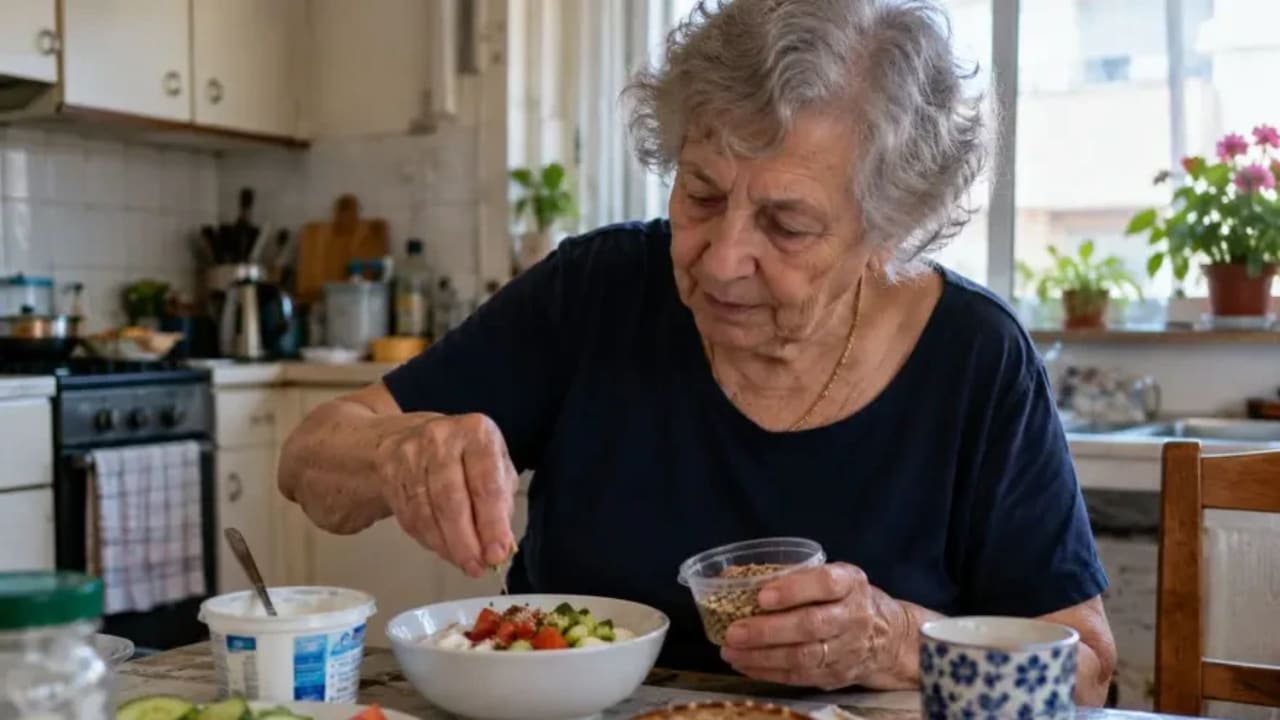
"Tell me, at my age does it still matter?" – I hear this question often. Sometimes from a 75-year-old woman whose daughter accompanies her to the clinic, sometimes from an 80-year-old man sent to me by his doctor. They sit in front of me suspiciously, waiting for me to tell them to give up bread. Many of them assume that the body's condition will no longer improve, and that from now on they are merely managing the decline.
I understand where this comes from. 40 or 50 years of habits do not disappear in one appointment. Moreover, most of what is written about nutrition and health is targeted at young people, prevention, and life expectancy. At age 75, other things concern me regarding patients: Will they manage to get up from a chair by themselves in five years, go shopping, play with their grandchildren? How many of the remaining years will be years in which the body functions?
A finding from home
A study from recent years provides an encouraging, and often surprising, answer to this. Dr. Abigail Goshen and Prof. Yariv Gerber from Haifa University and Tel Aviv University published a study in 2023 in the journal Mayo Clinic Proceedings. They returned to older Israelis who had participated more than a decade earlier in the Health Ministry's national nutrition survey.
Upon reexamination, the average age of the participants was already 84. Those whose diet was the best at the time of the survey had an approximately 40% lower risk of becoming frail. Frailty is a condition in which strength, energy, and walking speed decline together. It raises the risk of falls, hospitalizations, and dependence on others. Anyone accompanying an aging parent knows the moment when walking to the grocery store becomes a mission.
The researchers measured diet quality according to an accepted American index. It gives a high score for vegetables, fruits, legumes, whole grains, dairy products, and protein – and deducts points for sugar, salt, and saturated fat. In simple words, a standard, balanced menu.
However, this study does not yet answer my patient's question. She is not asking what would have happened had she eaten well all her life. She is asking what will happen if she starts now.
The train has not left yet
I found the answer in Australia. Researchers from the University of Melbourne published a trial in 2021 in the British Medical Journal (BMJ). The trial was conducted in 60 nursing homes housing over 7,000 residents. The average age of the residents was 86.
In half of the nursing homes, they added milk, yogurt, and cheese to the menu, about three and a half servings a day instead of fewer than two. The addition increased the residents' calcium and protein intake. In the other nursing homes, the menu remained as usual.
After two years, the number of fractures among residents in the nursing homes that added dairy products was lower by a third, hip fractures fell by almost half, and falls dropped by 11%. The reduction in falls was already visible after three months, and the reduction in hip fractures – after five.
At this age, a hip fracture is often the turning point after which one no longer returns to previous independence. In the Australian trial, a change in menu alone reduced this risk. And it did so among people who started eating differently after age 85, on average.
What do I ask of 75-year-olds? The recommendations are different from those I would have given them 20 or 30 years earlier. The goal is to maintain strength. After age 70, unplanned weight loss is a warning sign requiring investigation rather than a reason for celebration, and a weight-loss diet without supervision harms muscle mass. Therefore, I start with protein – at every meal and not just at lunch.
Muscles keep us on our feet, and over the years it becomes harder to maintain them. Dairy products do double duty here, as they are a source not only of protein but also of calcium. Fish, including canned options such as sardines, tuna, or mackerel, eggs, chicken, and legumes are good sources of protein.
The Health Ministry's national nutrition survey found that more than 92% of people aged 65 and over in Israel consume less vitamin D than recommended. The American Endocrine Society published a clear guideline in 2024: It is recommended for people aged 75 and over to take vitamin D as a regular supplement, without a prior blood test. The review of studies behind it found a decrease in mortality among those who took the supplement.
Vegetables and legumes should be eaten daily, and there is no need for new recipes. Familiar Israeli cuisine provides them in abundance: Lentil or bean soup, hummus, majadra, chopped salad with cheese or tuna. And anyone whose appetite has decreased, to the point that dinner shrinks to a cup of tea and a slice of bread, will benefit from small, frequent meals, each containing something nutritious.
A 78-year-old patient who is asked to change their entire menu all at once will arrive at the next appointment frustrated. Someone who starts with yogurt in the morning, and a week or two later adds legume soup once a week, builds a habit that lasts. After a month or two, when the first habit is already stable, the next one is added.
Combining vegetables and legumes in meals assists with a topic that 75-year-olds frequently raise in the clinic, sometimes with embarrassment: Constipation. It is common after age 70 due to several cumulative reasons. People eat less, drink less, move less, and quite a few common medications, iron and calcium supplements, and some pain relievers slow down bowel activity. Constipation also harms appetite. Someone who feels bloated and uncomfortable eats less, and every skipped meal represents more protein and energy lost to the body.
Vegetables, fruits, legumes, oats, and prunes add fiber. Introduce them gradually to ease the digestive system. And they only work when accompanied by sufficient fluids. In old age, the sense of thirst weakens, which is why I suggest always keeping a glass of water within reach and not only during meals.
A short walk after a meal also helps. Many discover that a hot drink in the morning, followed by breakfast quietly and without pressure, helps the bowels wake up. And those accompanied by long-term constipation would do well to check their medication list with their doctor before turning to drugs or over-the-counter remedies for constipation.
And one more thing that cannot be ignored: Those who eat in company tend to persevere. A spouse, a caregiver, family members who visit or even call to ask what you ate today. A dietary change stands a good chance when someone else is a partner to it. And I recommend starting with one step.