‘You are standing today’: A Jewish lesson for America, 25 years after 9/11
As we approach the 25th anniversary of that terrible day, this week’s haftarah (Isaiah 61:10-63:9) offers a powerful perspective on destruction, rebuilding, and memory.

As we approach the 25th anniversary of that terrible day, this week’s haftarah (Isaiah 61:10-63:9) offers a powerful perspective on destruction, rebuilding, and memory.


Parashat Ki Tavo teaches that joy is not a luxury but a religious obligation, revealed through gratitude, generosity and serving God with a sincere and joyful heart.

Jerusalem has endured exile and loss, but Isaiah tells her not to look only at what has been destroyed. She must look ahead to what will be rebuilt.

Parashat Ki Tetze abruptly shifts from collective responsibilities to personal ones. It is the densest legal section of the Torah, containing more commandments than any other parasha.

The relationship between a man and a woman is also, in a sense, a reflection of the relationship between a person and his Creator.

Trees have repeatedly been destroyed by war, fires, and other causes, but we have always planted again as an expression of Jewish resilience and rebuilding.

“Wholeheartedness is greater than wisdom, but great wisdom is required of a Jew before he reaches the level of ‘You shall be wholehearted with the Lord your God.’” - Rabbi Naftali of Ropshitz.

Even those who observe Jewish tradition have areas of choice that they have already conquered, while their struggles lie elsewhere, each person according to their own level and circumstances.

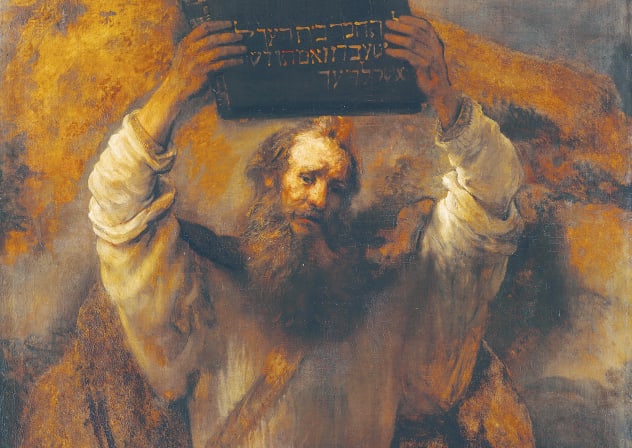
Moses shattered the Tablets, yet their fragments were preserved beside the new ones. Their message endures, what appears broken can still carry holiness, meaning, and strength.

Parshat Eikev teaches that the greatest threats to our values begin not with rejecting them, but with neglecting the small practices that keep them alive.
Isaiah declares, “Behold, the nations are as a drop from a bucket, and are regarded as the dust on the scales... All the nations are as nothing before Him” (Isaiah 40:15,17).
