
Everything was finally in place. Our enemies had been defeated, the nation had been counted, and we stood at the threshold of Eretz Yisrael, ready to enter the land promised to us for centuries.
At that very moment, two tribes approached Moses with an unexpected request. Rather than cross the Jordan, they asked to remain on the eastern bank.
Moses was initially shaken by memories of the previous generation, which had rejected the opportunity to enter Eretz Yisrael. He could not erase the image of the spies and their rebellion.
Eventually, however, he looked beyond the painful memories of the spies and recognized the sincerity of the request. He agreed to their petition. He bound them to a carefully crafted agreement that left nothing to chance or misinterpretation. Moses spelled out every contingency, and this agreement became the halachic model for contracts that contain stipulated conditions.
The two tribes, eventually joined by half of a third tribe, pledged to fight alongside the rest of the nation until the conquest of the land was complete. It would have been morally unacceptable for them to remain safely behind while their brothers risked their lives for the nation.
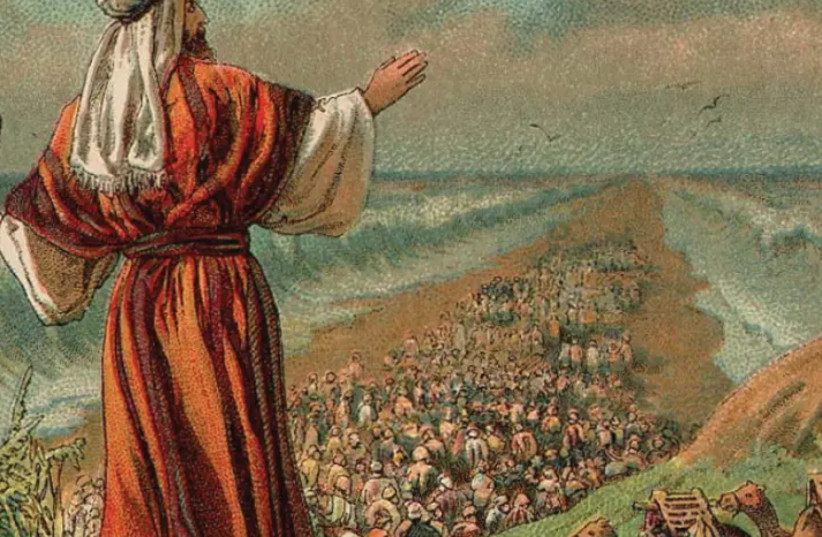
They fulfilled their promise in full. Not only did they fight throughout the seven years of conquest, but they remained for an additional seven years while the land was surveyed and divided among the tribes. For 14 years, these two-and-a-half tribes lived apart from their families. They honored their commitment and did not waver even when it became difficult.
Standing by our word, independent of any contractual obligation, is the mark of honor, honesty, and integrity.
Knowing when to change
Before turning to the story of the eastern tribes, the Torah begins parashat Matot with the laws governing oaths and verbal commitments.
Yet instead of simply commanding us to honor our word, it focuses on the circumstances in which an oath may be rescinded. In the Torah, certain vows made by a young woman can be annulled by the adult responsible for her, either her father or, if she is married, her husband. This protects her from an ill-advised or impulsive declaration.
Our Sages expanded this concept, allowing any vow made by an adult or a minor to be annulled through hatarat nedarim before a panel of three judges. This process forms the basis of the familiar custom of hatarat nedarim performed on the eve of Rosh Hashanah. Before entering a new year, we seek release from vows that we may not have properly fulfilled.
Sometimes life requires us to change our minds, and Halacha provides a responsible way to repeal verbal commitments that can no longer be honored.
A delicate balance
Taken together, these two sections of parashat Matot offer a balanced perspective. The story of the tribes underscores the importance of standing by our commitments.
Commitments lose their meaning if they are abandoned whenever circumstances become difficult or enthusiasm fades. A person who continually revises his commitments eventually finds it difficult to build anything lasting, whether a relationship, a community, or a larger mission.
By contrast, the laws of annulling vows remind us that there are times when changing our minds is the right course of action.
Halacha recognizes two broad grounds for releasing a person from a vow. One is regret, when the vow was made impulsively or without fully appreciating its consequences. The other is a change in circumstances. Sometimes we make decisions before we fully understand ourselves, but more often the world around us moves in unexpected directions. We are then required to adapt to new realities rather than stubbornly cling to commitments that no longer fit the situation.
The wisdom to reconsider
My rebbe, Rabbi Yehuda Amital, whose 16th yahrzeit falls this week, was unafraid to change his mind when circumstances warranted it.
He understood that history is not static. As the State of Israel entered new chapters in its development, he refined his understanding of its religious and historical significance.
He also famously reconsidered his views on women’s Torah education. In his earlier years, he did not believe that women required intensive text-based Torah study. As society changed, he revisited that position and became one of the driving forces behind the establishment of a major institution for women’s Torah study.
A student once wrote an entire thesis analyzing Rav Amital’s willingness to revise his opinions and asked him to read it. After reviewing the paper, Rav Amital remarked that he disagreed with several of its conclusions. A few moments later he called the student back and said that he had changed his mind. On further reflection, he agreed with many of the paper’s observations. My rebbe had changed his mind about a paper describing his willingness to change his mind.
Identity before ideology
Why is the ability to change our minds such an essential human trait? And why, despite its importance, is it often so difficult?
It all comes back to the question of identity. Human beings need an answer to the question “Who am I?”
If that answer is not supplied by enduring values, it will be supplied by something else. Political movements, ideological camps, and cultural movements offer an immediate sense of belonging. They become an easy answer to the question “Who am I?” But the identity they offer is borrowed rather than one built through character and commitment.
Ideally, our identity should be rooted in values that transcend changing circumstances. Our relationship with God, our moral conduct, our character, our relationships, our idealism, and our dreams and aspirations should define who we are.
These are the anchors of identity because they do not depend on shifting fashions or historical circumstance. Even if we had lived 200 years ago, or if we were to be transported 200 years into the future, we would have wanted, or would still want, to build our identity on these same lasting values.
Opinions become identity
When we fail to build an authentic identity on lasting values, we inevitably replace them with shallower identity markers. Instead of grounding our identity in character and values, we define ourselves by our opinions, our ideology, and our politics.
Political beliefs and ideological positions should guide our decisions about public affairs and contemporary questions, but they should never define who we are. They offer a sense of belonging and certainty, but the identity they provide is borrowed rather than rooted in religious character, moral conscience, and lasting values.
The problem is that borrowed identities demand constant defense. Changing our minds becomes painfully difficult. As long as our opinions remain separate from our identity, we can revise them when facts change. But when our opinions become our identity, changing them feels like surrendering a part of ourselves. Every disengagement from an opinion feels personal. We defend our positions not only because we believe they are correct, but because we believe they define who we are.
Much of modern polarization stems from this confusion. Public debate has become louder, more bitter, and less capable of self-correction because opinions have hardened into identities. Politics and hashkafa (ideological outlook) have become substitutes for identity.
Parashat Matot presents two virtues that stand in tension: the resolve to keep our commitments and the humility to reconsider our opinions. They are not opposites at all. When identity is rooted in enduring values, we can remain faithful to our commitments without becoming captive to our own opinions.■
The writer is a rabbi and educator at Yeshivat Har Etzion (Gush) in Israel. His latest book, Reclaiming Redemption,
Vol. II: Faith, Identity, Peoplehood, and the Storms of War, is available at mtaraginbooks.com.