Neanderthals
WATCH: A Paleolithic time capsule: Rare prehistoric cave discovered near highway outside of Haifa
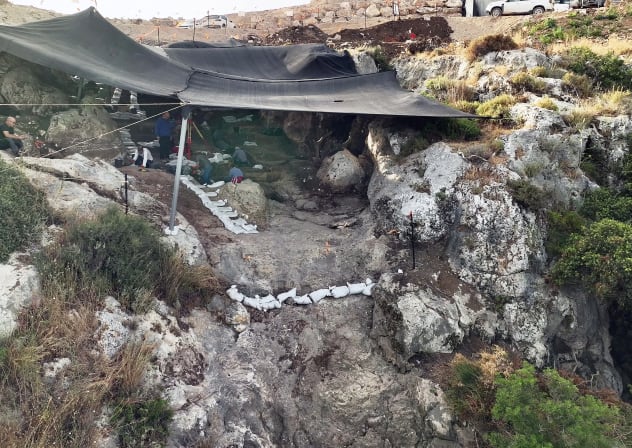
The cave dates back to 400,000 and 250,000 years ago, to the time of the Acheulo-Yabrudian culture – a collection of archaeological cultures in the Levant from the end of the Lower Paleolithic era.

Neanderthals' ancient toolkit included hammers, blades made from rhino teeth, study finds

Neanderthal tooth from Siberian cave shows signs of earliest-known invasive dental surgery - study

Extremely painful: Evidence suggests Neanderthals performed root canals 59,000 years ago
Kenyan find narrows Australopithecus-Neanderthal gap, reshaping 2M years of hand evolution
Dated to about 1.5 million years ago, the bones display a long robust thumb, short fingers and a mobile little finger, hinting at tool use and precision grips beyond the genus Homo.

Older than Neanderthal rites? New papers double down on the Homo naledi burial hypothesis
Researchers say remains of at least 15 individuals in the Rising Star cave were deliberately placed and quickly covered by sediments, countering claims of accidental deposition.

Neanderthal diversity: Iberian Neanderthals handled the dead with cave deposits, not graves
Archaeological study reveals systematic accumulations of Neanderthal remains in Iberian caves, indicating intentional mortuary practices distinct from burial traditions documented in other regions.

Mystery at Petralona Cave: 286,000-year-old skull near Thessaloniki upends the human family tree
Buried for hundreds of thousands of years, the Petralona cranium finally reveals its ancient secret.

Earliest proof of Neanderthals, Homo sapiens interbreeding discovered by Israeli archaeologists
Discovered approximately 90 years ago, the fossil was reanalyzed using advanced micro-CT scanning and 3D modeling.

Neanderthals ate maggots from rotting meat, new research finds
Melanie Beasley, a researcher at Purdue University, stated, "Large quantities of larvae were available, they are easy to collect, and they are rich in nutrients."

Neanderthal recipes: Study reveals how Neanderthals living in Northern Israel butchered their meat
These differences in butchery practices cannot be explained by tool type, skill, or available resources, indicating that cultural practices might be responsible.
Did Neanderthals have 'family recipes'? Study suggests butchery practices in ancient groups
Their meticulous examination of cut-marks on the remains of animal prey revealed patterns that cannot be explained by differences in skill, resources, or available tools at each site.

Neanderthals' 125,000-year-old 'grease factory' discovered at Neumark-Nord in Germany
The evidence constitutes the earliest clear case of intensive grease-rendering yet documented for the Paleolithic.

World's oldest Neanderthal fingerprint found on 43,000-year-old pebble in Spain
Researchers suggest the pebble may represent one of the earliest human facial symbolizations in prehistory.
