Neanderthals
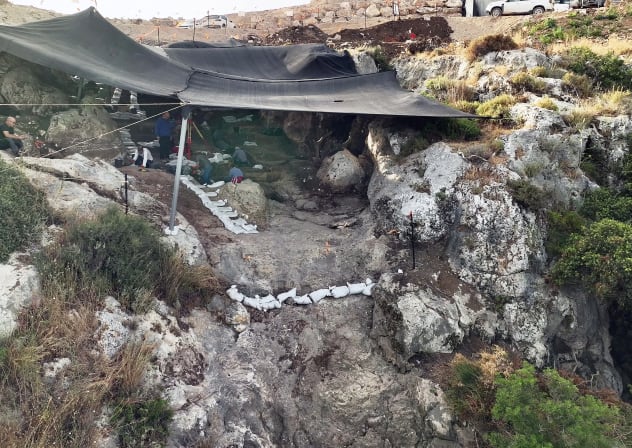
WATCH: A Paleolithic time capsule: Rare prehistoric cave discovered near highway outside of Haifa
The cave dates back to 400,000 and 250,000 years ago, to the time of the Acheulo-Yabrudian culture – a collection of archaeological cultures in the Levant from the end of the Lower Paleolithic era.

Neanderthals' ancient toolkit included hammers, blades made from rhino teeth, study finds

Neanderthal tooth from Siberian cave shows signs of earliest-known invasive dental surgery - study

Extremely painful: Evidence suggests Neanderthals performed root canals 59,000 years ago
Humans, neanderthals coexisted in the Negev desert 50,000 years ago
The study also found that Boker Tachtit is the earliest known migration point from Africa for early Homo Sapiens (humans) from the Levant region.

Caves in Rome contain remains of Neanderthals less than 70,000-years-old
Eight of the remains are dated to between 50,000 and 68,000 years ago, while one, the oldest, is dated to between 90,000 and 100,000 years ago, the ministry said in a statement.

Early humans in Europe found to have close lineage with Neanderthals
Early humans were known to mix with their common relatives, stemming from different areas and periods, and that the research proves the notion to also to be true in parts of Europe.

Humans revealed to have been apex predators for two million years - study
The study conducted at Tel Aviv University shows that our ancient ancestors ate mostly meat.
Neanderthals possibly used toothpicks, research shows
One of the teeth in question, was a third lower molar belonging to a 30-year-old Neanderthal, and was "heavily worn, perhaps from chewing hard food," according to the report.
Neanderthal foot sheds light on prehistoric inhabitants of the Galilee
The results of the different lines of studies have offered archaeologists several insights on the life of its prehistoric inhabitants.
Coronavirus genetic risk factor inherited from Neanderthals – new study
Almost 3,200 genetic profiles of hospitalized patients were analyzed, showing that those presenting the relevant DNA variant were 70% more likely to develop a severe form of the disease.