Archaeology
Jewish educators should stop relying on archaeology to prove Israel’s history - opinion
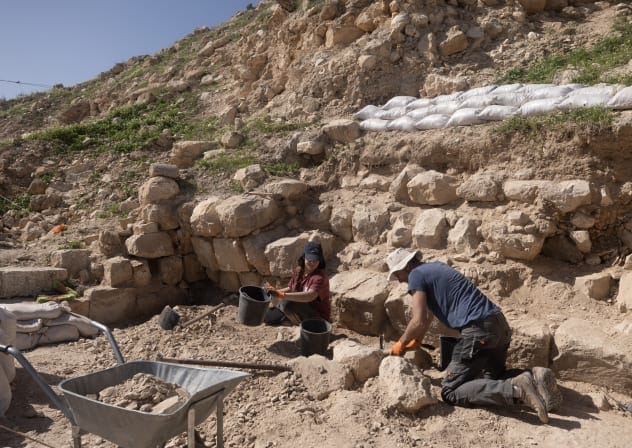
For a student who has never held an ancient artifact, a relic proves our history beyond argument. It connects us to distant times with a tangible demonstration of the Jewish people’s bond to the land

WATCH: Archaeologists unearth 1,300-year-old ‘shopping hub’ beneath stadium in central Israel

‘Smoking gun evidence’: Bronze Age shaman long thought to be male revealed to be female goldworker

Ancient Egyptian princesses were skilled archers, trained with weapons, controversial study claims
UNESCO adds 25 new World Heritage Sites including Mount Olympus, Normandy's D-Day beaches
The List of World Heritage Sites includes sites in three categories: cultural sites, natural sites, and mixed sites which combine the two.

Authorities seize thousands of stolen artifacts in raid on antiquities smuggler's home in West Bank
Trading in antiquities without a permit and searching for antiquities without a license using a metal detector are all criminal offenses under Israeli law.

First Temple-era figurine mold unearthed in Jerusalem's 'most significant excavation' in decades
Tower of David Museum Chief Curator Eilat Lieber said that "the discovery of the first mold for producing figurines dating to the First Temple period has generated tremendous excitement."

Ancient Cypriot silver coin found on Ashdod's shore offers new insight into 2,500-year-old trade
The approximately 2,500-year-old coin was located by Ashdod Beaches Department Deputy Director Avi Chaprak during a search to locate objects lost by visitors to the beach.

Previously undiscovered ancient Egyptian tomb found at Theban necropolis on Nile's west bank
Inscriptions found within the tomb bear the name of its owner, “Paser,” as well as wall paintings depicted Paser worshipping the shrines of several deities.

France returns 23 artifacts to Syria after 15 year-long loan amid Macron’s historic Damascus visit
The artifacts were originally loaned in 2010 and 2011 to the Arab World Institute (IMA ) in Paris from museums in Damascus, Aleppo, Latakia, and Palmyra.

Researchers decode 200-year-old Red Sea navigational chart, revealing lost seafaring secrets
The document, dated to the late 18th or early 19th century, is illustrated with images of ships and religious buildings. It depicts more than 180 islands, along with reefs, landmarks and flags.

Byzantine gold artifacts help archaeologists uncover past of ship wrecked off Croatian coast
His team, equipped with diving gear, has spent the past decade slowly uncovering the history of the ship, whose wreckage lies near the Adriatic island of Mljet.

Oldest copy of Homer’s Odyssey in book form joins Christopher Nolan's film press tour
The Manchester Odyssey dates back to the third century BCE in Egypt, around the time scrolls went out of fashion and “bound” books became more popular.

‘Weaponization of cultural heritage’: Israel accuses PA of exploiting UNESCO in bid for Sebastia
The 450-acre site, which has awaited joining the world heritage list since 2012, has a history dating back at least 3,000 years.
