Pompeii
AI helps recover complete text of Herculaneum scroll burnt by Mount Vesuvius
The blackened, fragile scrolls cannot be physically opened without severe damage. Researchers have instead used high-resolution scans and computational techniques to "virtually unwrap" them.
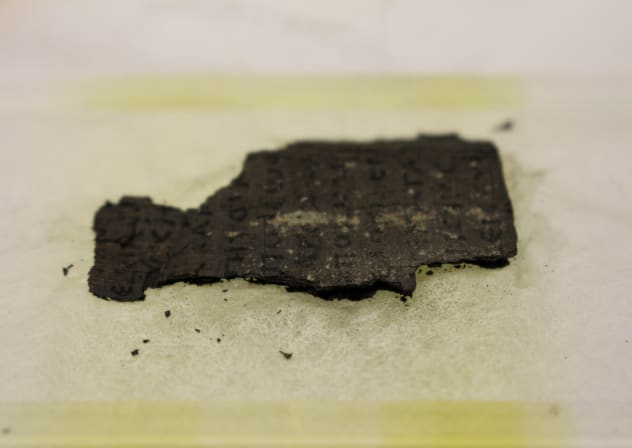

Pompeii victim revealed to be a doctor fleeing Vesuvius’ eruption over 60 years after discovery

Italian archaeologists use AI to generate image of Pompeii victim for first time
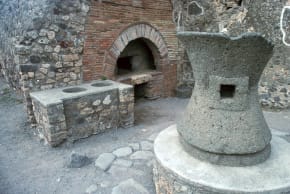
Archaeologist revives 2,000-year-old bread recipe in Pompeii after 18 years of experimentation
Newly discovered Pompeii fresco depicts a possible ancestor of pizza
The fresco depicts a plate of food and drink typically offered to guests upon entering the home.

'Pizza' painting found in ancient Roman ruins of Pompeii
What may be the ancestor of the modern pizza has been discovered in a fresco in the Roman city of Pompeii.

Two more victims of volcano eruption found in Roman ruins of Pompeii
The two skeletons are believed to have been killed by collapsing buildings.

How are sheep helping archaeologists in Pompeii perseveration efforts?
Plants growing on the ruins of Pompeii contributes to degradation of the historic site. Fortunately, sheep are a non-toxic solution to unchecked growth.

First Pompeiian human genome from 79 AD sequenced
Comparisons of the man's extracted DNA showed that it was the most similar to modern central Italians and others who lived in Italy during the Roman Imperial Age.
Meet SPOT the dog-like robot poised to be archaeologists’ best friend
An autonomous robot is being tested at Pompeii to monitor safety and structural issues for archaeologists.

Archaeologists discover 'slave room' at Pompeii
Pompeii is famous historically for being an ancient city that was buried by the eruption of Mount Vesuvius in 79 AD. It was reportedly home to about 13,000 people.
