Iron Age
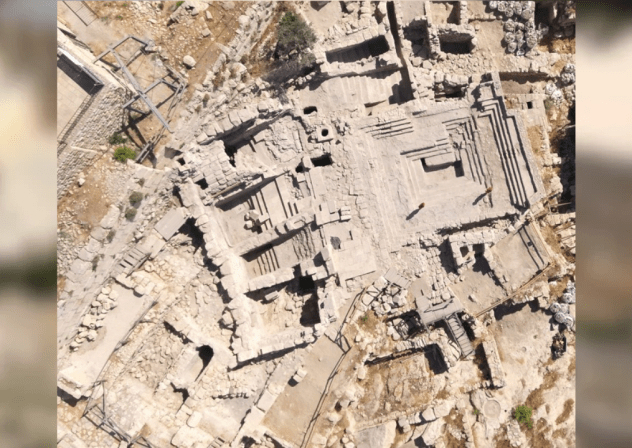
Massive newly-unearthed complex may shed light on how Jewish pilgrims prepared to enter the Temple
The discovery was made during five seasons of excavations, directed by Prof. Uzi Leibner and Prof. Orit Peleg-Barkat of the Hebrew University of Jerusalem’s Institute of Archaeology.

Previously unknown Iron Age grave of high-ranking individual, two-wheel chariot found in Germany

Ancient stone at Tel Eton may provide new proof of King Hezekiah’s religious reform, study suggests

Wooden platform older than Stonehenge found hidden beneath man-made island in Scotland
Microscopic Clues Rewrite History of Bronze Production in the Biblical Highlands
Analysis of 3,000-year-old smelting droplets shows copper from Timna and Feinan was alloyed with tin at a mountain site in Samaria, revealing a budding regional trade and technology network.

Oldest known use of harmal as incense discovered at Iron Age site in Saudi Arabia
Advanced metabolic profiling techniques revealed organic residues of harmal in Iron Age fumigation devices.

Banana traces in 3,000-years-olf Philistine teeth rewrite Iron Age trade map
Banana remnants in 3,000-year-old graves at Tel ‘Erani show the fruit reached the Judean coast by 1000 BCE, reshaping views on Iron Age trade and Philistine burial customs.

Miniature black juglets reveal Iron Age burial practice in Jerusalem cemetery
Israel Antiquities Authority paper records 49 black-fired vessels in a single Mamilla tomb and tracks their decline across the late eighth to early sixth centuries BCE.

Seeds, 3-D scans and Iron-Age artefacts deepen case for Holy Sepulchre’s biblical garden
Fresh finds beneath the Church of the Holy Sepulchre add hard evidence of a first-century garden and the site’s earlier life as a quarry.

3,000-year-old necropolis discovered in Al Ain, UAE
"The burial traditions of the Iron Age have always been a mystery to us," said Jaber Saleh Al Marri, Director of the Historical Environment Department at DCT Abu Dhabi.

A rise in exotic goods: When Jeruslaem was an Assyrian Vassal
A Oxford Journal of Archaeology publication by Reli Avisar examines how vassal kingdoms, elite consumption, and imported luxury goods shaped Iron Age Lachish and Jerusalem.

What a bearded faience head reveals about elite identity in Iron Age Israel
Analysis of a rare statuette from Tel Abel Beth Maacah suggests it portrayed a royal or elite figure, likely used as a cultic votive.

Iberians buried Iron-age unborn fetuses, young babies with care, intimacy
study finds infants were buried in homes as part of family rituals, reflecting intimate Iberian practices.

Ornate spears found in Iron Age hoard near Melsonby, North Yorkshire
Experts say the find challenges the belief that Iron Age wealth was limited to southern Britain.
