Human
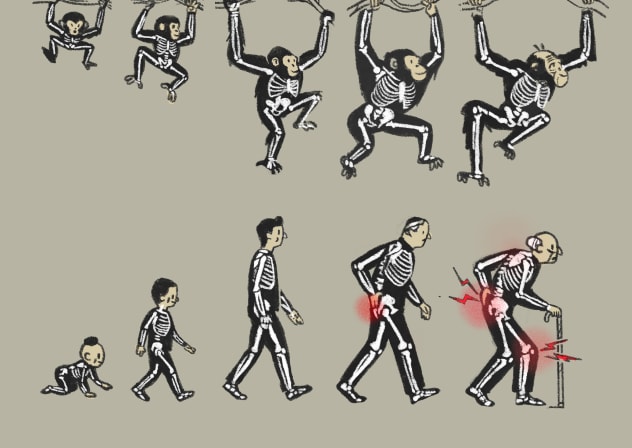
Israeli study finds why humans suffer from joint pain while other great apes stay agile
The researchers proposed an answer based on hybrid human-chimpanzee cells and other advanced techniques. They reveal that painful joints may be a hidden price we pay for traits that make us human.

Lingjie Guo: Expanding the human-centered boundaries of UX design

Ding Li: Redefining the boundary between AI and human through design

Stone handaxes found in Galilee show early humans valued aesthetics of their tools - study
Study reveals how Ice Age humans built mammoth-bone structures
Evidence suggests humans scavenged mammoth bones from existing bone beds over centuries.

Like cats and dogs, when we listen intently we prick up our ears, study finds
Although modern humans cannot move their ears around in the same way that dogs, cats, and horses do, the findings suggest that humans involuntarily tense their ear muscles when listening intently.

Does Hashem need Us? A deeper understanding

Blink, but slowly: Study reveals the secret to better communication with your cat
Scientists confirmed that when a person narrows their eyes and blinks slowly, cats become more receptive and are more likely to approach them.

Stone Tech 2.0: Forscher glauben, einen Technologiesprung von vor 900.000 Jahren gefunden zu haben
Die Homininen an der Fundstelle zeigten sorgfältige Planung und Effizienz in ihren Strategien für Herstellung und Ressourcenmanagement.

Pre-Pompeii: Footprints of villagers fleeing Mount Vesuvius found in Salerno
Near the footprint site, archaeologists uncovered burials in tombs covered with tuff slabs, some engraved with decorations. Most of the burials belong to children.

Romania discovers Europe's oldest human traces dating back two million years
Discovery supports early 'out of Africa' migrations, predating Homo erectus' exit from Africa.

New study shows human ancestor thrived in harsh desert conditions over 1 million years ago
The research challenges the long-held belief that only Homo sapiens had the capacity to thrive in extreme environments.

Study reveals human ancestors ate mostly plants, not meat
Some researchers hypothesize that the incorporation of animal-based foods in early hominin diets led to increased brain size, smaller gut size, and increased stature.

First US human victim of H5N1 bird flu virus reported in Louisiana
The patient was infected after contact with domestic and wild birds, specifically a non-commercial backyard flock and wild birds he raised at home.
