Dna
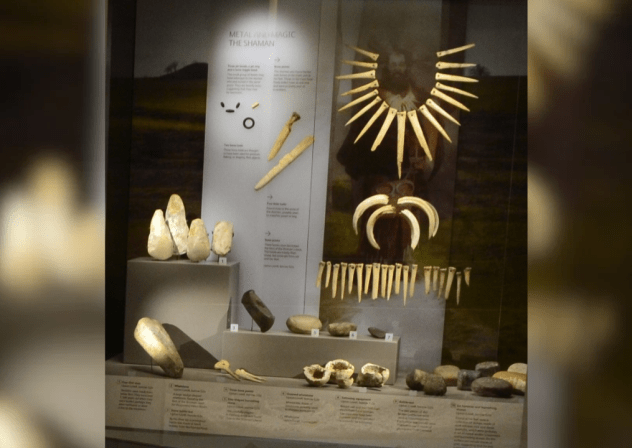
‘Smoking gun evidence’: Bronze Age shaman long thought to be male revealed to be female goldworker
“It completely tears up previous assumptions,” Wiltshire Museum Director David Dawson told The Guardian. “It’s a fantastic revelation of the position of women in society.”

Some parts of your body age faster than others, Israeli study finds

Judge orders pop singer D4vd to stand trial for murder, dismemberment of 14-year-old girl

FBI determines Nancy Guthrie kidnapping notes to be fakes, source says
Cistercian monks unknowingly used Viking-traded sealskin for book covers
The study found a strong trade network between Greenland Norse and French abbeys, linking Cistercians to broader economies, including the fur trade with Viking descendants.

DNA tests solve 3,300-year-old mystery of Tutankhamun's death
Researchers identified walking impairment and malarial disease sustained by Tutankhamun, supported by the discovery of canes and an afterlife pharmacy in his tomb.

Ancient DNA reveals lost human tribe that lived in Green Sahara
DNA from two mummies at Takarkori links them to 15,000-year-old Taforalt hunter-gatherers, challenging the idea of the Green Sahara as a migration corridor.

Jewish genetic data in danger again as 23andMe goes up for sale
With the company’s data up for sale, the genetic information of 15 million people are now up for grabs.

2007 murder investigation reopened in Italy over new DNA analysis
New DNA evidence led Italian prosecutors to reopen the investigation into the 2007 murder of 26-year-old Italian woman.

TAU researchers use CRISPR to shrink cancer cells - study
'In this study, we demonstrated that there are in fact some genes without which a cancer cell cannot survive, making them excellent targets for CRISPR therapy,' said Prof. Dan Peer.

Rare new sunflower species discovered in Texas national park
Scientists have identified both a new species and genus of sunflower in the Texas desert, but climate change may threaten its future before we fully understand it.

New DNA evidence links European Huns to Xiongnu Empire elite
The Xiongnu Empire had dissolved around 100 CE, leaving a 300-year gap before the appearance of the Huns in Europe.

An Ice Age refuge: DNA of humans, wolves, mammoths retrieved from sediments in El Mirón cave
For the first time, researchers managed to recover DNA from sediment at a Cantabrian site.

New study reveals ancient Europeans had dark skin until 3,000 years ago
Findings challenge previous belief that Europeans developed light skin soon after arriving 45,000 years ago.
