Biblical archaeology
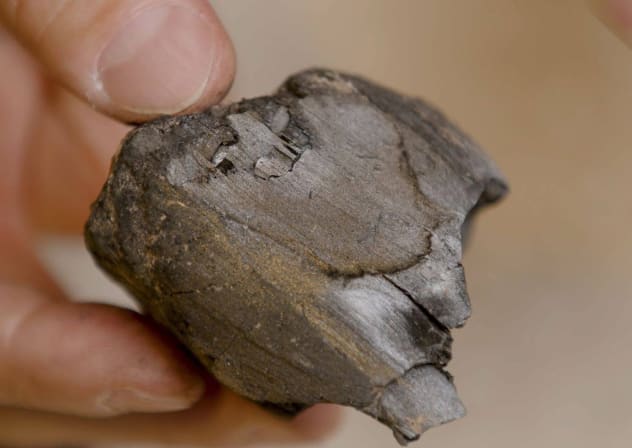
Noah’s Ark researchers find possible charred wood fragments bearing tool marks at Durupinar site
The fragments are currently undergoing carbon-14 dating to establish their age, as well as analysis identify the species of wood, and to search for traces of bitumen or sap.
Jacob's Well in Turkey: The beginning of the Bible's first love story reopens to tourists
US House Speaker Mike Johnson praises Israel’s official 'Biblical' Highway 60 designation

First Temple-era figurine mold unearthed in Jerusalem's 'most significant excavation' in decades
Tomb of Joshua bin Nun renovated after pro-Hamas vandalism
The graffiti was removed by Yossi Dagan, head of the Samaria Regional Council, and IDF soldiers.

National Geographic lists Israel's Roman swords as top find of 2023
The find includes a cache of four Roman swords and the head of a deer-shaped handle, estimated to date back nearly 1,900 years, and are in excellent condition.

Radiocarbon dating proves biblical accounts of the Israeli city of Gezer
New dates provided by Austrian archaeologists allow testing of proposed correlations between texts and archaeological remains

New research might point out to location, remains of Noah's Ark
Archaeologists identify and analyze a ship-shaped mound in the Mount Ararat complex in eastern Turkey, described by the Bible as the Ark's final destination.

Israel unearths ancient Roman swords, javelin stolen by Jewish rebels
The weapons cache was most likely hidden by Jewish rebels some 1,900 years ago after being seized from Roman forces.

Were the limestone spheroids of 'Ubeidiya intentionally designed?
Spheroids are either handmade or naturally shaped stones chosen and transported to places where they are used, making them one of the longest-used technologies on record.

Israeli archaeologists unearth building destroyed during Babylonian siege of Jerusalem
The building, dubbed 'Building 100', had once belong to an elite member of Jerusalem's society, until it was destroyed by fire in 586 BCE.

UNESCO to rule on ancient Jericho as Palestinian World Heritage site
Jericho prides itself on being the oldest most continuously inhabited city in the world, dating back over 10,000 years and for being at the lowest point below sea level of any municipality.

James Ossuary, alleged relic of Jesus's brother, to be shown in Dallas
While the 2,000-year-old ossuary is seemingly genuine, the underlying issue is whether its paleo-Hebrew inscription is the real deal.

Rebel Jewish coin dating to anti-Roman revolt discovered in Israel
A rare half-shekel coin dug up in the Ein Gedi nature reserve was inscribed with the words “The Holy Jerusalem” in Hebrew.
