
As an Iranian-American woman whose family escaped the Islamic Republic, I find myself confronting a troubling question: How do we ensure that America’s future does not resemble the nightmare that began in Iran in 1979?
As an ex-Muslim considered an apostate under traditional interpretations of Islamic law, some of which prescribe death for abandoning Islam, I would rather remain quiet. But as an activist fighting for the Iranian people’s freedom, I feel compelled to speak out.
Like Senator-elect Abdulrahman Mohamed El-Sayed, I grew up in an immigrant family with divorced parents in America. His family came from Egypt; mine came from Iran. He grew up Muslim, while I was raised in a secular Iranian family, an atheist or agnostic at best.
Ironically, in my 20s, I wholeheartedly embraced Sunni Islam.
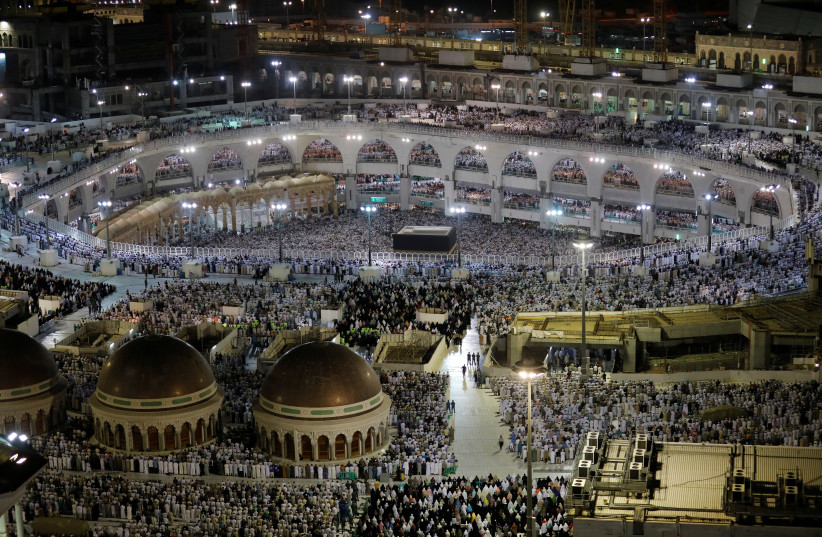
For more than 15 years, I practiced Islam devoutly. I wore the hijab, performed five daily prayers, studied more than 100 Islamic books, attended classes, and completed the obligatory Hajj pilgrimage to Mecca.
I believed strict obedience to God’s commandments was necessary to avoid punishment in hell.
What began as a search for spiritual meaning became increasingly restrictive and isolating. My husband struggled with my transformation.
Both our families had escaped the Islamic Republic, only for me to embrace religious practices they associated with the country they had fled. Our marriage eventually ended when our child was very young, largely because I had changed so profoundly.
I was an educated, independent American woman who had freely chosen this life. Nobody forced me to embrace Islam or wear the hijab.
It took me nearly 15 years to recognize how much I had sacrificed in pursuit of salvation and how unhappy I was.
Eventually, I rejected the belief that my “good works” or strict religious obedience could earn me a place in God’s kingdom. After decades of spiritual searching, I discovered the beauty and grace of God through Jesus Christ and embraced Christianity.
What Americans should understand about Islam
Islam’s foundational texts and traditions address not only personal faith but also law, governance, and political authority.
Jesus Christ did not establish an earthly government or command an army. Muhammad, by contrast, was both a religious and political leader who governed a community, led armies, and established rules concerning family relationships, criminal punishment, and public life.
Muslims traditionally regard Muhammad’s life and example as a model to follow.
During my years as a practicing Muslim, I repeatedly heard scholars discuss spreading Islam and establishing societies governed by Islamic principles.
As I understood their teachings, the long-term ideal was to gain sufficient political influence to replace secular laws with Islamic laws, justified as serving society’s collective interests.
In the interpretations I was taught, the perceived good of society often took precedence over individual liberties.
For example, women were expected to wear the hijab because preventing unwanted male attention and protecting the family institution were considered more important than a woman’s personal comfort and freedom of choice.
Of course, Muslims differ widely in their interpretations, and many are neither particularly familiar with nor interested in studying Islamic jurisprudence (fiqh).
My concern is with movements seeking to impose Islamic religious doctrines through democratic institutions.
In 2023, Hamtramck, Michigan’s all-Muslim city council, prohibited Pride flags and other political and religious flags on city property. In Britain, Sharia councils handle religious marriage and divorce matters, raising concerns about women’s rights, although they cannot override civil law.
My own religious studies eventually led me to question Muhammad’s marriage to Aisha, traditionally described in Sahih al-Bukhari as having been consummated when she was nine.
I also questioned teachings about women’s rights, apostasy, and Quranic verse 4:34, traditionally interpreted by many Islamic scholars as permitting husbands to strike disobedient wives, provided the strike is considered “light” and does not leave a mark.
Why had I accepted religious justifications for practices I would never have accepted outside religion?
The lesson of Iran’s 1979 revolution
Before 1979, Iran was undergoing significant modernization under the Shah. Women enjoyed expanding freedoms and legal protections. My own mother married in the 1960s wearing a miniskirt wedding dress and a beehive hairstyle.
After the revolution, religious authorities took control.
Compulsory hijab laws were imposed, female judges were removed from their positions, and the minimum marriage age for girls, previously raised to 18 under the Shah, was eventually reduced to as young as eight years and nine months under the Islamic Republic.
Political dissent was suppressed, and religious minorities faced persecution.
Iran demonstrates what can happen when religious authority becomes inseparable from state power.
This brings me back to Abdul El-Sayed. Hearing him use phrases such as “Inshallah” and “Alhamdulillah” during his victory speech raised questions for me about the distinction between publicly promoting one’s religion and simply practicing one’s faith.
He has every constitutional right to practice and express his religion, but Americans also deserve to understand traditional Islamic doctrines that can conflict with individual liberties.
These include teachings historically used to justify unequal treatment of women, child marriage, punishment for apostasy and certain same-sex acts, and severe corporal punishments. Some remain reflected in laws enforced by the Islamic Republic today.
My criticism is not directed at Muslims as individuals. It is directed at religious doctrines that I believe conflict with equality, personal freedom, and constitutional rights.
Nearly 47 years after the revolution, Iranians continue fighting for freedom, with Crown Prince Reza Pahlavi emerging as a prominent opposition leader.
In January 2026, millions of protesters responded to his call for freedom and faced deadly repression. An independent medical documentation report estimated approximately 54,200 deaths during the January crackdown.
Religious freedom is a fundamental American right, but so is freedom from religious coercion. No religious doctrine should be imposed through political power at the expense of constitutional rights.
I embraced Islam freely in America. It took me 15 years to understand what I had embraced. Nearly 47 years later, the people of Iran are still paying the price for what they embraced in 1979.
My greatest hope is that Iranians will soon be free to share their experiences with young Americans, so future generations will not repeat the same mistakes.
Only the young can truly awaken the young.
The writer is the pseudonym of an Iranian-American woman who practiced Islam devoutly for 15 years.