
Here’s something your doctor will probably never ask you: “Do you want this potentially lifesaving treatment? Or would you rather die?”
But what if the question were phrased differently?
“There’s a 30% chance the medicine won’t do anything to keep you alive. Moreover, if it does help, when you come out the other side you won’t be the same person you are now. But we can’t actually tell you what your quality of life will be. Every person is unique.”
What might have seemed a clear-cut choice now seems muddier, right?
This week marks the one-year anniversary of my decision to opt for what was behind Door No. 1 – the lifesaving treatment – and yet these questions still loom large.
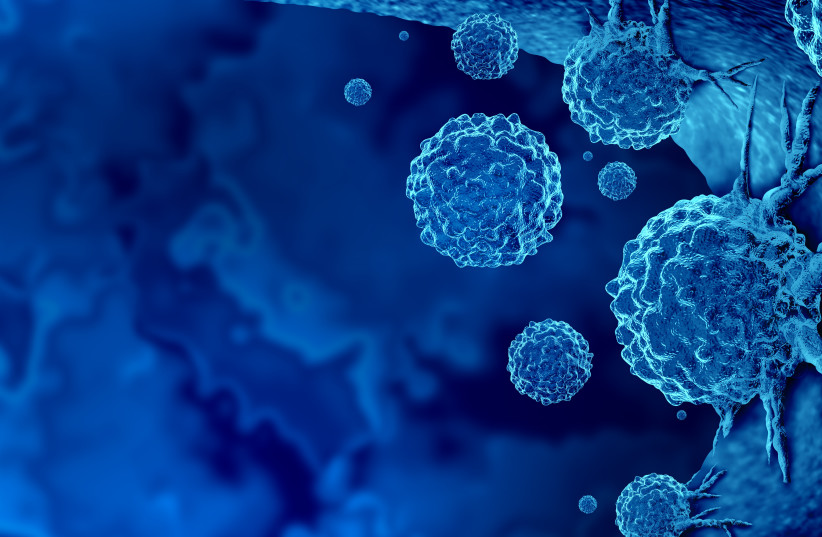
The treatment in question, CAR-T, which transforms your own T-cells into cancer-chomping Pac-Men, worked for me. In two weeks, it had knocked out the lymphoma from which I’d suffered for some seven years.
That said, I am definitely not the same person I was before.
A few months before my cancer transformed into aggressive DLBCL, my wife, Jody, and I had been hiking the hills of Lisbon and Porto. By the end of that year, I had lost a kidney, was deep into the one type of chemo I’d desperately hoped to avoid, and had lost my hair, my stamina, and my appetite.
I was six weeks in the hospital getting my CAR-T, during which time I was barely able to get out of bed without help; just taking the daily recommended stroll around the ward was an exercise in embarrassment.
Eventually, I was released, cured for now, but incredibly weak, with my bladder lining so decimated from all the drugs and radiation that every pee felt like a sushi chef’s jujitsu knife at play.
This was not the body I knew.
But slowly – very slowly – I started to get stronger. I returned to my exercise routine and added yoga. I was able to put aside the cane and could get up the stairs without clinging to the banister.
I was feeling so positive, I planned a cruise for our entire family. The logic was that if I was especially tired one day, I could just hang back and enjoy the endless buffet and heated pools, while the rest of our party went out and explored the local scenery.
Then, without warning, my blood counts crashed.
When recovery takes an unexpected turn
My platelets, which normally should be at a minimum of 150,000, hovered around a paltry 20,000. My neutrophils were in the toilet, as was my hemoglobin. My doctor reassured me this is not unexpected after CAR-T, but it was another unanticipated gut punch.
I wound up needing to take three different injections a week just to keep my levels at a bare minimum. I became a regular pincushion at the nearby blood lab. Every month, I haul myself to Hadassah for IV infusions to boost my IgG levels. I take 15 pills a day.
My son, Amir, commented that the entire process had aged me by 10 years. I might be 65 chronologically, but I feel and act more like 75. Nor has it been gradual aging. I went from 65 to 75 seemingly overnight.
All of which makes me wonder, if I were to require more treatment – if the cancer were to come back or something new cropped up – would the question my doctor never asked a year ago become relevant this time?
I think about bioethicist and author of Eat Your Ice Cream: Six Simple Rules for a Long and Healthy Life Dr. Ezekiel Emmanuel’s famous assertion that, at age 75, he wouldn’t do anything to prolong his existence. No chemo, no colonoscopies, no cardiac stress tests.
Had I reached that point – just 10 years earlier than expected?
And yet, my mind remains clear. I am able to pontificate as lucidly as before, whether in my writing or at the Shabbat table. I’m learning new things, like how best to employ AI. While I do forget a few things here and there, that probably is age related!
In the first months after I was released from the hospital, I’d regularly ask Jody, “Why didn’t you advise me to say no to the treatment? You knew I wouldn’t be the same.”
It’s a good thing she didn’t. “I want to live,” I now say with a faint smile.
My hematologist says that every time I’m at Hadassah for a checkup, she tells her team, “Here comes my walking miracle.”
Optimism has, for the moment, won out. Perhaps that’s why I just put a deposit down on another trip – a 20-day excursion to Vietnam and Cambodia for Jody and me. It’s not for another year – early 2027 – by which time I hope I will have regained enough of my strength that we can explore the streets and waterways of Hanoi and Hoi An and Ha Long Bay. (I made sure we can always cancel and get our money back.)
I’ve even started to keep a gratitude journal. Every night, I write down one good thing that happened that day. Playing with the grandkids. A satisfying meal. A compelling TV show.
Psychologist and Atlantic contributor Arthur Brooks has a different approach: He keeps a log of his regrets and disappointments. Whenever he writes one down, he leaves lines blank underneath. Then he makes a note to look at it in a month, and again in a month after that. The original complaint – the feelings, thoughts, and emotions around it – invariably seem smaller, he claims.
Science has a name for this: the fading affect bias (FAB). While roughly 60% of unpleasant experiences lose their emotional sting over time, only 42% of the pleasant ones fade. This creates a gap of nearly 20% – an inclination toward positivity that edits the narrative of our lives.
That works for me. In the meantime, who wants to meet next year at Angkor Wat?■
The writer’s book TOTALED: The Billion-Dollar Crash of the Startup that Took on Big Auto, Big Oil and the World has been published as an audiobook. It is available on Amazon and other online booksellers in print, e-book, and Audible formats. brianblum.com