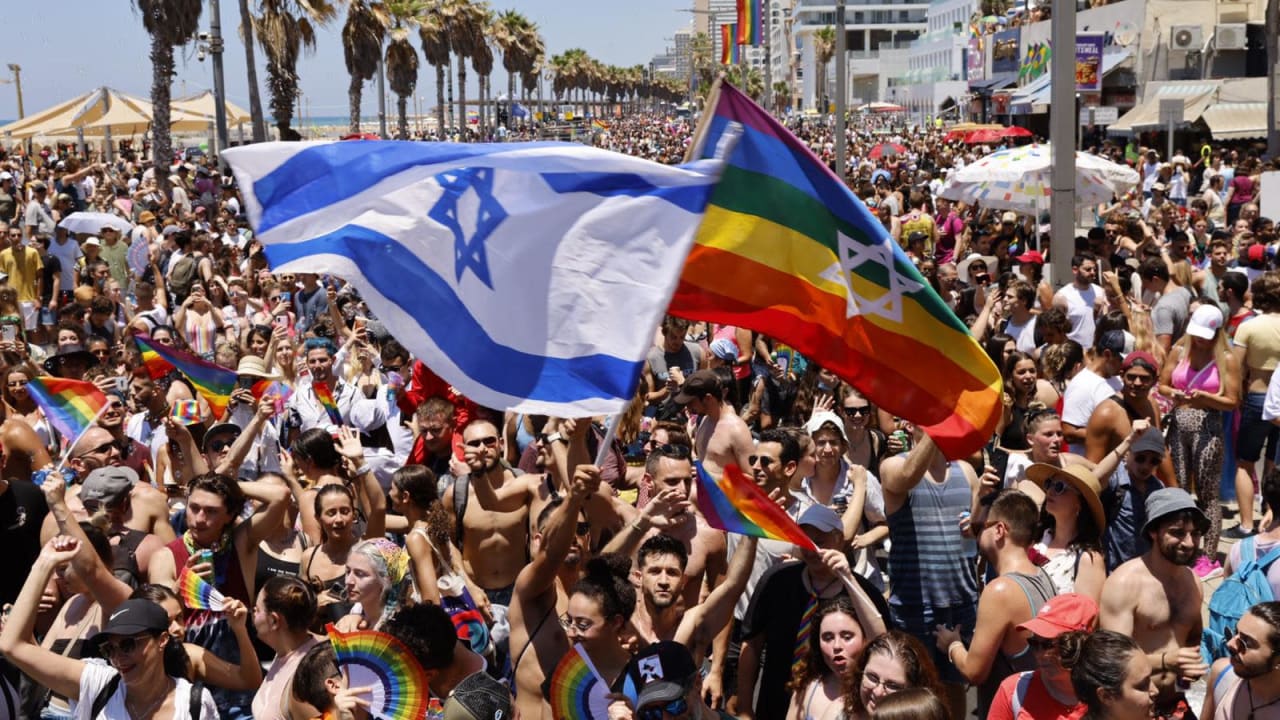
Newly published data points to a troubling rise in violence, attacks in public spaces, and incitement against Israel’s LGBTQ community, a study recently published by the Nir Katz z”l Center for Violence, Discrimination, and Homophobia Reporting of The Aguda - The Association for LGBTQ+ Equality in Israel found.
The report reflects a worrying trend of carefully planned lynch ambushes carried out through dating apps.
The 2025 homophobia report presents concerning data showing that members of the LGBTQ community are experiencing a growing loss of personal security.
Among the report’s main findings are the number of reported lynchings, stabbings, and cases of extortion by threats, with at least one physical assault reported per week on average. Another troubling figure is the rise in physical violence against LGBTQ people compared with previous years, including the finding that roughly half of the incidents reported in public spaces were physical assaults.
The Nir Katz z”l Center for Violence, Discrimination, and Homophobia Reporting has operated since 2012, with the aim of monitoring, documenting, handling, and providing support in every case of harm against the community. Its work includes assisting victims, mediating contact with police, tracking complaint handling, and identifying patterns and trends.

This is the 13th report compiled by the center. For the first time, it also includes data from a nationwide study on homophobia conducted by the Israeli Institute for Gender and LGBTQ Studies.
In 2025, lynchings carefully planned through dating apps, as well as stabbings in the hearts of major cities, became recurring incidents. The trend points to a pattern that begins with fake profiles created on dating platforms used by the community. Victims are then identified, and meetings are arranged under the pretense of getting acquainted, before the encounters end in violence by multiple attackers, often reaching life-threatening levels.
In 2025, the reporting center documented 322 reports. The number of inquiries to the legal department on homophobic matters stood at 110, bringing the total number of homophobic inquiries recorded this year to 432.
The reporting center also documented 2,634 homophobic talkbacks, or online comments, collected from articles across the internet, whether or not the articles dealt with the community.
The Aguda’s online advocacy department documented 1,325 pieces of homophobic content across the internet, including posts on social media.
A sharp rise was also recorded in calls to the Aguda’s hotline, with 3,863 inquiries received in 2025. The monthly average stood at about 322 inquiries, rising during the summer months and peaking in July with 578 inquiries.
The trans community accounted for more than half of all reports to the reporting center this year, at 54%, up from 43% in 2024.
Half of the incidents reported in public spaces this year were physical assaults. This marked a significant escalation compared with the 2024 homophobia report, in which physical incidents in public spaces accounted for 32% of reports.
A concerning rise was also recorded in extortion and threats in public spaces, which accounted for 13.5% of all reports this year, compared with only 3% in 2024. An increase in extortion and threats was also recorded through the Aguda hotline, indicating a broader trend.
The data in this year’s report point to growing fear among community members about reporting incidents or filing complaints with the police. At the same time, social media is saturated with violence and hatred, alongside documentation by community members of homophobic incidents.
The findings of the Israeli Institute for Gender and LGBTQ Studies research, which examined exposure to homophobia, present a worrying picture and add weight to the data received by the reporting center.
Study shows widespread exposure to homophobia
The findings show that an overwhelming majority, 91% of study participants, experienced homophobia at some frequency, while 79% experienced homophobia on social media.
The figures also show that 76% experienced homophobia in public spaces, 65% at school, 53% in private spaces, 51% during military or national service, and 49%, about half of respondents, experienced homophobia in interactions with state institutions.
Forty-seven percent of study participants experienced homophobia at a very high frequency, often or almost always, in at least one space, whether in public, on social media, in contact with government institutions, or elsewhere.
Forty-one percent experienced some form of homophobia in all three spheres of harm: private, public, and institutional.
People on the trans spectrum were exposed to homophobia and transphobia to a greater degree in every space examined: 87.5% on social media, 91% in public spaces, 79% at school, 69.5% in state institutions, 71% in private spaces, 62% during a year of service or national or military service, 66% in medical institutions, 58% in local authority institutions, and 54% in educational and higher education institutions.
A significant rise was found in exposure to homophobia in Israel. While the previous study conducted by the research institute found that 36% of participants experienced high-intensity homophobia, the current study found that 47% experienced high-intensity homophobia.
From the last quarter of 2024 through the end of 2025, more than 20 serious assault cases organized through the community’s dating platforms were documented by the reporting center.
The homophobia reporting center was the first to point to the trend of planned and organized assaults and attempted lynchings against members of the community through dating apps. The attacks followed a clear, repeated method: creating a fake profile on one of the dating platforms, with an emphasis on Grindr, identifying a potential victim, and corresponding with him under the pretense of an introductory meeting.
The attacks involved planned and preorganized assaults by groups of attackers, usually groups of five to 10 people, who were masked and armed with various weapons. The victims were attacked with brutal violence, and most required medical treatment. The motive, according to the report, was a hate crime against men who are attracted to men.
The trend revealed in the report is unprecedented in scope and frequency in Israel over the past year and a half.
Data on assaults and attempted lynchings
Most of the incidents took place in public spaces. Northern and central Israel were the main hotspots for harm, and the victim’s age did not appear to be a determining factor. Those attacked ranged across different age groups, young and old alike.
In addition, 92% of victims identified as gay. All of the victims were cisgender men, and in all cases, physical harm or attempted physical harm was involved.
Aguda chairman Nimrod Gorenstein said, “This year’s homophobia report proves that the surging violence and loss of personal security in Israeli society does not skip over the LGBTQ community. Behind the graphs and data stand the testimonies of thousands of members of the LGBTQ community who this year experienced more violence and discrimination on the basis of their LGBTQ identity, and this report makes their voices heard.
“Similar to other forms of hatred and demonization against other minority groups, homophobia reduces its victims to simple definitions and narrow boxes based on their sexuality and identity. The Aguda has taken upon itself the mission of fighting the dehumanization of LGBTQ people and continuing the struggle until every person in the LGBTQ community in Israel will no longer have to suffer discrimination, harassment, violence, or humiliation based on identity.”