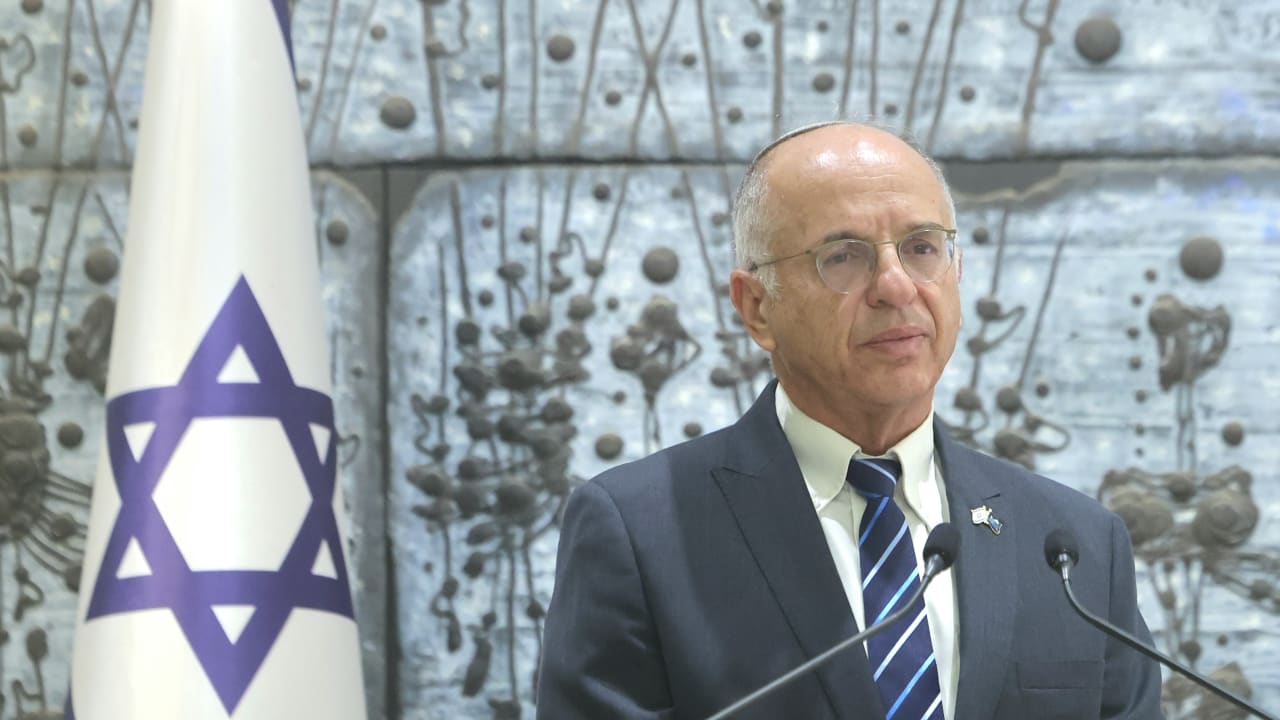
Information underlying the investigation into suspected foreign interference in Israel’s election has not yet developed into actual evidence and may never do so, Central Elections Committee chairman Justice Noam Sohlberg wrote in a sharply worded letter to committee members on Thursday. Nevertheless, he said, the information requires a thorough investigation.
Sohlberg also praised the Shin Bet (Israel Security Agency) and its director, David Zini, and said he had found no instance in which the government’s legal advisers had refused an investigative request submitted by the agency.
His letter addressed several points at the center of competing reports about the inquiry since it became public after the October 27 election. He did not identify particular reports, but said most media coverage was inaccurate, “to put it mildly.”
“The investigation is ongoing. Classified information has been presented that has not yet developed into actual evidence, and may not; time will tell,” Sohlberg wrote. “Nevertheless, this information requires continued intensive investigation until it has been fully pursued.”
The evidentiary position, he added, was similar to that presented before last week’s public statement.

Sohlberg met with investigation heads, affirms requests will be examined
Sohlberg, the Supreme Court’s deputy president, said he had met the investigation’s managers on Thursday morning, including representatives of the Shin Bet, police and State Attorney’s Office, to hear firsthand how it was proceeding.
“I asked and examined the matter with the members of the special investigation team - good, levelheaded professionals - and did not find that the government’s legal advisers had refused investigative requests submitted by the Shin Bet,” he wrote.
He said he had received assurances that any request grounded in the suspicion required by law would be examined promptly and efficiently, with a view to approving steps that would establish the truth in accordance with the law. He would act to remove any gaps or obstacles he identified.
Sohlberg also thanked Zini and the agency for their work protecting the election, including information security operations he said could not be detailed publicly.
“The Shin Bet deserves gratitude and the public’s trust,” he wrote.
The election took place on Tuesday, October 27. Sohlberg’s written instruction to investigate suspected foreign funding and election bribery was dated the following day and became public on Thursday, October 29.
The Shin Bet already held intelligence before the vote. Sohlberg’s written directive and Zini’s meeting with Prime Minister Benjamin Netanyahu followed on Wednesday.
The suspicions concern money allegedly transferred from abroad to influence the election. Reports have described possible funding to encourage voting in Arab communities and alleged payments to political figures.
Conduct of inquiry into possible foreign funding of election sees controversy
The inquiry has also been accompanied by disputes over how it is being conducted. The Attorney-General’s Office previously said the Shin Bet had delayed transferring material to the joint investigation team and stressed that citizens and elected officials could not be interrogated without an evidentiary basis.
In Thursday’s letter, Sohlberg also criticized leaks from the investigation. He said the committee was told on Tuesday evening that a classified opinion had been completed and would arrive by courier the next day. Its main points appeared in the media shortly afterward, before the committee received it on Wednesday afternoon.
His objection, he wrote, concerned repeated harm to the investigation, particularly its security aspects, rather than etiquette. He warned committee members to take media accounts “with a grain of salt.”
The investigation has unfolded alongside efforts to form a government. Likud cited the suspicions to claim Arab parties had stolen the election and argued that their votes should not underpin a new government. Police said on October 29 that election-integrity incidents had been relatively few and that the broader stolen-election allegations lacked investigative or intelligence support.
The Shin Bet itself cautioned that its unfinished inquiry should not be used to discredit Arab citizens who had voted lawfully. Sohlberg has likewise said the material presented did not undermine the election results as a whole.
The results gave Netanyahu’s bloc 53 seats, the opposition bloc 48 and the Arab parties a record 19. Parties representing 67 MKs, including both Arab factions, recommended Yashar leader Gadi Eisenkot to form a government.
President Isaac Herzog assigned Eisenkot that task on Sunday. He has 28 days, with a possible presidential extension of up to 14 days, to assemble a government.