Just weeks before Israel went to the polls, Britain and some of its allies imposed new sanctions and bans against Israeli settlements. Today’s election results may have exposed the limits of what outside pressure can achieve.
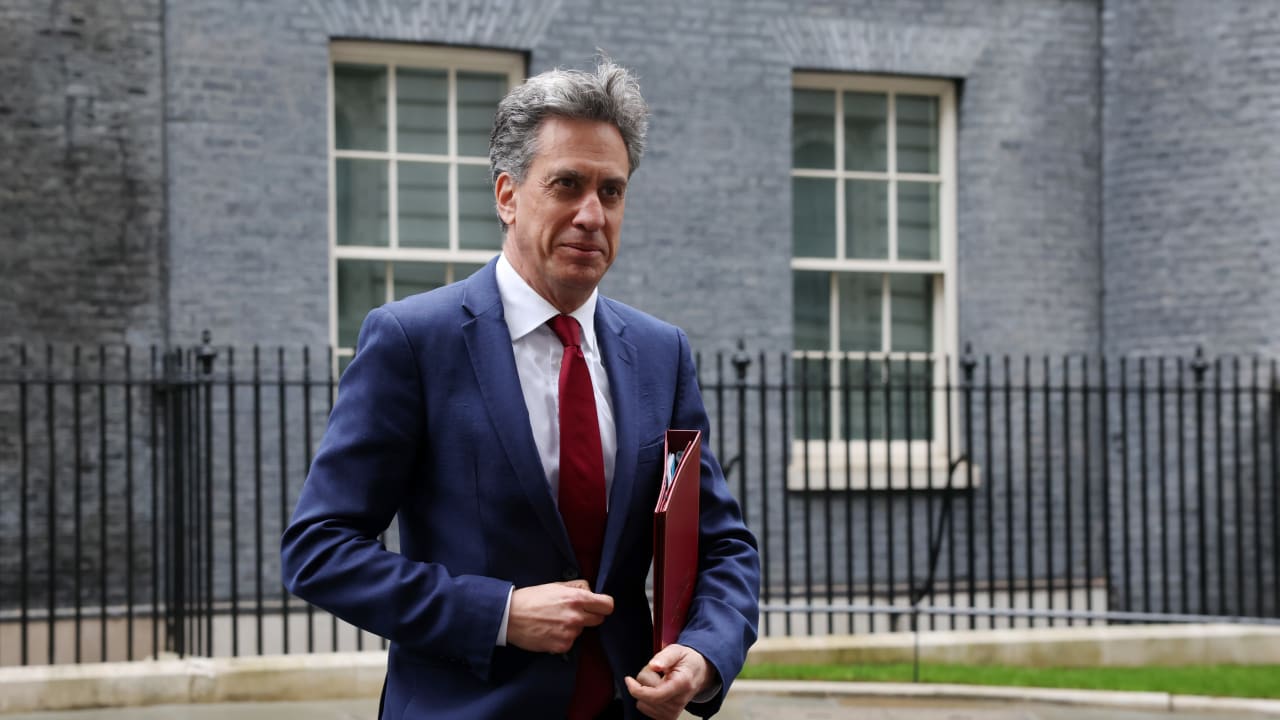
When British Foreign Secretary Ed Miliband announced new measures against Israeli settlements on September 8, he insisted that Britain was not trying to influence Israel’s election.
“I do not want to, in any sense, interfere in that election. The election is for the Israeli people to make their own decisions about their future. I have set out the policy of the British government, and I have made it clear that our quarrel is not with the Israeli people but with the policies of the Netanyahu government,” he told parliament.
Miliband’s answer was in response to concerns expressed by various MPs, including Shadow Foreign Secretary Tom Tugendhat, that the sanctions and their timing would help the campaigns of Israel’s far Right.
He acknowledged the concern but said that the international community could not wait for an Israeli opposition government to change course.

The timing raised an obvious question. With Israelis due to vote on October 27, could sanctions announced by foreign governments help weaken the prime minister they were criticizing, or would they instead reinforce Netanyahu’s argument that Israel was being singled out by a hostile international community?
The answer we see today is not straightforward. Exit polls showed Netanyahu’s bloc falling short of the 61 seats required for a parliamentary majority but with, nevertheless, more votes overall than the change bloc. Likud has far surpassed Eisenkot’s Yashar, which pre-election polls had suggested could perform much better.
Of course, neither outcome proves international pressure affected how Israelis voted.
But it does shine a light on a strategy that attempted to change Israeli policy through economic and diplomatic pressure.
The timing was not politically neutral
Britain’s September announcement was more than another expression of diplomatic disagreement. Its government announced measures targeting settlement expansion, including an import ban on settlement goods and restrictions targeting individuals and companies involved in settlement growth.
The British government maintains that these measures target settlement activity, not Israel within its internationally recognized borders.
Britain had already sanctioned National Security Minister Itamar Ben-Gvir and Finance Minister Bezalel Smotrich in June 2025, as did Australia, Canada, New Zealand, and Norway, citing their alleged incitement of violence against Palestinians in the West Bank. The September 2026 measures were therefore part of a more widespread deterioration in relations rather than an isolated attempt to intervene in an election campaign.
However, the proximity to election day made the political ramifications difficult to ignore. Miliband argued that the international community could not stand by as settlement expansion continued and that Netanyahu was making Israel “less secure.”
That distinction is notable: A government can legitimately seek to influence another country’s policies without explicitly seeking to change its leadership. But when it announces punitive measures just weeks before a significant election and publicly argues that the current leader’s policies are damaging the country’s security, the boundary between policy pressure and electoral pressure becomes more nebulous.
Were the warnings ignored?
A report by The Spectator, subsequently reported by Globes, alleged that British diplomats and intelligence officials had warned the UK government that announcing sanctions before the election risked affecting Israeli politics. According to the report, Israeli Foreign Minister Gideon Sa’ar had asked Miliband to delay the measures until after the vote, and some British officials reportedly agreed that waiting was a favorable option.
The concern was reportedly that the announcement could give Netanyahu an opportunity to present himself as defending Israel against foreign pressure, potentially strengthening rather than weakening his position.
And this is indeed the narrative that Likud members peddled in response. On September 8, Sa’ar responded by accusing the UK of “blatant interference in the affairs of a sovereign state and in its electoral process,” calling it a “completely unacceptable attempt by a foreign government to exert external influence in the midst of an election campaign.”
These allegations are worth taking seriously but do not constitute proof that the sanctions were designed to oust Netanyahu. There is a distinction between knowingly accepting a political risk and deliberately seeking a particular electoral outcome.
How might the pressure have played in Israel?
There were at least two plausible, and potentially concurrent, effects. For Netanyahu and his supporters, the measures could have reinforced an age-old argument that foreign governments are hostile to Israel regardless of its security concerns. Sanctions become evidence not of damaging government policy but of international actors attempting to dictate Israeli decisions. Netanyahu could present himself as defending national sovereignty against outside pressure.
His government could then present itself as the defender of national sovereignty against outside pressure.
For Netanyahu’s opponents, the same measures could reinforce the argument that it is his policies that have damaged Israel’s international standing and created consequences that a different government would have to rectify.
Diplomatic isolation may have been seen not as an external attack but as a cost of the current government’s approach to the Palestinians and to West Bank settlements.
Neither mechanism can be assumed to have determined votes. Israeli voters went into this election after years of war and profound security upheaval. The consequences of October 7, confidence in the government’s handling of national security, the future of military-service exemptions for haredi (ultra-Orthodox) men, and the cost of living all offered key incentives to support or reject the Netanyahu status quo.
The election’s high turnout and the weakness of his bloc in the exit polls cannot, on their own, establish which considerations mattered most to individual voters, or that sanctions shifted support between camps.
What, then, did the pressure achieve?
The British government said its measures were intended to restrict the economic activity supporting settlement expansion and preserve the possibility of a two-state solution. The success of those measures should ultimately be assessed against the objectives: whether the restrictions were implemented, whether they affected settlement activity, and whether they changed the calculations of those involved.
If the measures had little practical economic effect, their principal immediate consequences may have been diplomatic and symbolic. If they did impose meaningful costs, they may have influenced Israeli policy regardless of which government ultimately takes office. Neither outcome can be established simply by counting seats.
The broader question is: Can foreign governments apply pressure to Israel without strengthening the very political forces they hope to influence? The election has not supplied a definitive answer.
For now, the evidence supports a more muted conclusion: International pressure became part of Israel’s election debate, but the available electoral figures do not establish that it changed the result. Whether it altered Israeli voters’ calculations, or will ultimately alter Israeli government policy, remains a separate question.