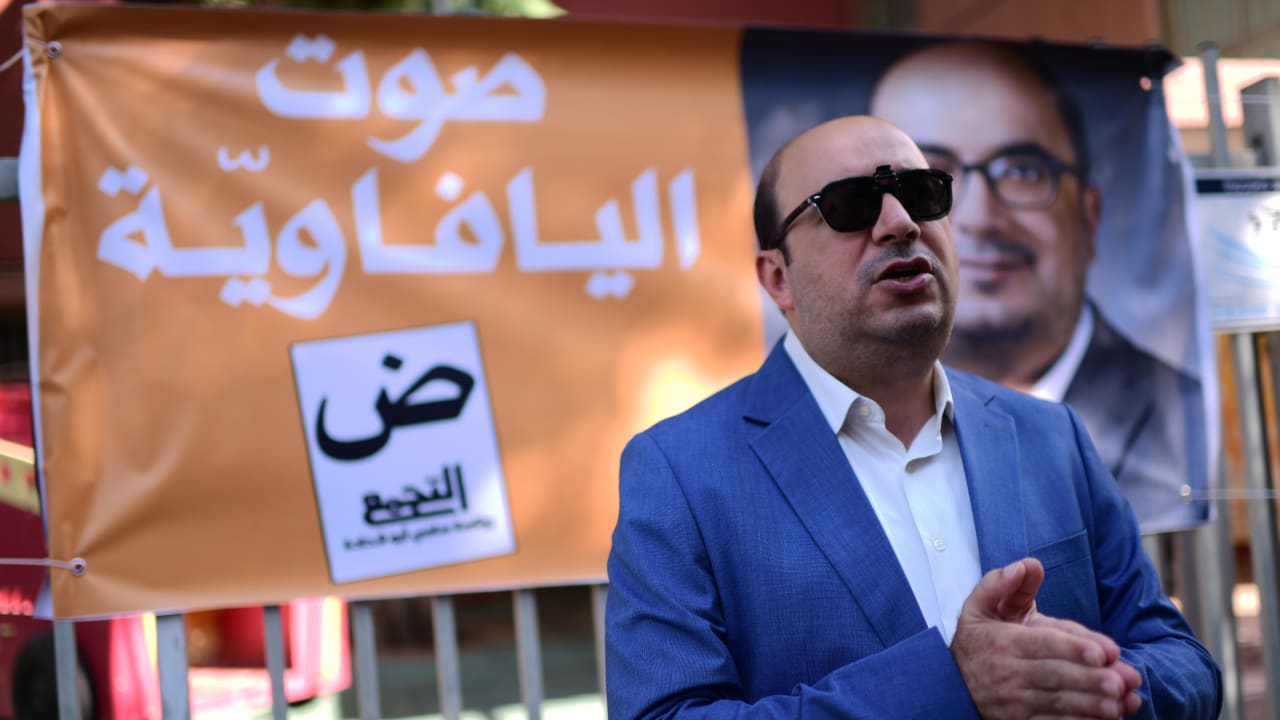
The Central Elections Committee voted 31-4 on Wednesday to bar Balad chairman Sami Abu Shehadeh from running in the October 27 election. It accepted an Otzma Yehudit petition alleging that he supported armed struggle against Israel by a terrorist organization.
The decision is not final. Under Basic Law: The Knesset, the disqualification of an individual candidate requires Supreme Court approval before taking effect. The court is set to hear election disqualification cases next week.
Abu Shehadeh, who is No. 3 on the Joint List slate, said he would challenge the decision, which he said it an attempt to silence Arab society’s political voice and exclude it from the political arena.
In an exceptional move, Deputy Supreme Court President Noam Sohlberg, the committee’s chairman, joined the vote in favor of disqualification, departing from a two-decade practice under which committee chairmen have abstained to preserve their neutrality.
Sohlberg: Disqualification must remain a last resort
Sohlberg said Abu Shehadeh had failed to provide a satisfactory explanation for the statements at the center of the case.
“If there is a case in which the application is clear, this is the case,” he said.

The last committee chairman to participate in such a vote was Supreme Court justice Mishael Cheshin in 2003.
Sohlberg’s vote followed a warning at the beginning of the proceedings that disqualification must remain a last resort, since it denies an entire constituency the ability to support its chosen candidate.
Section 7A of Basic Law: The Knesset allows a candidate or list to be barred for rejecting Israel as a Jewish and democratic state, inciting racism, or supporting armed struggle against Israel by an enemy state or terrorist organization.
The Supreme Court has interpreted those grounds narrowly. Disqualification requires clear, convincing, and unequivocal evidence that the prohibited position lies at the heart of a candidate’s political activity, generally demonstrated through a sustained pattern rather than an isolated statement.
The Otzma Yehudit petition centered on an Arabic-language article Abu Shehadeh published on October 8, 2023, one day after the Hamas massacre.
In the article, he described the attack as an “important historic event” in military, political, and strategic terms.
If “small and besieged Gaza” could surprise Israel on that scale, others could do so more effectively, Abu Shehadeh wrote.
Otzma Yehudit said the article had praised Hamas’s massacre and encouraged others to learn from it. National Security Minister Itamar Ben-Gvir, Otzma Yehudit’s chairman, told the committee Abu Shehadeh’s subsequent explanations were implausible given what was already known about the killings and abductions.
Attorney-General Gali Baharav-Miara’s position was unusually severe compared with her responses to the other disqualification requests.
In their written submission, she and State Attorney Amit Aisman said the evidence, particularly the October 8 article, apparently indicated that Abu Shehadeh had expressed support for a terrorist organization’s armed struggle against Israel.
They initially stopped short of expressly recommending disqualification, noting that previous cases had involved extensive, long-term evidence of systematic conduct.
During Wednesday’s hearing, however, the Attorney-General’s Office said Abu Shehadeh’s explanations had remained unsatisfactory, and that there was a basis for the request. His failure to condemn the attack in the article was not a neutral omission; it had.
Abu Shehadeh: 'I oppose armed struggle'
Participating remotely, Abu Shehadeh said he had written the article on October 7 before he understood the full scale of the atrocities. He acknowledged that it should not have been published in that form.
“I have never called for violence or terrorism,” he told the committee. “I oppose armed struggle.”
Abu Shehadeh said his description of the attack as historically important meant that events after October 7 would not resemble those before it. The article had analyzed Israel’s intelligence failure and called for an end to the military path in favor of a diplomatic process led by the Palestinian Authority and Arab states, he said.
Abu Shehadeh also condemned the Hamas massacre and cited other writings in which he opposed armed struggle and harm to civilians.
Adalah, which represents Abu Shehadeh, said the decision depended on a false portrayal of his political record. His three decades of public activity, together with repeated condemnations of harm to Jewish and Palestinian civilians, had demonstrated a commitment to nonviolent political action, it said.
Adalah Director-General Hassan Jabareen said the article had contained no direct call for violence, and that its central conclusion favored a political solution.
He accused the attorney-general of applying an expansive interpretation to a single Arabic-language article while finding that broader records cited in petitions against Otzma Yehudit and the Religious Zionist Party did not reach the evidentiary threshold for disqualification on grounds of racist incitement.
The disqualification attracted support from coalition and opposition representatives.
The Democrats chairman Yair Golan said genuine democratic partnership required “redlines,” adding that his party opposed the blanket exclusion of Arab parties and would also support barring Ben-Gvir.
The plenum of the Central Elections Committee is primarily a political body composed of representatives of factions in the outgoing Knesset. Its decisions have frequently been overturned by the High Court of Justice, including previous decisions barring Balad and its candidates.
The combination of Sohlberg’s vote and the attorney-general’s position distinguishes Abu Shehadeh’s case from the other challenges heard this week.
The High Court will decide whether the exceptionally grave timing and language of the October 8 article can satisfy a legal test that has generally required a broader and more sustained body of evidence.
On Wednesday, the committee also voted to disqualify Hadash MK Ofer Cassif.
It also considered requests involving Ra’am, the Joint List, and Balad. Challenges against Otzma Yehudit, the Religious Zionist Party-Zehut list, and The Democrats are scheduled for Thursday.