Syria is seeking to expand its international relationships as President Ahmed al-Sharaa’s government moves to consolidate its position almost two years after the fall of the Assad regime. A flurry of diplomatic meetings in Saudi Arabia, Europe, and Damascus this week shows how the new Syrian leadership is trying to reshape the country’s regional role while attracting investment and rebuilding state institutions.
Saudi Arabia has been a key supporter of the new Syrian government and has paved the way for friendlier ties between Syria and the US. Syria’s diplomatic activity also highlights a larger shift in its foreign policy. Under the Assad regime, Syria depended heavily on Iran and Russia while straining its relationships with many Arab and Western countries. Now, the new government is seeking a broader network of partnerships that can provide economic support, security cooperation, and international legitimacy.
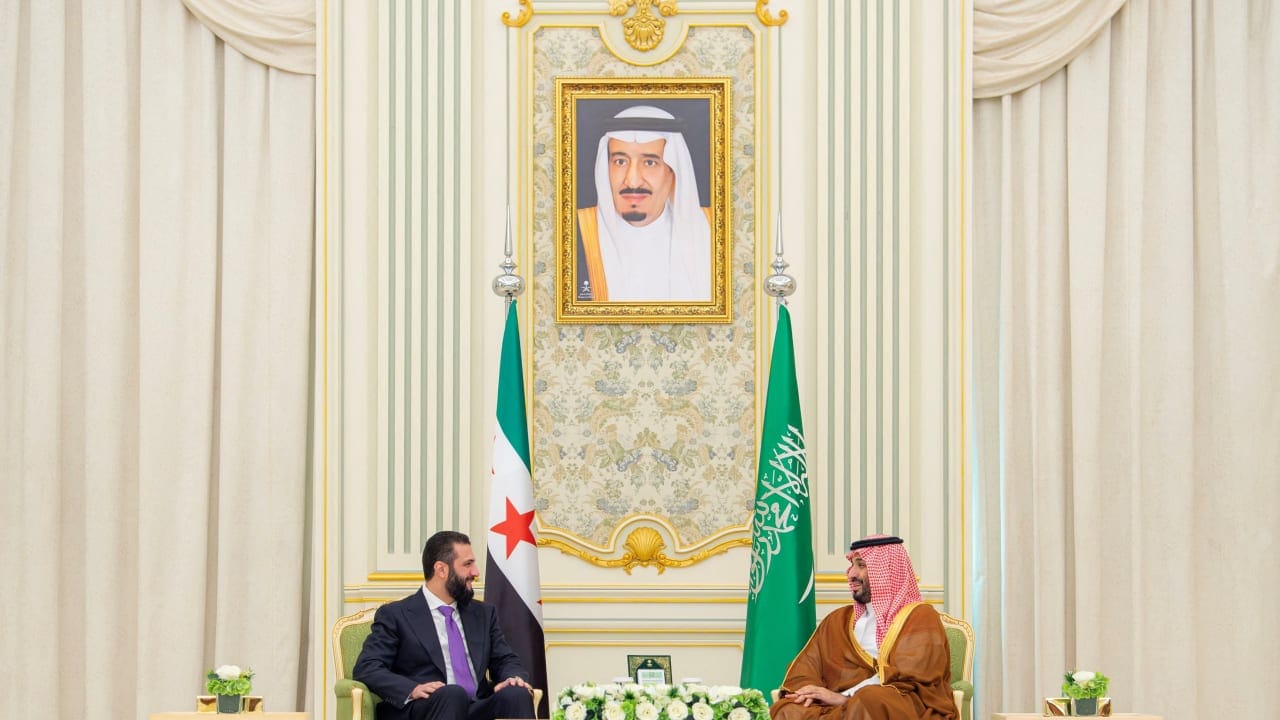
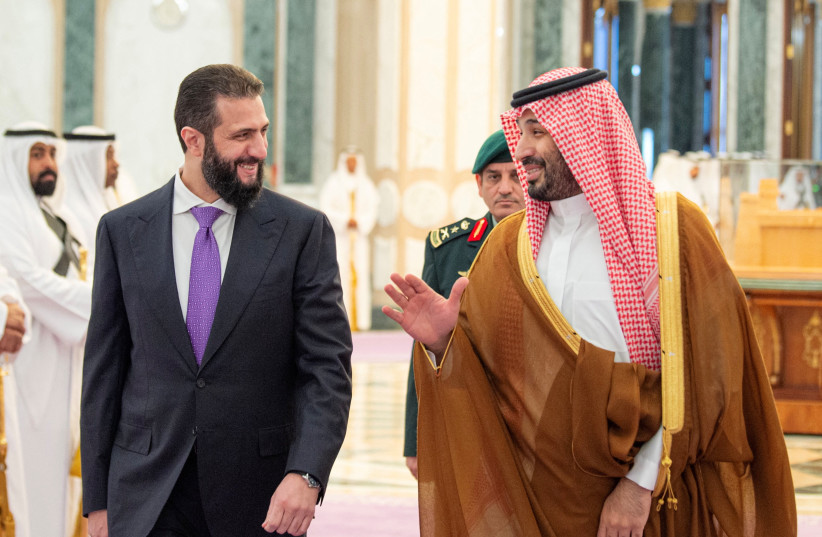
One of the most important developments came on Wednesday, when Sharaa traveled to Riyadh to meet Saudi Crown Prince Mohammed bin Salman.
According to the Syrian Arab News Agency (SANA), the two leaders discussed bilateral relations and regional security before overseeing the signing of agreements covering development, infrastructure, energy, housing, health, industry, agriculture, environmental protection, military cooperation, and financial services.
These subjects, however, are too vague. What matters is what was said privately and how the two countries are improving their ties. Riyadh is leading a new Mecca Pact with Pakistan and Turkey, and both countries are also friends of Damascus.
Riyadh’s growing role
Saudi Arabia has become an important partner for Syria since the Assad regime’s fall in December 2024. Riyadh was Sharaa’s first foreign destination as president in February 2025, and Saudi Arabia subsequently played a role in diplomatic efforts to ease sanctions and restore Syria’s access to international financial institutions.
In April 2025, Saudi Arabia and Qatar agreed to settle Syria’s approximately $15 million in arrears to the World Bank, enabling the institution to resume activities in the country.
Saudi involvement has since expanded. A Syrian-Saudi investment forum in July 2025 produced 47 agreements and memorandums of understanding valued at more than $6 billion, according to SANA. The latest agreements suggest cooperation is shifting from diplomatic commitments to specific reconstruction projects.
SANA reported on Thursday that Saudi development financing will support rehabilitation of the Aleppo power station, installation of 300,000 smart water meters in Damascus and Idlib, construction or rehabilitation of 25 Civil Defense centers, and repairs to hospitals and 10,000 damaged housing units. It remains to be seen if these will be effective, however.
These projects matter because Syria’s new government faces pressure to deliver real improvements to daily life. Syria must prioritize the rebuilding of electricity networks, water supplies, and public services. These are not only economic priorities, but they will also determine whether the government can gain the public’s confidence.
Saudi Arabia’s growing role also illustrates how regional powers are seeking to shape Syria’s future through investment and institutional cooperation.
While Syria’s leader met with Saudi officials, Syrian diplomats also presented Damascus’s changing priorities to European representatives. On Thursday, Qutaiba Kadish, director of international cooperation at Syria’s Foreign Ministry, addressed the European Union’s Mashreq/Maghreb Working Party in Brussels.
According to SANA, Kadish said Europe should be viewed as more than a source of financial assistance. He described it as a natural partner in building regional stability and supporting Syria’s recovery. Kadish argued that Damascus had changed its role since the Assad regime, particularly regarding drug trafficking, terrorism, and international security.
These issues matter to European countries concerned about regional instability, migration, and the risk of extremist groups exploiting weak state institutions. In addition, Syria says it is cracking down on drug smuggling.
However, Syria’s economic recovery also depends on rebuilding financial links with Europe. Kadish called for removing remaining obstacles to bank transfers, trade financing, and investment, arguing that practical banking restrictions continue to limit reconstruction. He also criticized Israeli military operations in southern Syria, calling on European governments to support Syria and pressure Israel to stop raids into Syria near the Golan.
Looking east: China and Pakistan
China is also receiving outreach from Syria. On Tuesday, Sharaa met representatives of Chinese companies and business organizations in Damascus. According to SANA, discussions focused on investment opportunities in industry, construction, and reconstruction. The meeting coincided with a Syrian-Chinese Economic Development Forum in Damascus.
China’s potential involvement matters because Syria needs substantial investment in infrastructure, manufacturing, and transportation. However, meetings with business delegations do not necessarily mean that major investments will materialize.
This may raise concern in Washington. Syria will still need to demonstrate that projects are financially viable and that investors can operate within a predictable legal and security environment.
Damascus is also exploring military relationships with Pakistan as well. On Tuesday, Syrian Defense Minister Murhaf Abu Qasra met Pakistan’s military attache to Syria and Iraq to discuss possible bilateral military cooperation, SANA reported. Although the announcement provided few details, it suggests that the Syrian government is seeking to diversify its defense relationships as it rebuilds its armed forces.
Turning diplomacy into results
Taken together, these developments illustrate a Syrian government attempting to reposition itself within the Middle East. Saudi Arabia is providing a route on the way to reconstruction, financing, and renewed Arab economic integration. Europe offers potential institutional cooperation, investment, and diplomatic engagement. China represents another possible source of infrastructure investment, while contacts with Pakistan point to efforts to broaden military relationships.
Damascus's central challenge is turning these diplomatic initiatives into concrete results. Syria continues to face internal security problems, destroyed cities, economic hardship, and tensions involving armed groups. Its ability to attract investment will depend partly on whether the government can establish stability and effective institutions.
The emerging foreign policy also represents a departure from the Assad era, when Syria’s relationships with Iran and Russia shaped much of its strategic orientation. Sharaa is seeking a more diversified set of partnerships. Whether this produces a real transformation will depend on the agreements signed and whether Syria can rebuild its economy and consolidate authority at home.