Earthquake alerts were activated in Eilat and other areas in the South after a 4.5-magnitude earthquake was registered Wednesday morning in the Red Sea and Gulf of Eilat.
Alerts were sounded in Eilat, Eilot, Be’er Ora, Elifaz, the Timna Mines, and the Shahoret Industrial Zone.
According to preliminary data from the Geological Survey of Israel, the earthquake’s epicenter was near Taba in southern Sinai, about 224 kilometers from Israel.
The earthquake was initially estimated at magnitude 4.4 and a depth of eight kilometers. The Energy and Infrastructure Ministry later revised it to 4.5, citing the Geological Survey of Israel.
No casualties were reported.
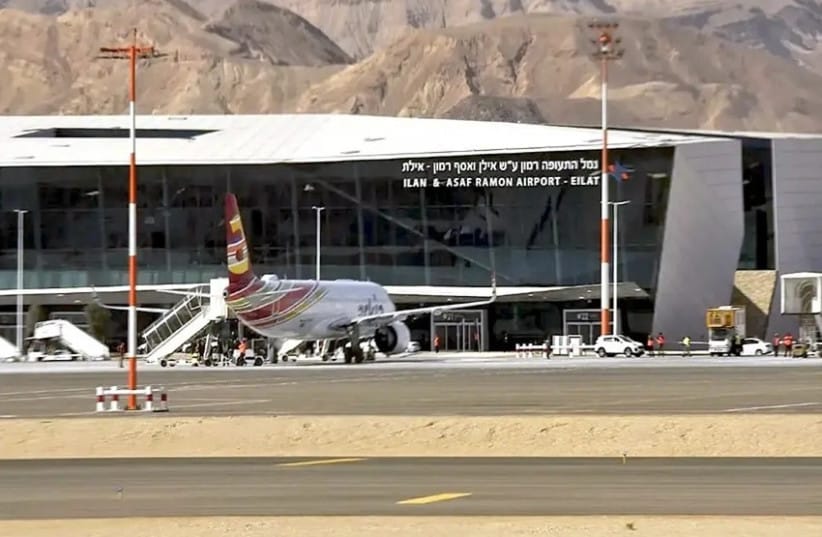
Ramon Airport was evacuated after receiving the alert but later resumed operation. Broken glass was found at the airport, N12 news site reported.
“Security just announced that everything is fine,” Club Hotel Eilat employee Olga told Maariv. “Everyone went into the safe room. Personally, I didn’t feel anything. Nothing moved. I’m on the ground floor.”
Dan Eilat Hotel employee Chava said she “personally didn’t feel anything. We heard a Red Alert siren. Everyone is fine. We’re at the hotel.”
The last deadly earthquake in Israel occurred in 1927. At that time, an estimated 300 people were killed, and thousands were injured. The earthquake took place along the Syrian-African Rift.
Home Front Command announces national plan to strengthen earthquake readiness
According to research studies, a powerful earthquake can occur in this region about every 100 years.
In response to the earthquake, and others in recent years, Home Front Command said it would advance a national plan to strengthen the home front’s readiness for a major earthquake. It said 2027 would be the “Year of Earthquake Preparedness.”
Home Front Command said it would hold a series of training sessions and exercises throughout the year that will culminate in a major national-level drill.
It said preparations would focus on three key pillars: strengthening local authorities’ readiness through reference scenarios, training, and drills; building Home Front Command’s operational capacity and enhancing search-and-rescue capabilities; and bolstering the IDF’s preparedness to address the consequences of a significant earthquake.
Rami Shani, Avi Ashkenazi, and Yuval Bagno contributed to this report.
The Environment and Climate Change portal is produced in cooperation with the Goldman Sonnenfeldt School of Sustainability and Climate Change at Ben-Gurion University of the Negev. The Jerusalem Post maintains all editorial decisions related to the content.