
While mango growers are anticipating a poor harvest season, Israel’s avocado industry is preparing for a record-breaking peak season. A combination of ideal weather conditions and massive expansion of avocado plantations in recent years is expected to bring a record-breaking increase in yields, resulting in large quantities reaching the market and driving down prices of one of Israel’s favorite fruits.
“If in a good year we usually talk about a national harvest of around 240,000 tons, this year forecasts are pointing to approximately 300,000 tons or even more. These are figures we have never seen before. The trees have never been healthier,” says Shahar Goldberg, avocado manager for Kibbutz Afek and Kibbutz Yasur and chairman of the Avocado Desk at the Plant Production and Marketing Board.
For comparison, last season’s harvest stood at just under 250,000 tons.
According to industry experts, the dramatic increase is primarily the result of the favorable spring weather conditions Israel experienced this year. While May typically brings severe heat waves that damage avocado trees, this year there were no such extreme heat events, and the summer has been relatively mild. The favorable weather conditions led to exceptionally high fruit set and produced high-quality avocados with minimal external defects.
The contrast is particularly striking compared with the conditions experienced by mango trees. Late rains and high humidity negatively affected their flowering process, causing this year’s mango harvest to plunge by around 70%.
“The mango industry is having an extremely difficult year because of severe crop shortages, but avocados are experiencing the exact opposite situation,” explains Uri Kaplan from More-Briut, the company behind the “Ripe Avocado” brand.
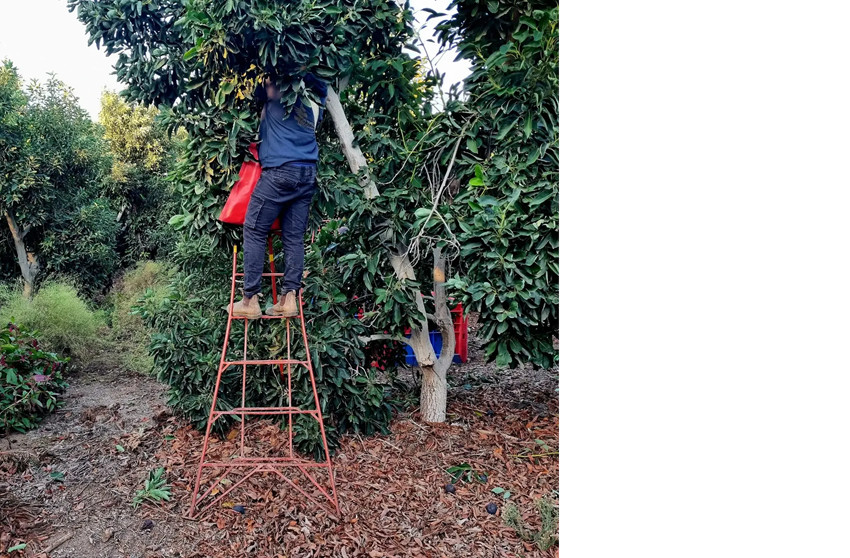
Another major factor behind the abundance is the massive expansion of avocado-growing areas in recent years. Israel currently has approximately 160,000 acres of avocado plantations, with an additional 8,000 to 10,000 acres planted every year. In recent years, most of the expansion has shifted to southern Israel, while traditional growing regions in the Western Galilee and Jordan Valley have reached their land capacity. These younger orchards have now matured and are producing enormous quantities of fruit.
For Israeli consumers, this is particularly welcome news. In previous years, during this summer period between growing seasons, avocado prices soared to as much as NIS 40 per kilogram in supermarket chains, while shelves were often nearly empty. This year, however, the situation is completely different. Although the first fruits of the new season, mainly the “Galil” variety, will only begin being harvested around mid-August and throughout September, market prices are already significantly lower than in previous years.
“This is the cheapest summer I can remember since I entered the industry,” says Kaplan. “Market stalls and leading supermarket chains are full of high-quality avocados that were preserved exceptionally well in cold storage from last season. Chains that previously sold avocados for NIS 30–40 per kilogram are now selling them for only NIS 15–16. The quality is significantly better compared with previous years.”
Goldberg estimates that at the peak of the current season, prices in the domestic market will be affordable for consumers and will range between NIS 8 and NIS 10 per kilogram. Kaplan, however, believes prices could drop even further - to around NIS 5 per kilogram.
Israelis, who are considered passionate avocado consumers and rank second worldwide in per-capita consumption (12 kilograms per year, just behind Mexico), are expected to enjoy an exceptional year of abundance. The industry also invests approximately NIS 2 million annually in television and social media advertising campaigns designed to encourage domestic consumption.
However, the Israeli market can absorb only around 20%–30% of total production, meaning the rest must be exported. The European market, which receives approximately 85% of Israeli avocado exports, is becoming increasingly crowded and competitive, with most of the remaining exports going to Russia. European markets are also targeted by producers from Central America, as well as emerging competitors such as Kenya, Spain, and Morocco.
Avocado growers, like other farmers in Israel’s north and south, have endured nearly three difficult years. They continued working daily in open fields, including areas where air defense systems do not provide full protection, while carrying out agricultural work under constant security risks. Now, they can finally return their full attention to farming.
Meanwhile, major packing houses are preparing for an unprecedented logistical operation and will operate in two shifts for the first time in order to handle the record harvest volumes.