Since October 7, 2023, questions about Zionism have become supercharged, particularly for many younger American Jews. Israel’s recent election has renewed attention on the country’s political future. A reprise of the current right-wing, extremist government could do irreparable damage to the Jewish, Zionist and democratic Israel we strive for.
But setting the question of leadership aside, deeper questions remain: What kind of Jewish state should Israel be, and how should Jews in Israel and around the world help shape its future?
And within the Reform movement, there is another pressing question: Should anti-Zionists, and by that I mean those who do not believe in the right of the Jewish people to a Jewish state in the Land of Israel, be ordained as Reform rabbis?
The Reform movement has grappled with the idea and reality of a Jewish homeland for nearly a century, including in my own family. My grandfather cast a critical vote that guided the movement toward supporting a Jewish homeland. I live in the capital of that nation, and I have counseled rabbinical and cantorial students seeking to bring Israel and the Diaspora closer together.
In 1937, Reform rabbis gathered in Columbus, Ohio, to debate a new platform. Decades had passed since the 1885 Pittsburgh Platform, which famously declared that its drafters did not support a “return to Palestine.”
Much had changed, most specifically increased safety concerns for the millions of Jews living in Europe. The rabbis of the Reform movement had moved away from the earlier platform’s grand universalist vision to a more particularistic approach, embracing more rituals and recognizing the need for a Jewish homeland.
Magnes's hopes for binational Arab-Jewish state
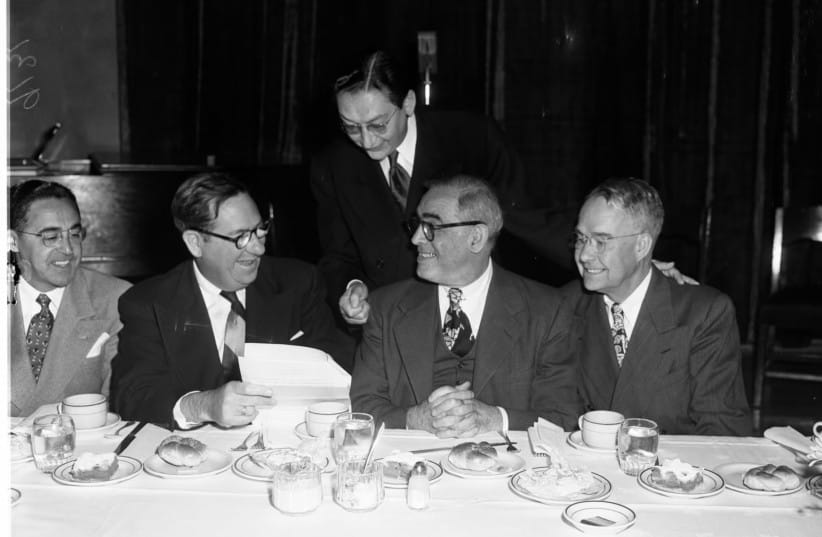
The vote to advance the Columbus Platform was tied, leaving my grandfather, Rabbi Felix Levy, president of the Central Conference of American Rabbis (CCAR), to cast the deciding vote.
He voted for the new platform, which reversed the anti-Zionist stance of the 1885 platform, and launched a new phase of Reform convictions, while tensions between the “universalists” and “particularists” remained.
Rabbi Levy was convinced to vote for the new platform after traveling to Palestine for the opening of Hebrew University in 1925 and meeting his colleague and friend, Rabbi Judah Magnes, the university's first chancellor.
Magnes was an advocate for a binational state in Palestine, where Jewish and Arab communities would share political power equally, but his wasn’t a universal view. Mainstream Zionist leaders sought a sovereign Jewish state.
The establishment of the sovereign State of Israel triumphed. My grandfather could never have imagined that two of his grandchildren would become American-born pioneering rabbis of Reform Judaism in the Israel that exists today.
Today’s impassioned conversation about anti-Zionism, non-Zionism and Zionism in North America is a bit baffling for those of us who actually live in her. Am I a Zionist? Classical Zionism once rejected the Diaspora’s legitimacy. I do not. On the contrary, we need a thriving Diaspora interacting with Israel for a robust Jewish people. But a huge gap remains between the populations. Both sides are ignorant and misinformed about the other.
And the real question we must ask ourselves is: yes, Israel is a reality, but is it the Israel it needs to be?
Today’s “Zionism” is no longer about supporting or rejecting the idea of a Jewish state. For Israeli and American Jews, it should be a commitment to improving our collective national identity, where Israeli Jews are soon to be the majority of all Jews. Elections change governments and leaders, but our responsibility to shape what Israel should become transcends any one prime minister or governing coalition.
The Diaspora and Israel's effect on it
For decades, Israelis viewed the Diaspora as a story of antisemitism and assimilation. For the Diaspora, Israel was both the miracle of a desert blooming and an ongoing conflict that has yet to be resolved.
More recently, Israelis are much more exposed to the diversity of Jewish life in the Diaspora, the successes and failures of Jews around the world, political polarization, and the fact that what goes on in Israel has an impact on the lives of Jews everywhere.
American Jews, particularly liberal Zionists, are deeply dismayed and very concerned with Israel’s conduct in the war in Gaza, the attacks on Palestinians in the West Bank by extremist settlers, and the ongoing rejection of religious pluralism, rendering liberal Judaism unwelcome. So am I. And we can admit that if a right-wing extremist government is established, it will certainly be more challenging for all of us who believe in the possibility of peace and religious pluralism to engage meaningfully with the government.
That is the context in which the Reform movement is debating the question of admitting anti-Zionists. The question before us now is how we instill a love of Israel while accepting the questions and critiques that our students have about its government and its policies.
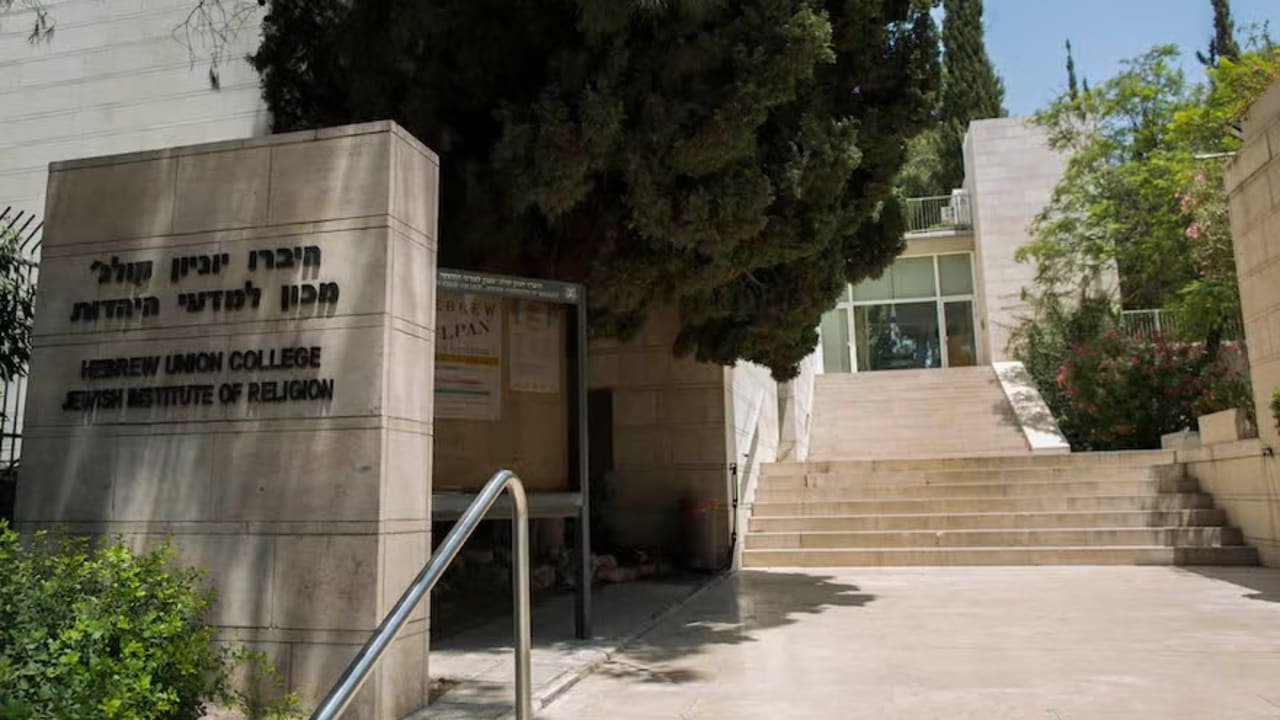
Hebrew Union College requires that first-year students come to Israel for their first academic year. In Israel, they are exposed to the complex realities of the Jewish state while learning modern Hebrew and foundational Jewish studies. Any student who participates in this program is at least willing to engage with Israel.
When I served as director of the program and dean, students would share with me how significant their Israeli studies were for them. Some would complain that we are too liberal; others, that we are too conservative. That is how I know we are doing our job.
Will all our students become staunch advocates of Israel’s right to exist? I certainly hope so. Will most choose to live a rich Jewish life in the Diaspora that includes ongoing engagement with the Jewish people and Israel? I believe so. Will there be some who are staunch advocates of Diasporism and consider themselves opposed to Jewish statehood?
Yes, there may be a few of those too, but I suspect that allowing them to take part in the HUC’s Year-In-Israel program offers a chance to change minds and hearts. On balance, we gain far more by trusting our students to encounter the place directly and reach their own conclusions than we would by insulating them from both it and the diverse opinions about its existence.
The most important engagement of this year in Israel is their exposure to the growing Israeli Reform movement. They meet their Israeli counterparts on campus. They visit our synagogues and recognize the shared ideals and values. This is the best new form of Zionism in the making.
Entering the Year-In-Israel program is indeed the gateway to the Reform rabbinate and cantorate. All those willing to be here to learn and listen are welcome. Those who declare no interest, or worse, little regard for the experience of Jewish collectivity in the State of Israel will find neither comfort nor fit in our program.
Since October 7, our entering Year In-Israel students are, if anything, more self-selected and well aware of the situation. They are willing to experience many challenges and grapple with them.
Israelis cast their ballots, but governments and leaders will continue to come and go. Our students face a choice that endures beyond any election, whether to engage with Israel in all its complexity and remain part of the conversation about its future. The year in Israel offers our students a chance to learn, to look, to listen, and, hopefully, to return home and fight for a Jewish democratic future shared by Jews in the diaspora and in Israel.
The views and opinions expressed in this article are those of the author and do not necessarily reflect the views of JTA or its parent company, 70 Faces Media.