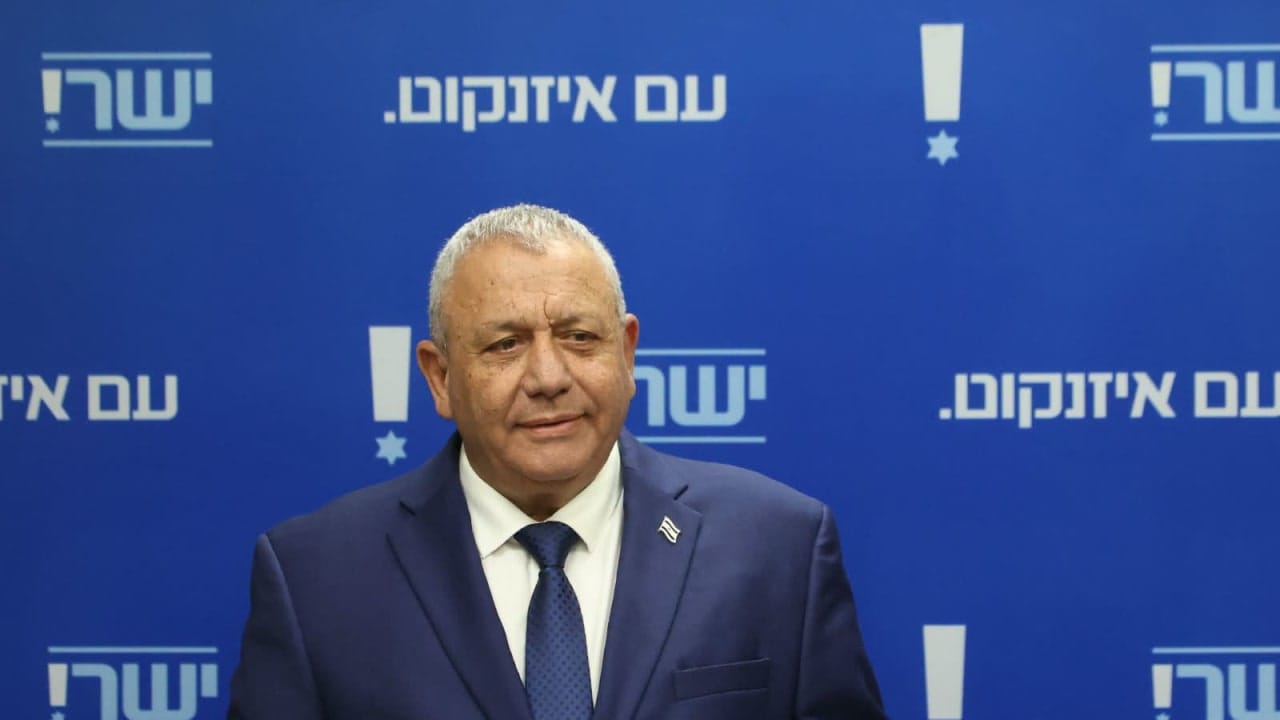
One of the first things Gadi Eisenkot should do if he becomes Israel's next prime minister is stand before the Israeli people, the Palestinian people, and the international community and make a simple, unequivocal declaration:
"If the Palestinian people elect leaders who genuinely want to live in peace with Israel, who recognize our right to live here in security and freedom, and who are prepared to build their state alongside ours, they will find a genuine partner for peace in the State of Israel and in my government."
Those words could begin to change the way the world sees Israel. But words alone will not be enough. They must be followed by actions demonstrating a fundamental change in Israel's direction.
Israel's international standing has suffered enormous damage. In the United States, Europe, and much of the world, Israel is increasingly associated not only with the trauma of October 7 and its legitimate security concerns but also with the destruction and suffering in Gaza, settlement expansion, settler violence, and the abandonment of serious efforts to resolve the Israeli-Palestinian conflict.
Rebuilding international confidence cannot be accomplished by replacing Prime Minister Benjamin Netanyahu with a more respectable face, appointing better spokespersons, or launching another public diplomacy campaign.
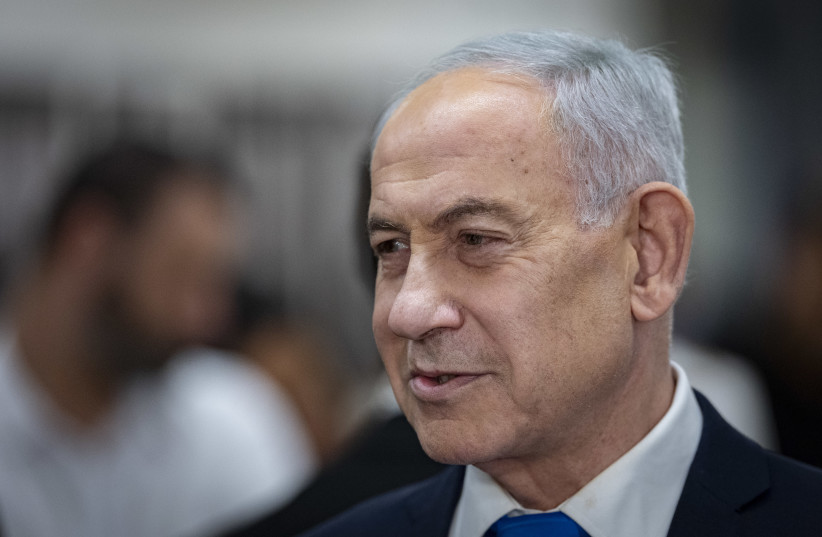
Israel does not need better explanations for bad policies. It needs better policies.
The formation of a new government offers an extraordinary opportunity for change. But if it continues the policies of its predecessor with different ministers and more moderate rhetoric, that opportunity will be lost.
The first priority must be restoring a credible Israeli commitment to peace.
For too long, Israeli leaders have insisted there is no Palestinian partner. That assertion has become a self-fulfilling prophecy. Israeli policies have weakened Palestinian moderates, undermined the Palestinian Authority, and strengthened those who argue that diplomacy is futile. A new government must reverse that logic.
Palestinians have not elected a president since 2005 or a Legislative Council since 2006. An entire generation has grown up without choosing its national leadership. The absence of democratic renewal has contributed to corruption, political stagnation, declining legitimacy, and despair. Israel should not choose Palestinian leaders. That right belongs exclusively to Palestinians. But Israel should welcome genuinely free and fair presidential and legislative elections and actively facilitate them.
Those elections must include the West Bank, east Jerusalem, and Gaza. Israel should guarantee freedom of movement for candidates, election officials, observers, and voters, permit political campaigning, and facilitate international monitoring.
President Mahmoud Abbas has postponed elections until September 2027. Israel should join the United States, European Union, and Arab states in supporting the earliest feasible elections, rather than using political divisions or security concerns to justify further delays.
The world should hear a new message from Jerusalem: We do not fear Palestinian democracy. We welcome it. We are prepared to work with legitimately elected Palestinian leaders committed to peaceful coexistence, mutual recognition, and rejecting terrorism.
The second priority must be Gaza. President Donald Trump's 20-point plan, endorsed by the UN Security Council, offers a framework for establishing Palestinian governance, demilitarizing Gaza, rebuilding the territory, and creating a political horizon.
The next Israeli government should commit to implementing the entire plan, not selectively or only those provisions concerning Israeli security. This means enabling the Palestinian technocratic administration to govern, cooperating with the Board of Peace and an international stabilization force, establishing a new Palestinian police force, disarming Hamas and other armed factions through an internationally supervised process, and implementing the agreed stages of Israeli military withdrawal.
It means opening crossings for humanitarian assistance, reconstruction materials, medical supplies, and commercial goods. It means restoring water, electricity, sanitation, hospitals, schools, and housing. Above all, it means recognizing that Gaza's future belongs to Palestinians, not Israel, Hamas, or an indefinite international administration.
Implementation must lead toward reunifying Gaza and the West Bank under legitimate Palestinian institutions, with a credible pathway toward Palestinian self-determination. Security without political purpose will merely reproduce the conditions for another war.
The third priority must be the West Bank, where Israel can demonstrate a change of direction almost immediately. Jewish terrorism against Palestinians must end, not through declarations but through determined enforcement of the law.
The police, Shin Bet (Israel Security Agency), military, and State Attorney's Office must investigate, arrest, and prosecute those responsible for attacks on Palestinian civilians, burning homes and agricultural land, destroying property, and terrorizing communities. There must be no political protection for violent settlers, selective enforcement, or tolerance for security personnel who stand aside while crimes are committed.
The government must immediately stop new unauthorized settlement outposts, dismantle existing illegal outposts, and end state support for them. Unlawfully seized land must be returned, and Palestinians displaced by violence must be allowed to return safely. A genuine change also requires freezing settlement expansion and rejecting measures intended to make territorial compromise impossible.
These changes are essential to restoring Israel's relationships with the US and Europe. American support has been among Israel's greatest strategic assets. But Israel cannot assume it will remain unconditional or depend indefinitely on one political party, ideological camp, or generation of voters. Israel must rebuild relations with Democrats and Republicans, younger Americans, and American Jews increasingly alienated by Israeli policies.
International confidence also requires restoring Israel's own democratic institutions: protecting judicial independence, reinforcing the rule of law, ensuring accountability for October 7, and guaranteeing equal treatment for Jewish and Arab citizens. Arab citizens must be full partners in determining Israel's future, not merely a parliamentary arithmetic problem. A government that includes Arab political representatives as legitimate partners would send an important message about Israeli democracy.
Finally, Israel must embrace the extraordinary regional opportunity emerging around it. Saudi Arabia, the UAE, Egypt, Jordan, and other regional partners can help create a Middle East of economic cooperation, regional security, investment, and development.
Trump's ambition to expand the Abraham Accords could become a historic achievement. But a sustainable Saudi-Israeli agreement cannot bypass the Palestinians. It requires a credible political horizon for Palestinian statehood.
Israel should become an enthusiastic partner in an American-led initiative linking normalization, Palestinian self-determination, security cooperation, Gaza reconstruction, and major projects such as the India-Middle East-Europe Economic Corridor.
None of this requires Israel to be naive. Hamas and other armed organizations must not be permitted to threaten Israeli civilians. Israel must defend itself, deter its enemies, and protect its borders. But military superiority is not a national destination. It is a means of protecting the country while its leaders build a future worth defending.
Israelis have endured years of trauma, fear, war, political division, and declining confidence in their institutions. They deserve more than a government promising to manage the next emergency better. They deserve leadership offering a different future.
The new government must prove it means what it says in Gaza, the West Bank, and east Jerusalem, and in its treatment of Arab citizens and its diplomacy with the region and the world. Israel was established with the aspiration to be a secure homeland for the Jewish people, living in peace with its neighbors. That aspiration must once again guide Israeli policy.
Israel's image will recover not simply when the world sees a new government but when it sees a country with its hand genuinely outstretched for peace. And the time to extend that hand is now.
The writer is the Middle East director of the International Communities Organization and the co-head of the Alliance for Two States.