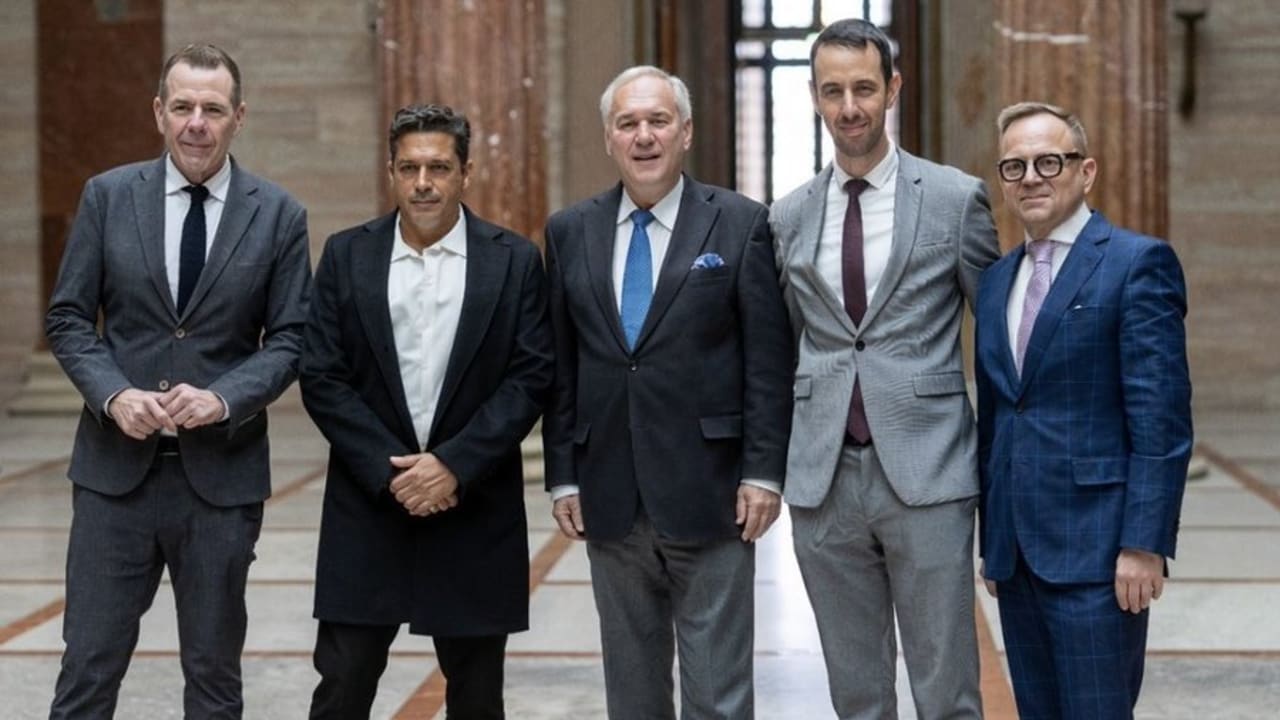
As Austria marked the anniversary of Kristallnacht, Diaspora Affairs Minister Amichai Chikli met senior representatives of Austria’s Freedom Party (FPÖ) at the Austrian Parliament, including Walter Rosenkranz, president of the National Council, and Harald Vilimsky, an FPÖ member of the European Parliament.
The timing matters. The FPÖ was founded in 1956 by former Nazis. For decades, Israel kept its distance. Yet here was an Israeli minister meeting its leaders as Austria remembered the November 1938 Nazi pogrom.
Chikli also attended a Kristallnacht ceremony in Graz alongside an FPÖ representative.
The political timing raises another concern. Chikli serves in an outgoing government whose coalition lost its majority in Israel’s October election. A decades-old policy is being reconsidered before a new government takes office.
Was the meeting a mistake? That is not an easy question to answer.
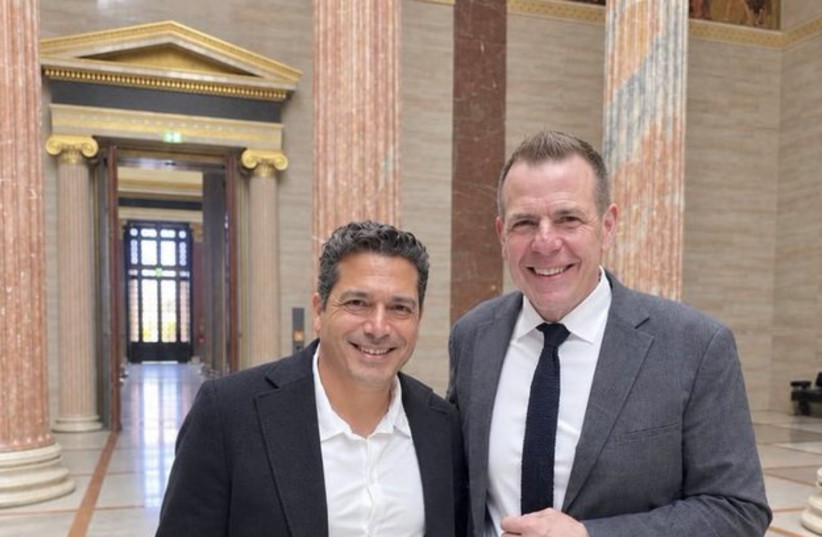
The FPÖ could lead a future Austrian government. The Patriots for Europe group, which includes the FPÖ, carries weight in the European Parliament. Israel cannot ignore these realities.
But talking to someone is not the same as embracing them. Who decides when officials cross that line? Israel needs clear standards for weighing diplomatic interests alongside the concerns of local Jewish communities.
In September, FPÖ leader Herbert Kickl addressed a gathering in Strasbourg attended by Likud representatives.
He condemned the October 7 massacre, acknowledged Austria’s responsibility for the Holocaust, endorsed the International Holocaust Remembrance Alliance’s working definition of antisemitism, and promised to move Austria’s embassy to Jerusalem if he became chancellor.
Foreign Minister Gideon Sa’ar welcomed the speech as an opening for dialogue. Chikli went further, describing Likud’s “partnership” with the Freedom Party. The visit was reportedly coordinated with Sa’ar.
That is quite a leap in language, from boycott to partnership. Political movements deserve the chance to confront their past. But trust requires time and evidence of change.
In June, Austria’s interior minister, Gerhard Karner of the Center-Right People’s Party, accused the FPÖ leadership of no longer distancing itself from the far-right Identitarian movement.
During Chikli’s visit, Vilimsky argued that antisemitism today is “almost entirely imported or left-wing.”
A party with the FPÖ’s history cannot simply blame antisemitism on immigrants and political opponents. Nor should concern for Jewish safety be used to stir hostility toward Muslims.
In 2018, FPÖ official Gottfried Waldhäusl proposed tighter controls over ritual slaughter and the distribution of kosher and halal meat. He emphasized that most purchasers were Muslims. Yet the proposals raised the possibility of registering Jewish purchasers by name.
Oskar Deutsch, president of Vienna’s Jewish community, compared the idea to “a negative Aryan clause.” Lower Austria’s governor subsequently ruled out registering individual buyers. The episode shows how measures aimed at one minority can endanger another.
What do Austrian Jews make of Israel’s rapprochement with the FPÖ?
Elie Rosen, who leads the Jewish community in Styria, Salzburg, and Carinthia, invited Chikli to Graz and accompanied him. Deutsch, who represents Vienna’s larger community, took a different position.
“With the FPÖ there is no basis for dialogue,” Deutsch said. “The reasons lie not only in this party’s history, but in its present.”
Rosen acknowledged that Deutsch’s position deserved respect but said it was not shared by all Jews. Both men have devoted themselves to Jewish life in Austria, yet their judgments about the FPÖ differ sharply.
Israel need not resolve that disagreement. But both positions deserve a serious hearing before it changes its policy.
In a 2021 study, Dani Filc and I examined how Europe’s populist Right gained legitimacy through Israeli connections, while Israeli politicians gained diplomatic allies. The benefits were real, but so was the temptation to overlook troubling behavior.
Those relationships have deepened. In February 2025, Likud joined the Patriots.eu alliance as a partner party. The FPÖ plays a prominent role in that alliance.
There may also be diplomatic costs. Israel needs good relations with European Union institutions shaping policy on trade, research, and security. Embracing one controversial party may damage relationships with others.
This is why I believe the next Israeli government needs clear guidelines for dealing with Europe’s radical political parties. Such decisions are too important to be left to the preferences of individual ministers or the excitement surrounding a diplomatic visit.
The guidelines need not be complicated. They should take account of a party’s history, but also its present conduct, its commitment to democracy, and its treatment of Jews and other minorities.
Support for Israel matters, of course, but it cannot be the only consideration. The same standards should apply to parties on the radical Left. And there must be room for different levels of engagement. A diplomatic conversation is not the same as a political partnership.
Above all, Israel should listen to the Jewish communities that live in these countries. Their interests and Israel’s often overlap, but not always.
They should not have a veto over Israeli foreign policy, nor should we expect them to speak with one voice. But their concerns deserve to be heard before decisions are made, not after ministers have returned home.
The Foreign Ministry developed internal guidelines concerning Europe’s radical Right in 2015. The next government should revisit that work and agree on a clear, consistent policy that applies across the political spectrum.
It should also consider the wider diplomatic consequences of embracing controversial parties. What matters is that ministers know where the boundaries lie and that those boundaries do not change with every political visit.
Israel should build lasting relationships across Europe, including with parties that have genuinely changed. But as the state of the Jewish people, Israel must also consider how its decisions affect communities beyond its borders.
Israel needs friends in Europe. But it should also be careful about whom it embraces.
Israeli ministers can shake hands, pose for photographs, and fly home. The Jewish communities in those countries remain. They will live with the consequences of Israel’s choices long after the visit is over.
The writer is a senior fellow at the Jewish People Policy Institute (JPPI) and a professor of European studies and international relations in the Department of Politics and Government at Ben-Gurion University of the Negev.