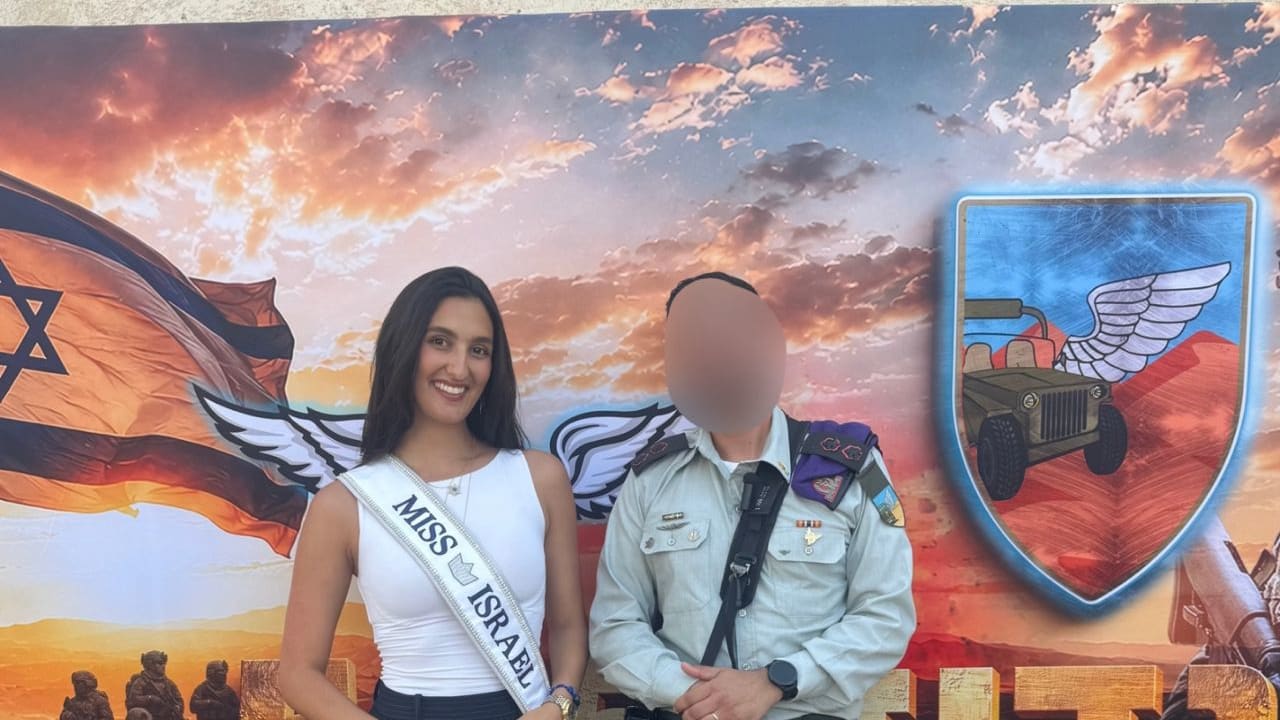
For years, the world has been told a very simple story about Arabs and Israel. Arabs on one side. Israelis on the other. It is always pinned as conflict, division, or suspicion. But recently, I stood in a space that told a very different story.
I was attending the anniversary of IDF Unit 585, the Desert Reconnaissance Battalion, a unit made up predominantly of Bedouin soldiers, alongside other Arab and minority service members. The battalion was established in the late 1980s and has long operated in Israel’s south, particularly around the Gaza border. For many of its Arab soldiers, service is voluntary rather than mandatory.
This unit is made up largely of Arab soldiers, including but not limited to members of Israel’s Bedouin and Druze communities. And as I looked around the event, I realized how few people outside of Israel even know this unit exists, because I myself didn't know it existed.
That matters. Because when the world talks about Israel, it often speaks in absolutes. Israelis and Arabs are presented as two groups who could never share a uniform, a mission, or a sense of responsibility for the same country. Then you meet the soldiers of Unit 585.
At the anniversary, I spoke with veterans who had served in the unit decades ago. Their names cannot be published, but their pride was impossible to miss.
“We are soldiers from Unit 585,” one group of veterans told me. “We enlisted in 1979, and today we came to honor and celebrate 40 years.”
There was something striking about hearing that sentence while standing beside Arab soldiers serving in the battalion today. Different generations. The same unit. Men who had enlisted decades earlier had returned to stand alongside young Arab soldiers currently serving in Israel’s military, including soldiers who have operated in the Gaza border region and across southern Israel.
One current soldier described the moment simply: “Today we are marking 40 years since the battalion was established. Some of our veterans, together with the soldiers serving today, are here with us.” It was a place full of people whose lives complicate the version of Israel most of the world has been taught.
Why the story of Unit 585 matters
And that is exactly why I believe their story matters. Most people outside of Israel will never meet an Arab Israeli soldier. Many do not even realize that Arab citizens serve in the Israeli military at all. The idea does not fit neatly into the categories they have been given. But reality rarely fits neatly into categories.
Israel is home to Jews, Muslims, Christians, Druze, Bedouins, and people from countless backgrounds. Their experiences are not identical. Their politics are not identical. Their relationship with the country is not identical. That complexity is not a weakness. It is the story.
Unit 585 represents one part of that story that deserves far more attention. Service in this unit is a choice. These soldiers made the decision to put on an Israeli uniform, train as combat soldiers, and serve alongside people from communities different from their own.
For some, military service can also mean learning Hebrew fluently, gaining skills, building relationships, and creating opportunities for the future. But beyond any individual benefit, something bigger is happening.
People whom the outside world is constantly told should see one another only as enemies are serving beside one another. They train together. They depend on one another. They protect the same communities. They become friends.

That does not erase every disagreement in Israeli society. It does not mean discrimination does not exist, or that every Arab citizen feels the same way about the state. It should not. Real societies are complicated. But acknowledging complexity is very different from pretending these stories do not exist.
I have spent years speaking about Israel, and one of the hardest things about advocacy is watching an entire country reduced to a headline. Israel is discussed constantly, but Israelis themselves are often absent from the conversation.
Arab Israelis are discussed constantly, too. Yet how often are Arab Israelis actually allowed to speak for themselves? How often does the world meet the Bedouin soldier who volunteered to serve? How often does it hear from the veteran who enlisted decades ago and still returns to celebrate the unit he helped build? How often do people encounter a story that does not fit the narrative they were expecting?
That is why being at the anniversary stayed with me. The most powerful part was not a speech or a ceremony. It was the people.
Veterans greeting current soldiers. Young soldiers saluting the generation that came before them. Men from different parts of the country gathered around the same history. You could feel that this unit meant something to them. And I kept thinking about how invisible that reality is outside of Israel.
If your only understanding of this country comes from social media, you may never know that a place like Unit 585 exists. If your understanding of Israelis and Arabs comes exclusively through the language of conflict, you may never imagine them standing beside one another in uniform.
That is the danger of telling simple stories about complicated places. Eventually, the story becomes more powerful than the people living inside it. I do not think Unit 585 proves that Israel is perfect. That is not the point.
I think it proves that reality is more interesting, more difficult, and more human than the version we are often offered. It is possible for tension to exist alongside partnership. It is possible for different identities to exist inside the same country. It is possible for people with different religions, languages, and family histories to choose to stand together. And it is possible for someone to be Arab and Israeli without those identities canceling each other out.
The world needs to know about Unit 585 because the world needs more stories that challenge certainty. Stories that force us to look at people before categories. Stories that remind us that a country cannot be understood through its worst headline. Stories that make us uncomfortable with easy answers. Standing at that anniversary, surrounded by soldiers who had served generations apart, I was reminded of something I have learned again and again through advocacy:
You cannot understand a place if you refuse to meet the people who complicate your assumptions about it.
Unit 585 complicates assumptions.
That is exactly why its story should be told.
The writer is the current Miss Israel.