
Iran has been evading US sanctions and the blockade using a system of ship-to-ship transfers in which sanctioned ships laden with Iranian oil offload their cargo onto another ship in the water before it is sent to China, the Wall Street Journal reported on Wednesday.
The ships receiving the oil are often part of Iran’s “shadow fleet,” a fleet of old, rusting tankers that obscure their owners and may switch their flags to those of countries with little shipping oversight to conceal their identities. Ships will often turn off their tracking device and may paint over identity numbers.
The shadow fleet is aided by China, Iran’s main oil consumer, according to the WSJ.
Despite China logging no official imports of Iranian oil since 2022, Iran took in around $31 billion in oil revenue from it, according to the US-China Economic and Security Review Commission, a Congressional group. That accounts for about 90% of Iran’s total foreign oil sales and comprises about 45% of its government's budget, according to the group.
In this way, China avoids additional US sanctions on its refineries, ports, and banks while still receiving Iranian oil at a discount to international prices.
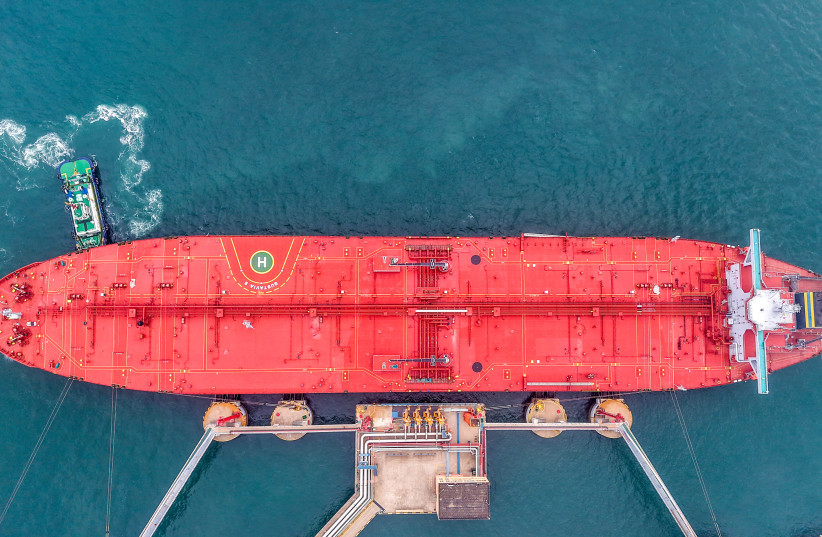
China ensures Iran’s shadow fleet can stay afloat by registering many of the tankers’ legal owners in Chinese cities and by sending many of the ships’ crews from China, WSJ reported.
Chinese ship management companies openly advertise jobs on shadow fleet tankers, offering extra pay for the risk of sailing these older ships, which are associated with higher rates of crew injury and a higher likelihood of oil spills.
China encourages companies to ignore US sanctions
China has also explicitly encouraged companies to ignore US sanctions, according to the WSJ, which added that this month, China ordered firms not to comply with sanctions on five of the nation's refineries, invoking a 2021 rule designed to combat foreign laws believed to violate international norms or restrict trade.
The US recently imposed multiple new sanctions against oil tankers and Chinese oil infrastructure, which China’s Foreign Ministry called “illegal and unreasonable,” vowing to do whatever is necessary to protect its energy security, WSJ wrote.
Most ship-to-ship transfers take place in the area known as the Eastern Outer Port Limits (EOPL). It is midway between Chinese and Iranian territory, has calm waters, and is in a legal gray area within Malaysia’s exclusive economic zone, but outside territorial waters.
Maritime Vice Admiral Saiful Lizan bin Ibrahim, a senior official in Malaysia’s coast guard, acknowledged the fleet's presence but explained that Malaysian authorities could not intervene as the ships are outside Malaysia’s “direct enforcement jurisdiction,” WSJ wrote.
Malaysia has detained over a dozen vessels for unauthorized anchoring over the past year, but it has limited resources and maintains a neutral foreign policy, meaning it does not automatically comply with foreign sanctions.
WSJ reporters described the EOPL as “a giant tanker parking lot, with dozens of ships.” While many ships can’t enter many international ports due to sanctions, there are designated vessels in the EOPL to resupply ships with fuel, supplies, and repair crews. Small boats travel among the tankers, selling cigarettes and beer. Some tankers stay around for weeks, filling up with Iranian and Russian oil before redistributing it, WSJ wrote.
Even when authorities do take action, it can have a limited effect
After Malaysian authorities detained a US-sanctioned vessel, the Nora, a 24-year-old ship registered in Shanghai and conducting a ship-to-ship transfer of Iranian oil in January, the vessel received a $33,000 fine.
The Nora was tracked to Iran’s main oil export hub, Kharg Island, less than two months later, in early March. It then crossed the Strait of Hormuz before the US embargo took effect, blocking it from leaving, and traveled back to off the coast of Malaysia.
Late April satellite data showed the Nora discharging oil onto the Lana Luster, another ship which then sailed to northern China and is currently near Rizhao, a key port city for refineries, waiting to discharge its oil, according to financial data provider LSEG.
The Lana Luster, which operates under the Sierra-Leone flag, was sanctioned by the US on May 19th, and was said to have transported millions of barrels of Iranian oil since mid-2025.
According to the US Treasury Department, the US is pursuing the Iranian shadow fleets, and the sanctions are depriving the regime of funding needed for weapons programs and terrorism.
“Under President Trump’s strong leadership, Treasury will continue to stop the Iranian regime from plundering the country’s natural resources in the name of terrorism,” a department spokeswoman told the WSJ.
However, to truly stop the flow of oil revenue, the US would likely need to maintain its military blockade on Iranian ports and sanctioned ships, as well as intensifying pressure on China, WSJ reported.
Even then, according to energy analytics company Vortexa, some 90 million barrels of Iranian oil were outside of the blockade, with most or all having left Iranian waters before it began.
As it takes two to three months for the oil to reach China and another two to three months for the payment to make it to Iran, Iran will likely be receiving money for its oil until October, according to Iman Nasseri, managing director of Middle East Research at energy analytics company FGE NexantECA in Dubai, who once worked in the research arm of Iran’s Ministry of Petroleum
“Economic Fury was supposed to bring them to their knees,’ he said to WSJ, referring to the US economic campaign against Iran. But compared with other oil exporters in the region, “Iran is suffering the least,” he said.