
Reports that Washington and Jerusalem had planned to install former Iranian president Mahmoud Ahmadinejad as Iran’s new leader were “demoralizing,” members of the Iranian diaspora told The Jerusalem Post on Monday. Nevertheless, they doubted the credibility of such reports.
Promoting Ahmadinejad had been an early goal of the war, The New York Times reported, citing anonymous American sources. An Israeli airstrike on his home had been part of a plot to free him from house arrest, the report said.
Ahmadinejad has been missing since the airstrike, but there have been multiple indications that he is alive and well.
Ellie Borhan, an Iranian activist who founded the London-based Stage of Freedom group, told The Jerusalem Post she doubted the US and Israel had planned to install a figure who has vocally spoken against Israel’s existence and even denied the Holocaust.
Such a move would “discourage and demoralize the millions of Iranians who, both inside Iran and across the world, have openly chanted the name of Crown Prince Reza Pahlavi as the alternative to the Islamic Republic,” she said.
The people of Iran have made their position “unmistakably clear,” Borhan told the Post, adding that any future conception of Iran under the Islamic Republic was a betrayal of the people and an insult to those who lost their lives protesting during the January demonstrations.
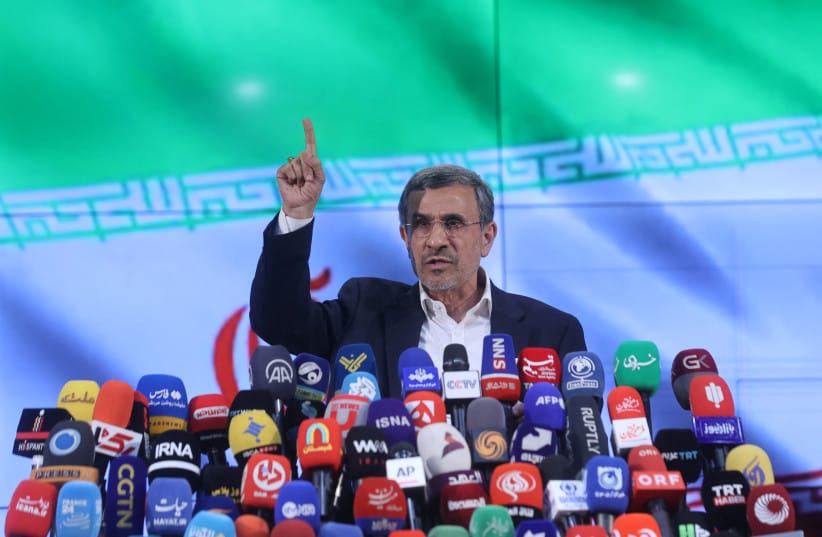
'Suggesting Ahmadinejad as any kind of viable option is almost insulting'
“They fear the survival of the Islamic Republic far more than they fear war,” she said.
“During the protests of January, millions responded to the call of Crown Prince Reza Pahlavi. These protests were peaceful, yet the regime answered with a massacre. Thousands were killed in just two nights, and thousands more were arrested. Still, the message from the people has not changed: Remove the regime completely.
“What truly terrifies Iranians today is not war but the possibility that world powers will once again ignore their voices, sit down with the Islamic Republic, lift sanctions, and inject money into the regime – money that only strengthens the Islamic Republic and its proxy forces across the region, enabling it to shoot protesters in Iran while exporting threats and instability abroad.”
The Iranian people could no longer accept the illusion of reformists in the regime, and nobody wanted to see “another face from within the same corrupt system” running the country, Borhan said.
Ahmadinejad would “forever be associated” with the irregularities that led to his election in 2009, which was perceived to be yet another sign of corruption within the country’s political processes, and the killing of hundreds of protesters during the Green Revolution and during his presidency, she said.
While the regime only acknowledged the deaths of 36 people during the suppressed protests, the PBS Tehran Bureau independently verified and documented more than 100 deaths. According to human-rights organizations, the death toll was significantly higher.
Restarting the “years of repression” would never be a solution for the power vacuum that will be left in Iran, Borhan said, citing the death of Neda Agha-Soltan, an Iranian philosophy student who was fatally shot in the chest by a Basij member while walking to her car.
“He is a painful reminder of everything Iranians are trying to leave behind,” she said. “Western media outlets and governments may continue publishing convenient narratives and searching for incomplete deals. But they should understand this: The people of Iran have drawn their line very clearly.
"They are prepared to sacrifice everything to cross it. The only remaining question is whether the West will stand beside them at this historic moment or once again sacrifice their struggle for short-term political interests.”
Sahar, an Iranian member of the Stage of Freedom group, said the Times report was “suspiciously aligned with the Iranian regime’s preferred narrative.” Such reports should not rely on anonymous sources when they have the power to shake Iranian trust in the West, she said.
The report was quickly amplified by regime-aligned think tanks and lobbying groups, Sahar said, adding that its factual accuracy was in doubt because it was disconnected from the Iranian reality.
'Iran is awake. Its people will settle for nothing less than complete freedom'
“Suggesting Ahmadinejad as any kind of viable option is almost insulting,” she said. “He is a finished, deeply hated figure among Iranians. The man who secured power through massive fraud in the 2009 election became the public face of the brutal suppression of the Green Movement, the murder of Neda Agha-Soltan, the killing of hundreds of protesters, and one of the bloodiest periods of executions and human-rights abuses in modern Iranian history.”
Iranians “are not interested in choosing between factions of the same regime,” she added.
Regarding the Internet blackout imposed by the Islamic regime, which has lasted more than three months, Sahar said Tehran was trying to hide calls for Pahlavi’s return from global audiences.
“The truth Western policy-makers still struggle to accept is this: Iranians are not primarily afraid of war,” she said.
“Their real fear is the continued survival of the Islamic Republic. They are prepared to pay any price, ‘Begu bezaneh’ [Let it strike], to see this regime uprooted completely.”
The anti-war rhetoric imposed on the Middle East and the US by Western nations was separated from reality, Sahar said.
The regime “is in its final stages, [and] “recycling regime-friendly narratives or pursuing flawed diplomatic deals will not save it,” she told the Post. “It will only prolong the suffering and discredit those who choose to stand on the wrong side of history.”
“Iran is awake,” Sahar said. “This time, its people will settle for nothing less than complete freedom.”