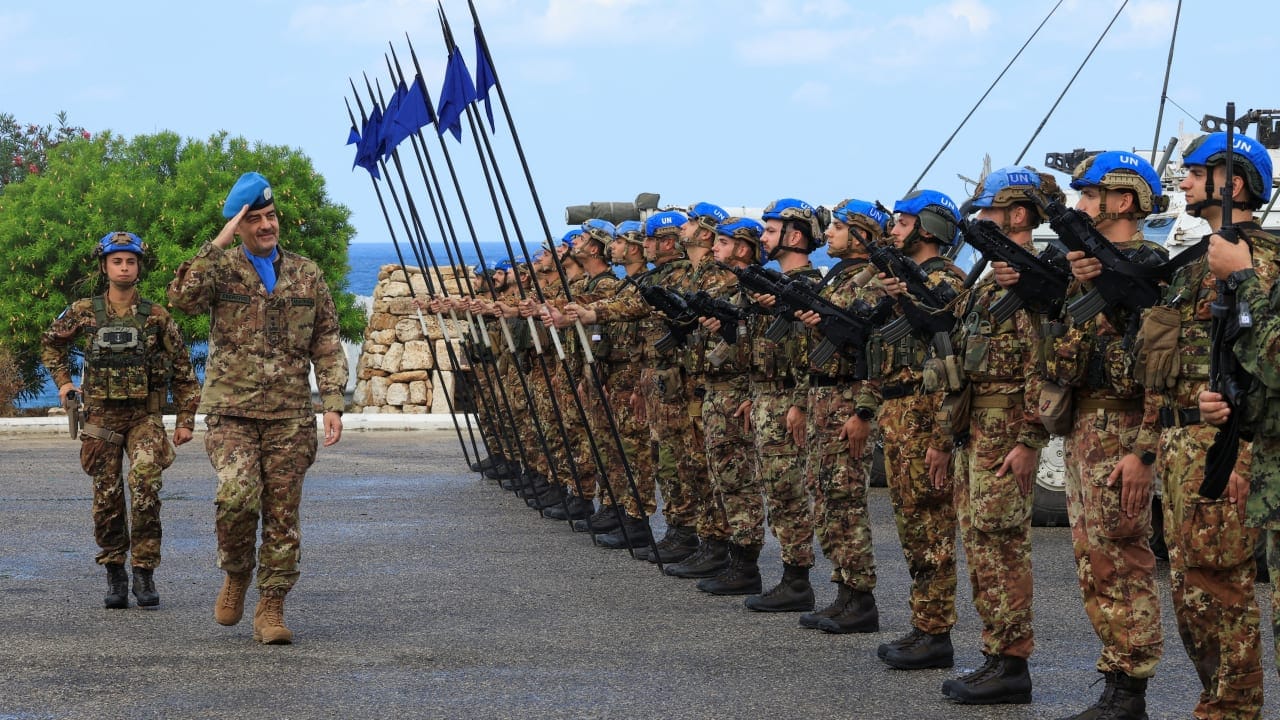
Israel opposes a French initiative to deploy French troops in southern Lebanon, Israeli Ambassador to the UN Danny Danon told The Jerusalem Post on Wednesday.
“The last thing we need right now is another force getting in the way and allowing Hezbollah to return to the places where it was,” he said. “They are talking about deploying forces across all sectors. They are not talking only about sending them to the Syrian-Lebanese border or to Beirut. The French are also discussing southern Lebanon. This would be unprecedented and problematic.”
With UNIFIL’s mandate set to expire at the end of the year, paving the way for the withdrawal of all UN peacekeeping forces from southern Lebanon by September 2027, France is seeking to advance a series of initiatives.
These include deploying hundreds, and potentially thousands, of French troops to Lebanon to help strengthen the Lebanese army, as well as promoting a UN resolution to deploy about 500 official UN monitors to southern Lebanon to oversee the ceasefire.
France has recently been holding discussions with Israel, the US, and other partners regarding security arrangements.

Danon hosts delegation of UN ambassadors to clarify situation on ground
No agreements had yet been reached on the matter, a diplomatic source said on Wednesday, adding: “France’s sole interest is to strengthen the Lebanese army. There is no intention of establishing UNIFIL 2.0.”
Danon told the Post: “The French are genuinely very active on this issue right now, putting forward various initiatives, most of which are unacceptable to us.”
To provide a clearer understanding of the situation on the ground, Danon hosted a delegation of UN ambassadors in Israel last week. The delegation received a briefing from IDF Northern Command officers on the threats and challenges facing Israel on its northern front and took part in a series of observation tours overlooking the Lebanese and Syrian borders.
“The goal was to show them how close the villages in Lebanon are to our communities and to explain what the consequences would be if we neglected the threat on our side,” he said. “You cannot understand it from a distance.
“We wanted them to understand what would happen if we were not there and Hezbollah returned. It would mean Hezbollah once again being right on our border, rearming and rebuilding the threat it previously posed. That is unacceptable to us, and we will not agree to it.”
Danon also addressed whether the destruction of villages on the Lebanese side of the border could create a problem for Israel.
What lies beneath
“Look, you cannot ignore this reality,” he said. “They have also seen the destruction in Gaza, but we show them what lies beneath the homes and villages – the tunnels, the bunkers – and explain that without a strong Lebanese army enforcing its control, Hezbollah will once again establish itself in the area.”
On Tuesday, Defense Minister Israel Katz said the pilot project under which the Lebanese army had entered two areas was a failure.
“In one area, they did not operate at all, and in the other, after they entered, Hezbollah moved in,” he said.
Lebanese army commander Gen. Rodolphe Haykal was a “Hezbollah collaborator,” he added.
In response, a diplomatic source said: “Parts of the Lebanese army have ties to the Shi’ite community, but we do not believe there is active cooperation with Hezbollah.”
There was agreement that the pilot areas were not functioning effectively, the diplomatic source said, adding that the Lebanese army’s capabilities and willingness to disarm Hezbollah should be strengthened.
Danon said Israel would welcome meaningful and genuine Lebanese army operations in the relevant areas, but that was not happening.
“Just as we work with the Egyptian and Jordanian armies and have coordination mechanisms with them, we want the same arrangement with the Lebanese army, without additional forces,” he said. “The idea of sending French and European forces is clearly going to provide cover for Hezbollah to return.
“They are not going to fight Hezbollah. They will not neutralize it, nor will they act quickly to stop it from digging tunnels or preparing rockets for launch. They will not do that. In practice, their presence would give Hezbollah freedom of action to return to the areas where it was previously deployed.
“If only the Lebanese army would do what it is supposed to do, the situation would look completely different,” Danon said.