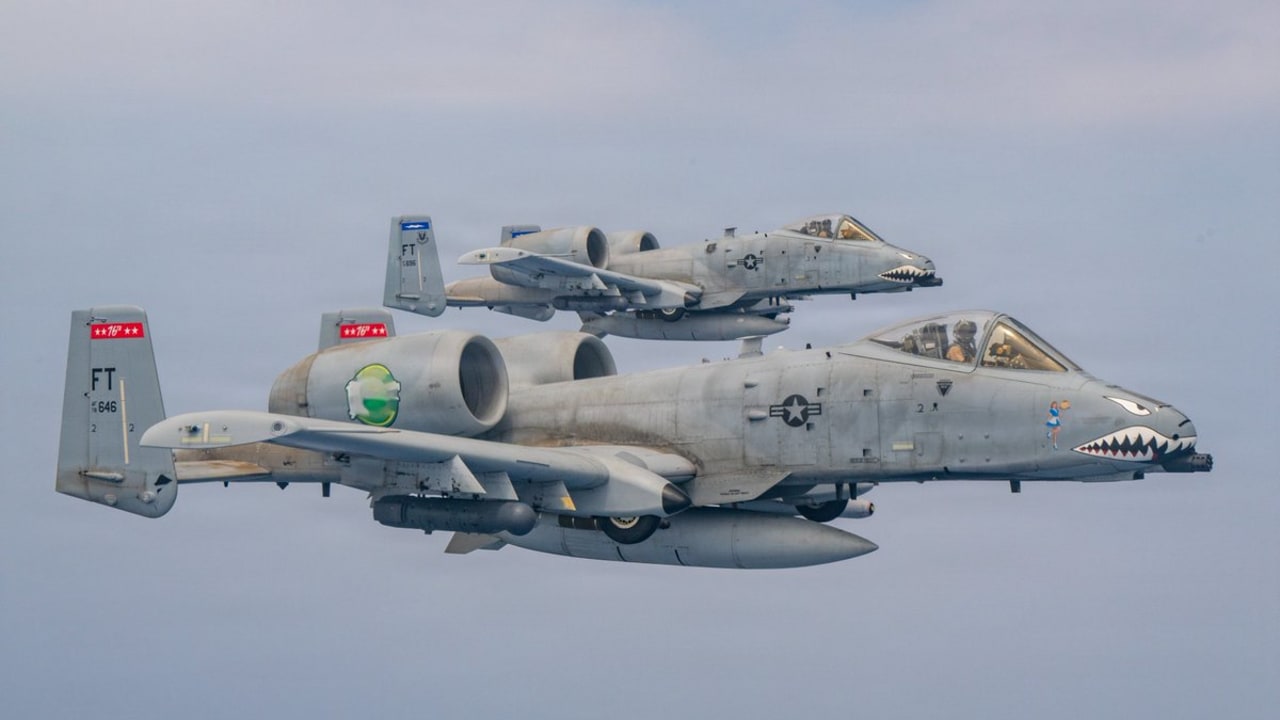
The US military is conducting nightly missions over the Strait of Hormuz as American forces work to enforce a blockade on Iranian ports along the waterway and protect commercial vessels at risk of being struck by Iranian projectiles, according to a Wall Street Journal report on Thursday.
Pilots and aircrew aboard the USS George Washington aircraft carrier, deployed in the region since August, spoke to the WSJ about the warship’s daily operations and around-the-clock defense of the strait.
The airspace over the waterway is only about 20 miles wide but is full of aerial objects, US service members told WSJ, giving fighter jet pilots a small window to react to any projectiles launched from Iran’s coast.
US naval blockade support 'reliably' defending commercial shipping
Rear Adm. Jeffrey Heames, who commands the USS George Washington Carrier Strike Group, told WSJ that US forces have been reliably striking down threats to commercial shipping in the region.
“If there’s a threat that’s launched against those vessels, whether it’s an anti-ship cruise missile or a drone, those aircraft will go in and intercept it and shoot it down in a very short amount of time,” Heames stated.

According to US Central Command (CENTCOM), the protection provided by the US Navy has allowed Gulf partners to export over 1.5 billion barrels of crude oil since the summer. Over the past six months, more than 3,000 commercial vessels have successfully transited the Strait of Hormuz without incident.
In a video statement released on X/Twitter on Friday, CENTCOM head Adm. Brad Cooper detailed that since the blockade was imposed, Iran has not been able to export any oil.
Nightly operations strain crew members, cost US billions of dollars
Despite the success of the nightly operations, US officials familiar with the missions told WSJ that the frequency of flight operations has put a strain on aircraft, crew members, and the mechanics responsible for maintaining fighter jets.
According to the WSJ, Adm. Daryl Caudle, chief of the US’s naval operations, said that the Navy is taking the strain into account. Caudle stated that a ship maintenance hub has been set up on Diego Garcia, a base on an island in the Indian Ocean.
He added that they are learning from the conflict and are planning more port calls after naval personnel aboard the USS Abraham Lincoln completed a record-breaking deployment of 286 days at sea.
An officer in the aircraft carrier’s maintenance department, Ensign Addie Schaefer, told WSJ that the more the aircraft fly, the more they are prone to damage and wear, leading to frequent maintenance.
US military leaders say that their forces can maintain the blockade and protect the strait for as long as is needed, but some officials worry that the resource-intensive operations may impact the US’s ability to respond to other potential future crises in other regions.
According to the WSJ, the US currently has 50,000 troops and 20 ships deployed in the Middle East, costing the US between $2 billion and $3 billion a month on munitions, fuel, supplies, and other expenses necessary for maintaining its presence and operations in the region.