


On September 8, Britain’s foreign secretary, Ed Miliband, announced in the House of Commons what he described as a “reset” of UK policy toward Israel.
Among other matters, he declared that “the official view of the British government is that the occupation is unlawful,” and that the UK “will introduce an import ban on goods from illegal settlements in the occupied territories.”
He went on to suggest that the IDF had committed war crimes in Gaza, and to support the International Criminal Court in considering whether Israel had perpetrated a genocide there.
Central to the UK government’s revamped position, he asserted, was its unwavering adherence to the two-state solution.
“We will not acquiesce in the destruction of the two-state solution,” he said in his opening speech. Later he declared: “Securing the two-state solution in its fullest form is the North Star of this government’s policy.”
Miliband, in common with much global opinion, seems to believe that the Palestinians are nurturing a deep desire for the two-state solution, which has been consistently frustrated by Israel. Ignored is the fact that the Arab world was offered a two-state solution on six separate occasions, and turned it down each time.
In truth, the Palestinian cause has never been a struggle for the two-state solution, but a sustained effort to eliminate the State of Israel. PLO leader Yasser Arafat supported the two-state idea as a tactic to win world opinion, while he consistently strove to achieve the true objective.
Hamas would have no truck with Arafat’s long game and refused to support his bid for a Palestinian state on pre-1967 lines.
Security comes first
Few of the 157 UN member states that recognize the “state of Palestine” seem to acknowledge the existential danger Israel would face if any version of the two-state solution did not incorporate cast-iron security guarantees for Israel.
The geographic and strategic reality is that a sovereign Palestinian state would control territory exceptionally close to Israel’s industrial and population heartland.
For example, the eastern suburbs of Tel Aviv are, at some points, only about 15 kilometers from the West Bank border. An Islamist takeover of a new Palestine, either by force or – given the popularity of Hamas and its like – by election, is a real possibility.
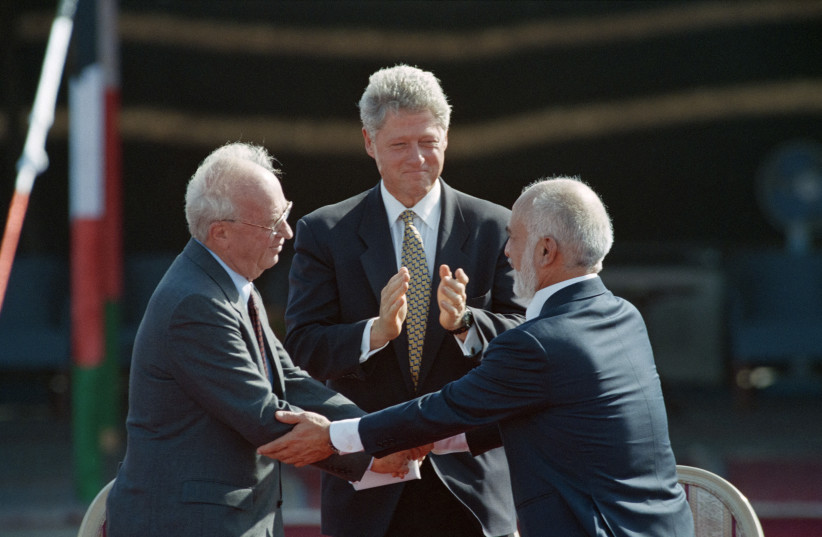
An armed state hostile to Israel would place Ben-Gurion Airport, Tel Aviv, and other major population and economic centers within easy range of missiles and drones.
For that reason, any arrangement addressing Palestinian statehood would need to incorporate demilitarization, counterterrorism cooperation, weapons control, border security, and enforcement mechanisms.
Jordan is also unlikely to welcome a Palestinian state on its doorstep unless it is hedged about with effective safeguards preventing its takeover by jihadists.
Although Jordanian policy strongly supports Palestinian statehood and the two-state solution, successive Jordanian governments have consistently argued that any final-status settlement must take Jordanian security interests into account.
Jordan’s concern would center on whether a sovereign Palestinian state could facilitate the expansion of armed Islamist movements in the region.
Does any sort of mechanism exist that could ensure an independent Palestine, but also provide Israel and Jordan with guaranteed protection from existential danger?
Beyond two states
On May 14, 2015, Yossi Beilin, the former Israeli justice minister and one of the architects of the Oslo process, wrote a seminal article for The New York Times.
Titled “Confederation is the Key to Mideast Peace,” he wrote: “This idea isn’t new. For a brief time in the 1990s, it animated some of my earliest discussions about peace with a spokesman whom Palestinians revered, Faisal al-Husseini.
“But that was before the Oslo Accords of 1993. ... In hindsight, it is clear that we should have been looking all along at confederation – cohabitation, not divorce.”
What is a confederation? It is a form of government in which constituent sovereign states maintain total independence, while merging certain aspects of administration, such as security, defense, economic, or administrative matters. The European Union is a good example.
Given Jordan’s collaboration, an Arab-Israeli peace conference could be dedicated to establishing a new legal entity: a confederation incorporating Jordan, Israel, and a sovereign Palestinian state which could be brought into legal existence at the same moment as the confederation itself.
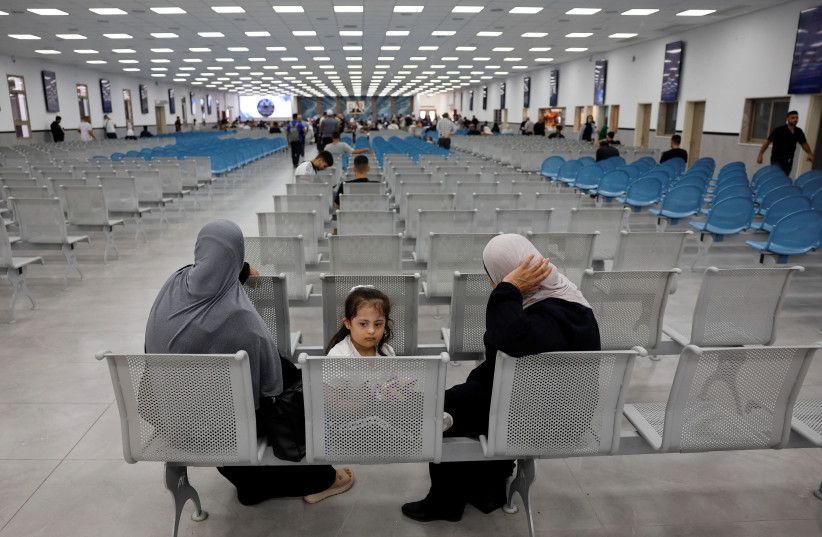
The confederation might have among its founding principles the establishment of a collaborative system dedicated to providing hi-tech security and economic growth for its three component states.
Such an umbrella entity might also undertake to establish a pragmatic status for Jerusalem and especially its Old City, satisfactory to all parties.
To guarantee the confederation’s security as a whole, the IDF would act in collaboration with the forces of the other parties.
With genuine acceptance of Israel as a permanent presence in the Middle East, a three-state confederation covering the whole of what was originally Mandate Palestine might open a hitherto unexplored path leading toward a peaceful and thriving future.
It could set the transformation of the region as its objective, turning it into a thriving financial, commercial, and industrial hub to the benefit of all its citizens – Jordanian, Israeli, and Palestinian alike – within, say, 10 years.
Toward confederation
While support for an overriding confederation allying Jordan, Israel, and a sovereign Palestinian state is not an official position of any government, it appears occasionally in policy discussions, think tank papers, and media debates.
Beilin and Hiba Husseini, a legal adviser to the Palestinian negotiating team leading to the Oslo Accords, are promoting what they call the Holy Land Confederation.
In September 2025, the prestigious think tank Chatham House hosted Beilin and Husseini to discuss their confederation proposal, which does not include Jordan, though it could be expanded to do so.
Prof. Alon Ben-Meir strongly supports a Jordan-Israel-Palestine confederation. His 2022 paper remains the foundational contemporary statement of the idea.
Ben-Meir was one of the many expert contributors to the Winter 2022 special edition of the World Affairs journal, which was devoted entirely to considering the idea of the three-nation confederation.
With the potential to overcome many of the problems associated with establishing a stand-alone “state of Palestine” alongside Israel, the confederation solution merits serious consideration.■
The writer is a former senior civil servant. Follow him at: www.a-mid-east-journal.blogspot.com