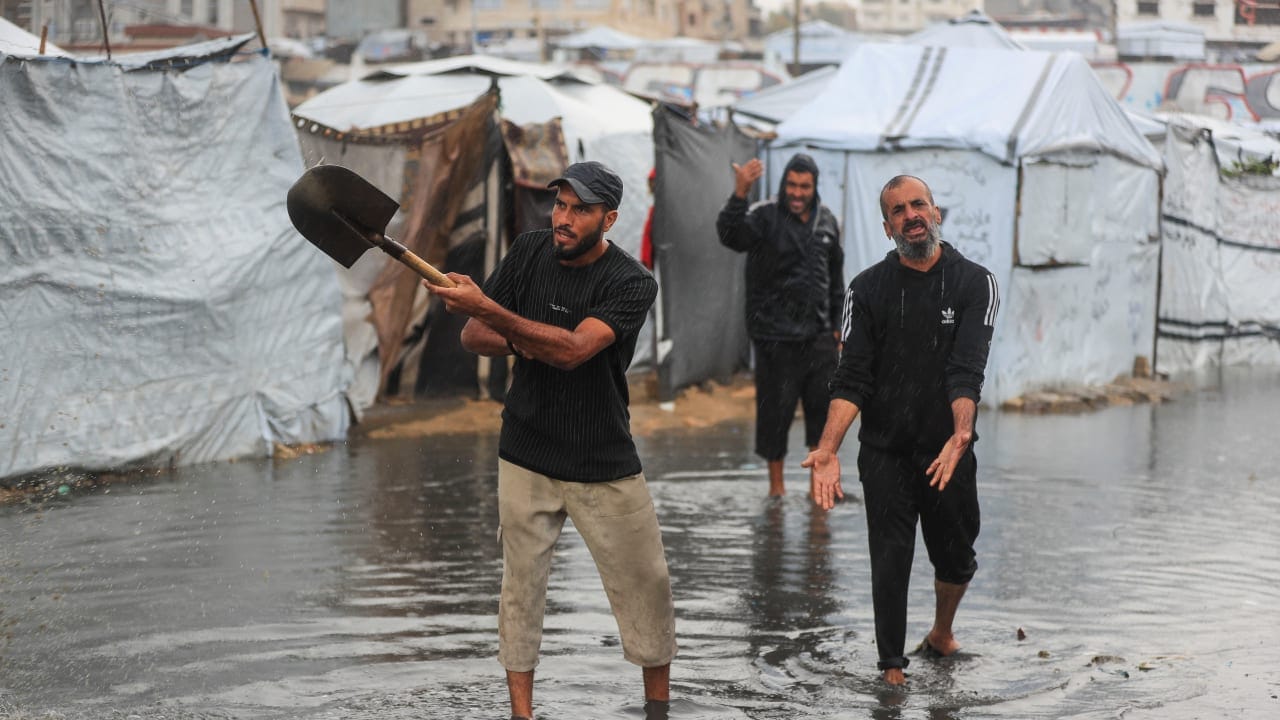
The intensity of accusations and counterclaims surrounding the humanitarian problems in Gaza obscures the many complexities of the current situation.
In this case, the Board of Peace, sponsored by US President Donald Trump, took the side of critics of Israel more than the side of Jerusalem, although it also criticized Hamas.
At stake is the matter of who will win the struggle between Israel and Hamas about whether rebuilding Gaza and withdrawing from Gaza would come first, or whether Hamas disarmament would come first.
Within that larger struggle, there is another competition between Israel and Hamas over the kind of humanitarian aid to be provided, namely, whether Hamas can be provided with better materials to make Palestinian residences that can withstand the elements, including flooding, or whether Israel will continue to block many of these materials out of concern that they have dual-use capabilities and can be repurposed for military needs.
The third issue is the debate about the tents themselves, and how much Hamas tried to weaponize the situation in advance, versus how much Israel is trying to partially cover up how bad the Palestinians’ living situation remains more than a year after the 2025 ceasefire.
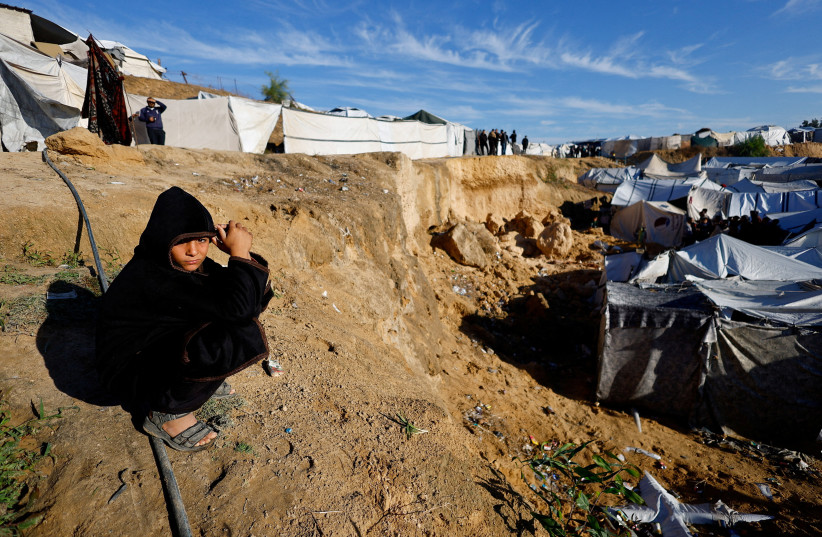
Some members of the current government may also be holding out hope for a large number of Gazans to emigrate, although efforts to make this happen in any concrete way have failed at any strategic level for three years.
Aid expert: Israel’s waterproof tents fall short
According to Lihi Levian Joffe, coordinator of the Israeli Forum of Experts and Civil Society for Humanitarian Aid to Gaza, Israel’s allowing waterproof tents to enter Gaza is not an act of altruism, but an international obligation, given that it is controlling all aid access.
Israel has allowed aid groups to provide better tents this fall than in the past, she said, adding that Israel says about 91,000 waterproof tents have been provided.
The tents Israel has allowed in are only a small step up from camping tents, Joffe said, and they last a maximum of six months, because they were not constructed to be lived in constantly. Every time they must be moved to another spot for various practical reasons, this reduces the six-month life cycle of the tent, she added.
Furthermore, even the tents that withstand rain are not actually meant to handle it constantly; they are just for a quick camping trip, Joffe said, which means they also fall apart much faster than the six-month life cycle.
Gaza needed large plastic-covered areas or much better tents, she said, implying that Israel does not always allow in some of these related items.
Undeniably, if Israel had allowed in October 2025 to early 2026 the start of building some new neighborhoods, sponsored by the UAE, in parts of Gaza that it controls, those areas eventually would be much better for Palestinian civilians (who Israel would need to approve) than any temporary tent situation.
Israel’s limits on Gaza aid groups and crossings
Israel only allows one entry per week of certain items and about eight to 10 aid organizations, along with the UN, to bring in aid, Joffe said.
At an earlier stage, there were dozens of groups involved, but Israel cracked down on many organizations, either because they refused to register their employees or because of different kinds of specific allegations of either direct or indirect cooperation with Hamas by some of their employees.
Honest Reporting has correctly jumped on Hamas for weaponizing the humanitarian situation and having certain public-relations materials ready to attack Israel.
It has said some of the claims passed on by Hamas are wrong, exaggerated, and serve as an echo chamber, repeating the same statistics, regardless of whether they are accurate.
Hamas and many global media outlets have ignored or downplayed the 91,000 tents Israel has allowed into Gaza, as well as other humanitarian aid.
Honest Reporting has exposed that the apparent goal of Hamas has been to try to pressure Israel into withdrawing and allowing rebuilding in Gaza, while Hamas either does not need to disarm or must take only symbolic actions.
There is also a debate about whether Israel or Hamas has done more to hinder fixing neighborhood-wide piping and other systems for reducing flooding.
The US Board of Peace has criticized both sides: Hamas for not disarming, and Israel for stalling for several months on certain commitments it made regarding integrating global peacekeepers, non-Hamas Palestinians technocrats, and allowing better building materials into Gaza at least on an initial basis.