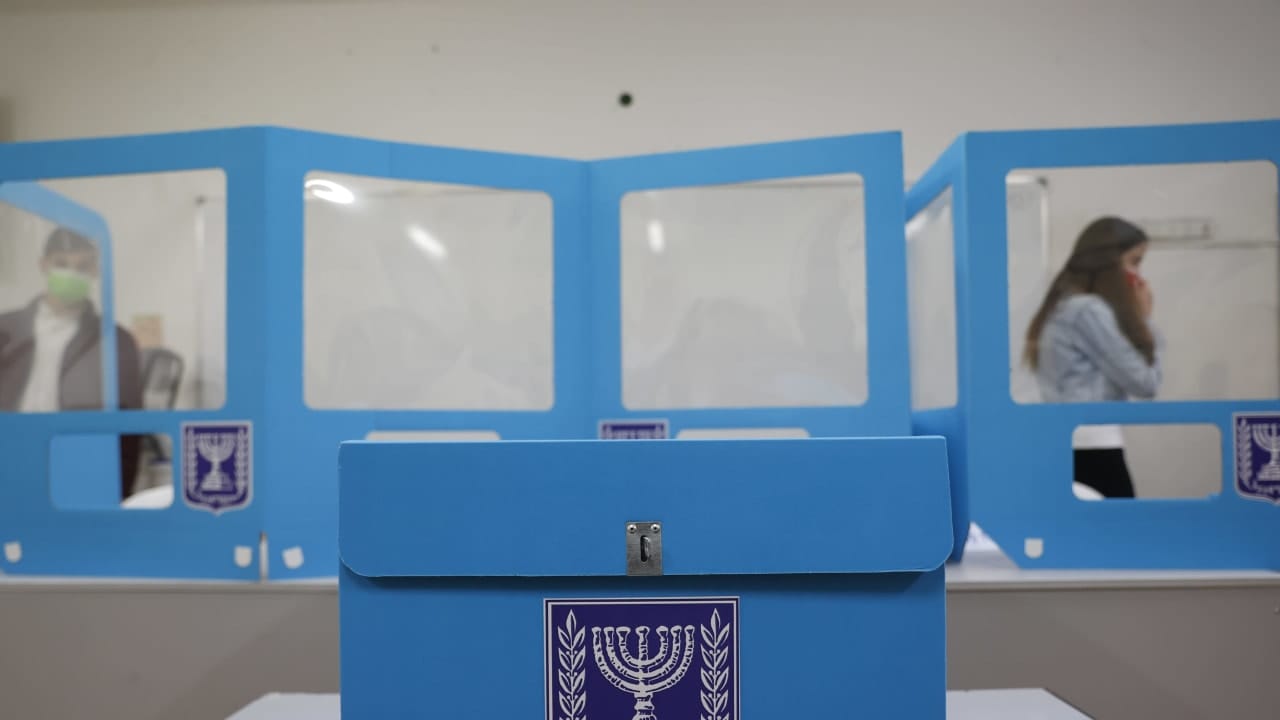
Supreme Court Justice Noam Sohlberg’s ruling to ban observers from announcing the identity of voters restores voters’ privacy and prevents the disclosure of sensitive information and political views, explained former deputy attorney-general Mike Blass in an interview with 103FM on Thursday.
“When the public appeals came up for discussion, several members of the public who wanted to ban the practice of reporting to the party who had already voted in order to encourage those who hadn't yet, sought to prevent it,” Blass explained.
“A comprehensive hearing was held before [Justice] Sohlberg, with all the relevant parties, the Privacy Protection Authority, and the attorney-general. They all presented their legal positions to him.”
Blass said Sohlberg had carefully examined the relevant legislation.
“He conducted a thorough analysis of Israel’s privacy protection laws and election laws, and reached the conclusion that this constitutes an infringement of a person’s privacy, which I believe is legally difficult to dispute," Blass said.
Blass described that the reporting process worked and how someone would know what to report.

Information being used for more than its intended purpose
"The voter enters the polling station and states their name, and the observer writes it down,” he said. “An infringement of privacy is defined, for example, as tracking a person in a manner that could harass them.”
He added that the information was being used for more than its intended purpose.
“In addition, it involves using information about a person’s private affairs, or providing that information to someone else, for a purpose other than the one for which it was given," he said. "What did Justice Sohlberg say? A person arrives at a polling station to vote and provides their details, and then someone takes the details provided for the purpose of voting and uses them to encourage other voters.”
Blass said the ruling also addressed polling stations located in sensitive facilities, where reporting a voter’s presence could reveal additional personal information.
“The justice also explained that there are more sensitive polling locations, such as facilities for people with disabilities, shelters for abused women, or various hospitals, so you would be revealing additional information about that person,” he added. “He [Sohlberg] concluded that reporting that a voter has voted constitutes an infringement of that voter’s privacy.”
Blass also noted that information about who voted could, in some circumstances, reveal a person’s likely political views.
“Solberg referred to the fact that at polling stations, where most voters go to a particular party or bloc or when the number of voters is low, it is possible to draw approximate conclusions about the worldview of a particular voter and his political opinions. The person himself is being followed, and therefore certain people feel a violation of their privacy," he said.
Ruling 'restores respect' to voters
Blass said he believed the ruling restored respect for voters’ right to privacy and clarified the limits of observers’ authority.
“There is a sense that there is no law or order, but when Justice Sohlberg examined and analyzed this issue, his legal analysis led to two conclusions: that there is an infringement of privacy, and that observers are a type of public employee for that day, and therefore have no authority to do what they are doing," he noted.
Further, Blass recalled that he had previously taken part in the same practice, before Israel’s privacy laws and constitutional protections had changed.
“Decades ago, when I was young, I served as a party observer during elections and reported who had voted," he said. "That was how we operated at the time, but Israel’s legal framework has since changed. I'm talking about a period when there was no Privacy Protection Law and the Basic Law on Human Dignity and Liberty with a constitutional right to privacy."