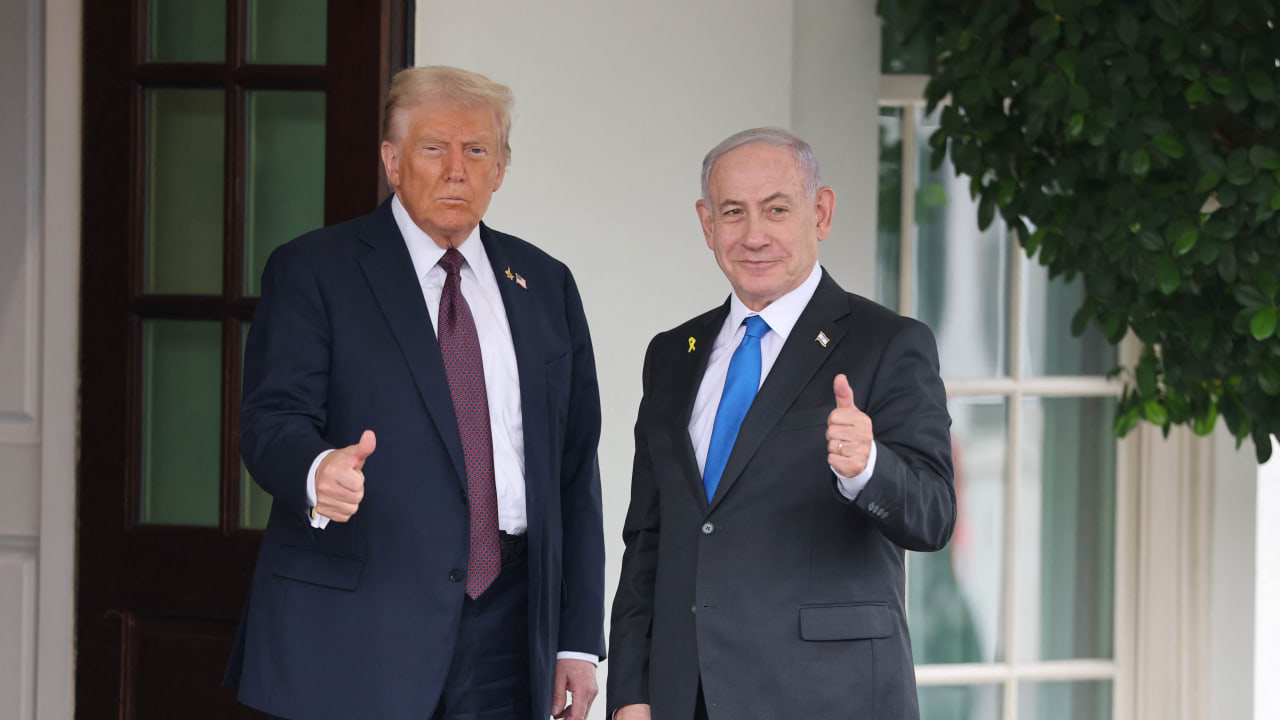
US President Donald Trump and Prime Minister Benjamin Netanyahu's intense phone call regarding the IDF planning to strike Beirut “sends a message of Iranian victory, both on the battlefield and in terms of perception,” Institute for National Security Studies (INSS) researcher Beni Sabti told 103FM on Wednesday.
“The president of the United States is becoming an advocate for the Iranian regime,” he said.
“Iranian hubris is growing and growing. They are essentially talking to themselves, and they see that the United States is stopping Israel, rebuking it, and not allowing it to attack. Hezbollah has suddenly recovered, and it turns out they have also created a split between Israel and the United States. This is a kind of enormous Iranian achievement.”
Yaki Dayan, a former Israeli consul in Los Angeles, said he understood the difficult exchange between the two leaders.
“I think difficult conversations, certainly on the issue of Lebanon, where we are paying the high price for the negotiations between Iran and the United States, are even necessary,” he said.
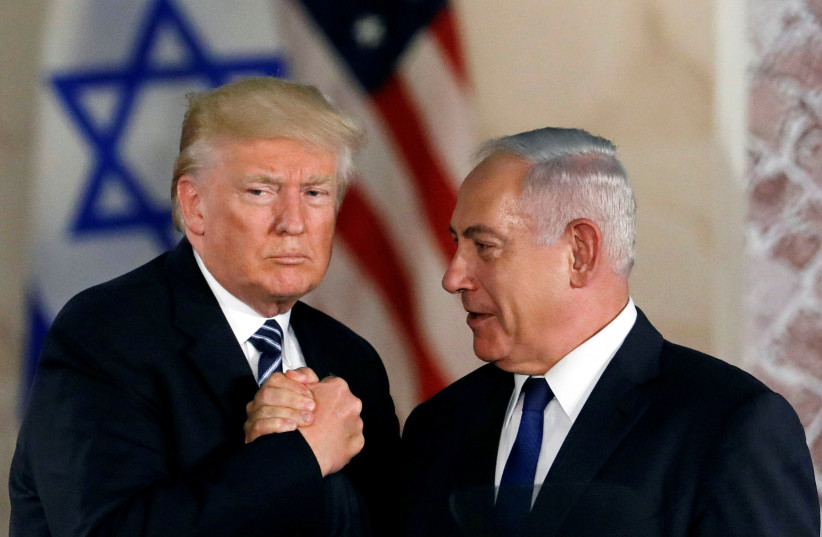
“Trump is a friend of the State of Israel, but in Lebanon, the interests are different.”
Sabti said the Middle East was entering an era of the “campaign between the wars.” Unlike past campaigns, he said, this time Iran and its proxies are leading it.
'Israel used to act first and talk afterward'
“They are striking back at us. I think Israel needs to be more independent in this matter, with less talk. I heard of a different Israel that used to act first and talk afterward,” he said.
Dayan noted that Iran may be “flexing its muscles,” but internally, its situation is deteriorating.
"It is collapsing inward. The situation in Iran is very difficult, and every day we hear about new American sanctions," he said.
Sabati added that the linkage between the various fronts is bad for Israel.
"Israel is paying for the negotiations,” he said. “There is no doubt that this is not good, but I am only putting things in context: beyond the statements and beyond the big, high rhetoric in Iran, what is happening right now is very heavy pressure."