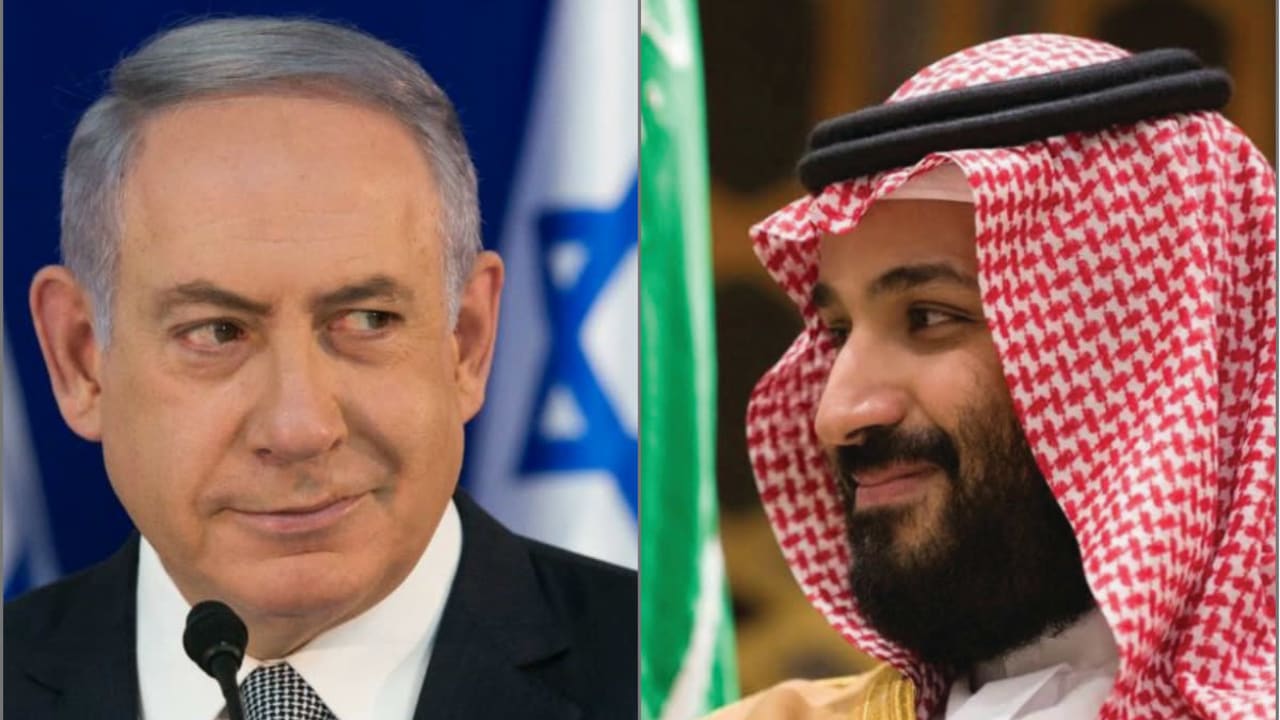
A majority of Israelis, 54%, believed Israel should assist Saudi Arabia in its struggle against the Houthis, a Friday Maariv poll revealed.
Thirty-eight percent said such assistance should be conditioned on a normalization agreement between Israel and Saudi Arabia, while 16% supported assisting the kingdom against the Iran-backed Yemeni terror group even without an immediate diplomatic return.
Twenty-six percent opposed Israeli assistance to Saudi Arabia, while 20% said they did not know.
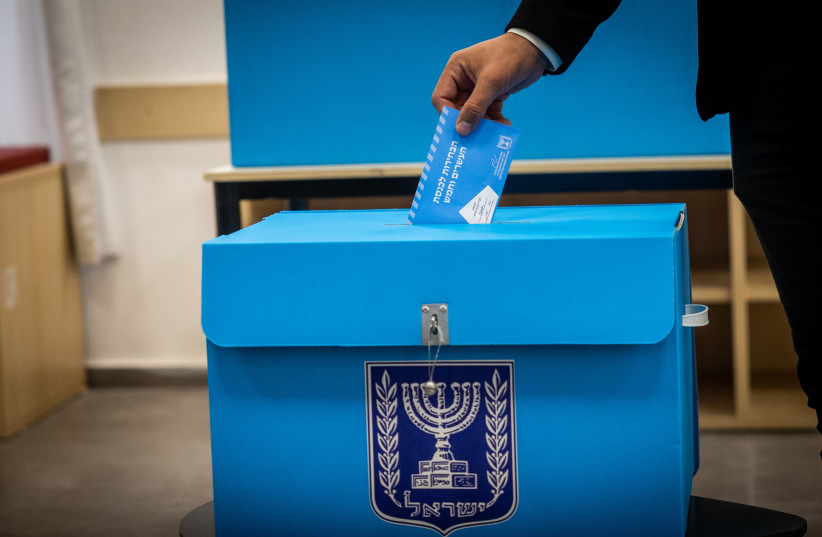
The poll also surveyed support for the upcoming Knesset elections slated for October 27. The poll's findings showed Prime Minister Benjamin Netanyahu’s Likud continuing its downward trend this week, falling to just 18 seats, while the coalition bloc remained stable at 50 seats.
The bloc held its ground as Ofer Winter’s People of Israel once again cleared the electoral threshold, and Finance Minister Bezalel Smotrich’s Religious Zionist Party, running in an alliance with Moshe Feiglin's Zehut, gained one seat, bringing it to six.
Reservists and Economic Party passes electoral threshold
In the opposition bloc, the most significant change this week was Yoaz Hendel and Yaron Zelekha's The Reservists-Economic Party joint list clearing the electoral threshold with four seats.
At the same time, Gadi Eisenkot’s Yashar lost two seats, while Naftali Bennett’s B’Yachad and Yair Golan’s Democrats each dropped by one. The Zionist opposition, excluding the parties led by Hendel and Zelekha, stood at 54 seats. The Arab parties retained their strength with 12 seats.
However, the poll also found that The Reservists-Economic Party crossed the 3.25% electoral threshold with 3.5% of the vote, while People of Israel received 3.4%, putting both parties only narrowly above the threshold.
When asked who voters would pick if elections were held today, respondents gave the following answers:
Yashar: 23 seats.
Likud: 18 seats.
B’Yachad: 13 seats.
The Democrats: nine seats.
Yisrael Beytenu: nine seats.
Otzma Yehudit: eight seats.
United Torah Judaism: seven seats.
Shas: seven seats.
Joint Arab List: seven seats.
Religious Zionist Party-Zehut: six seats.
Ra’am: five seats.
People of Israel: four seats.
The Reservists-Economic Party: four seats.
Eisenkot's lead over Netanyahu narrows in polls
The poll also found that Eisenkot led Netanyahu when respondents were asked who was better suited to serve as prime minister, with 48% supporting Eisenkot compared with 40% for Netanyahu. The gap between the two, however, narrowed from 12 percentage points to eight.
Netanyahu also narrowed the gap with Bennett by one percentage point. Bennett led with 44%, compared with 41% for Netanyahu.
By contrast, Netanyahu maintained his advantage over Avigdor Liberman, with 42% supporting Netanyahu compared with 38% for Liberman.
The poll was conducted on September 16-17 by Lazar Research, headed by Dr. Menachem Lazar, in cooperation with Panel4ALL. A total of 4,089 people were invited to participate, and 600 responded, for a response rate of 15%. The respondents constituted a representative sample of Israel's adult population aged 18 and over, including Jews and Arabs. The poll had a maximum sampling error of 4%.