
Former Israeli educator and Jewish intellectual Meron Mendel has raised concerns over Yad Vashem's planned expansion into Germany, warning in comments to German media that the Holocaust memorial institution's educational work could be "influenced by Israel's far-right government."
His remarks came a day after Yad Vashem announced plans to open an educational center in Munich and a satellite branch in Leipzig, its first permanent facilities outside Israel.
Mendel, an Israeli-born educator who heads Frankfurt's Anne Frank Educational Center, has raised concerns about Yad Vashem's planned expansion into Germany, arguing in interviews with German media that the Holocaust remembrance institution's ties to the Israeli government could become a source of controversy. His remarks came after Yad Vashem announced plans to open an educational center in Munich and a satellite office in Leipzig, marking the institution's first permanent branches outside Israel.
Speaking to Deutschlandfunk, Mendel said the initiative carries considerable historical significance but argued that Yad Vashem is not entirely independent of the Israeli government. He expressed concern that the institution's educational work could be influenced by political developments in Israel and called for a public discussion about the implications of establishing Yad Vashem-affiliated institutions in Germany.

Critics raise concerns over transparency, oversight
Mendel, who was born in Israel and has lived in Germany for years, argued that debates surrounding antisemitism and criticism of Israel have increasingly become politically charged. He suggested that Yad Vashem's interpretation of contemporary antisemitism differs from the prevailing consensus in Germany and said closer cooperation with existing German institutions could have been considered during the planning stages.
"It would be good if we discussed this critically," Mendel said, adding that a partnership model involving established German institutions, such as Munich's NS Documentation Center, may have been preferable.
His criticism was echoed by Jens-Christian Wagner, director of the Buchenwald and Mittelbau-Dora Memorial Foundation, who questioned how the decision to establish the German branches had been reached.
In comments to Bayern2 radio, Wagner said on Friday that the process lacked transparency and that German memorial institutions had largely been left out of discussions surrounding the project.
"The objective of this historical-political initiative by the Israeli government remains unclear," Wagner said, while calling for consultations with institutions including the Dachau Memorial Site and Munich's NS Documentation Center.
Yad Vashem announced on Thursday that it intends to establish two new branches in Munich and Leipzig within the next three years. The facilities will be the institution's first locations outside Israel since its founding in 1953 as the state's official authority for Holocaust remembrance, research, documentation, and education.
Yad Vashem chair dismisses criticism as 'nonsense'
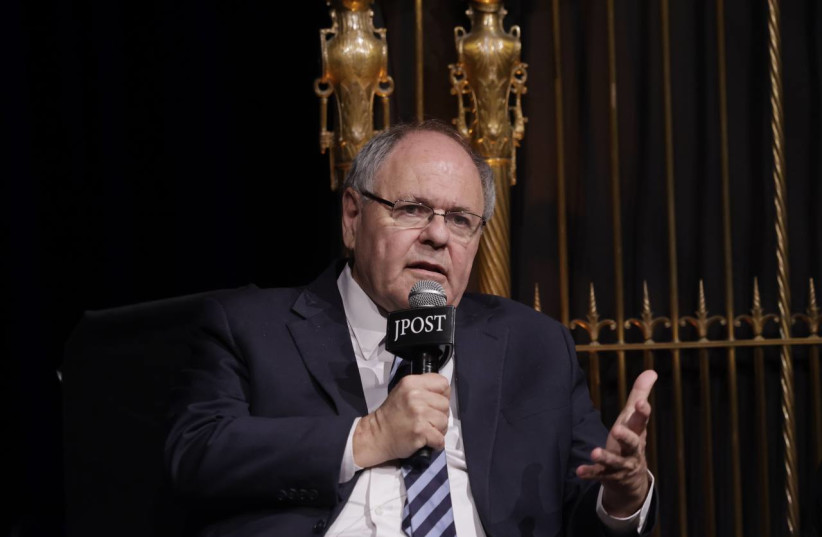
The criticism prompted a sharp response from Yad Vashem chair Dani Dayan, who dismissed Mendel's remarks in an interview with Israel's Public Broadcaster, Kan.

Calling the criticism "nonsense," Dayan said the comments reflected a misunderstanding of Yad Vashem's status and mission.
"The most striking thing is the man's ignorance," Dayan told Kan. "Yad Vashem is not a government institution but a national institution. It belongs to the State of Israel and to the Jewish people, to its victims and survivors, and is completely independent. This has been proven in practice on countless occasions," he argued.
Dayan added that Yad Vashem's standing as the world's leading Holocaust remembrance institution did not require validation from Mendel.
"The reputation of Yad Vashem as the world's leading institution in Holocaust remembrance, including in the educational field in which the new center will operate, does not require certification from Mr. Mendel," he said.
Israeli Ambassador to Germany Ron Prosor also condemned Mendel's comments, accusing him of unfairly delegitimizing the institution.
"Anyone who reacts allergically to Holocaust remembrance is antisemitic," read a statement issued by Prosor. "Whether they are far-right, Islamist, or far-left, they all receive a stamp of approval from Meron Mendel."
"The fact that he is now carrying out delegitimization and demonization against Yad Vashem marks a new low point," Prosor added.
The ambassador defended the expansion as an important symbol of the relationship between Israel and Germany.
"Yad Vashem is an institution of a democratic state and carries out vitally important work," he said. "The fact that it will also be present in Germany in the future is a powerful symbol of reconciliation between our peoples, a symbol we can all be proud of. Except, of course, for opponents of every kind."
Germany's leaders and Jewish community support project
The project has also received support from German political leaders and Jewish community representatives, according to a report published by the German-Jewish newspaper Jüdische Allgemeine, citing the Evangelischer Pressedienst (epd) news agency.
German Education Minister Karin Prien described the initiative as an important contribution to Holocaust remembrance and civic education, while Charlotte Knobloch, president of the Jewish Community of Munich and Upper Bavaria, called the planned center a necessary response to rising political extremism.
As the number of Holocaust survivors continues to decline, Knobloch argued that educational institutions dedicated to preserving historical memory are becoming increasingly important.
"Hatred of Jews cannot be overcome without knowledge of history," she said.