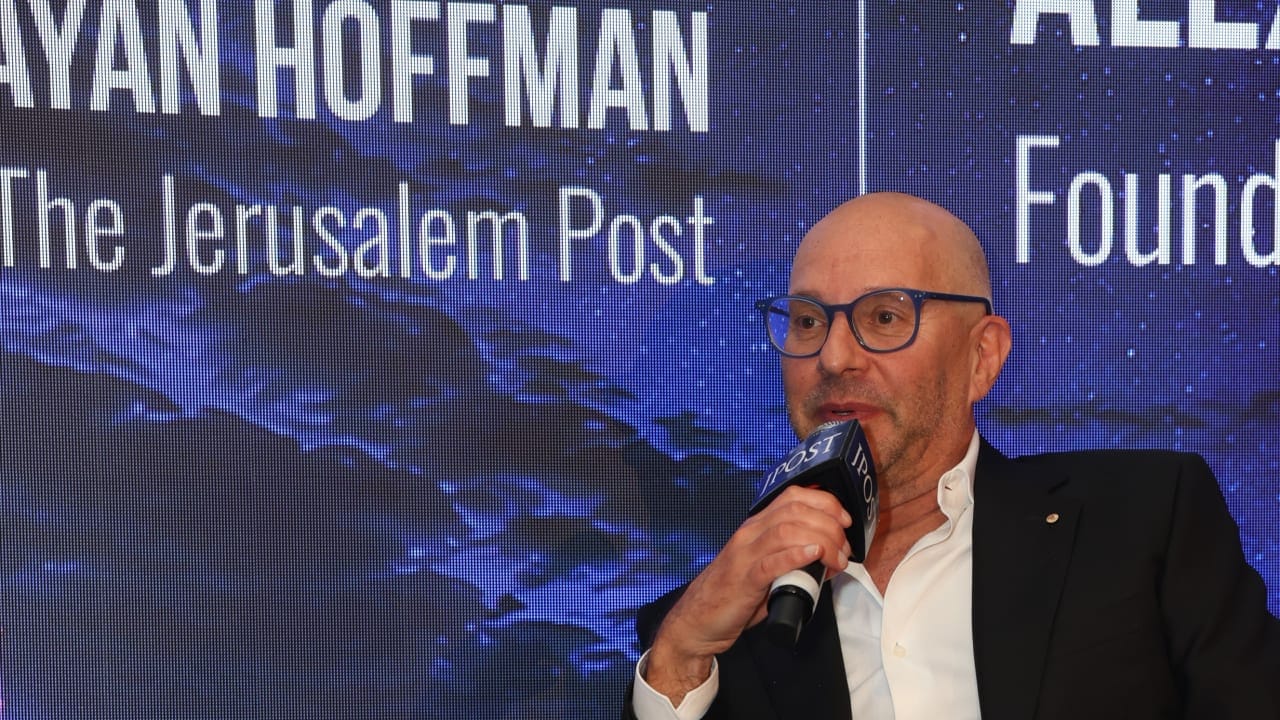
Despite years of war, international criticism and political uncertainty, Israel continues to attract investors and expand its technological reach around the world, according to Australian billionaire investor Alex Waislitz.
Waislitz, founder and chairman of Thorney Investment Group, said a recent visit to Israel left him increasingly confident in the country's economic future.
“What you don't read about in the headlines is the fact that even a lot of countries that are criticizing Israel on the surface level are actually adopting Israeli innovation and technology constantly,” Waislitz said during an on-stage interview with The Jerusalem Post at its Australia Summit in Sydney on Thursday.
He explained that Israeli technologies are embedded in essential infrastructure and critical systems worldwide, including in countries whose governments have publicly criticized Israel.
“What seems to be on the surface is one thing, but the Israeli penetration of so many countries' essential areas is profound,” he said.
Waislitz, who visited Israel just weeks before the conference, said he met with the CEO of the Tel Aviv Stock Exchange and learned that the exchange was experiencing record profitability and growth. Major financial institutions from the United States and Europe were also strengthening their involvement in the Israeli market, he said.
“The innovation is outstanding,” Waislitz said, pointing to Israel's strong corporate governance and continued technological development despite the challenges since October 7, 2023.
However, while Waislitz expressed confidence in Israel, he was far more critical of Australia's investment environment.
“We have a major problem in Australia at the moment,” he said, singling out Victoria, which he described as “uninvestable” several years ago.
“I think I've actually unfortunately been proven right,” he said.
Waislitz also criticized the federal government's approach to business, arguing that many of Australia's economic problems stemmed from domestic policy decisions.
He contrasted Australia with Israel, the United States and several Southeast Asian economies, which he described as more supportive of entrepreneurship and innovation.
According to Waislitz, businesses need the freedom to adapt quickly to changing conditions, something he believes Australia's political leadership has made increasingly difficult.
Nevertheless, he said opportunities remain, particularly among small- and mid-cap companies struggling with higher interest rates and rising capital costs. He noted that takeover activity was increasing as investors identified undervalued businesses.
Waislitz said he had been focusing more of his investments on the United States because of its more supportive business environment.
Asked about lessons from investments that had gone wrong, Waislitz identified two major mistakes: failing to cut losses quickly enough and waiting too long to intervene when a company's leadership or strategy was not working.
“If it's a people issue at the board or at the CEO level or elsewhere, change it,” he said. “If it's a strategy issue, you've got to encourage debate.”
His message was that investors must be prepared to act rather than wait for circumstances to improve.