Australian Jews are now asking themselves a question that generations of Jews before them have been forced to confront: Is it time to leave?
For Steven Lowy, the prominent Australian businessman, philanthropist and former world chairman of Keren Hayesod-United Israel Appeal, the fact that Jews in Australia are even considering leaving the country should serve as a warning about the direction Australian society is heading.
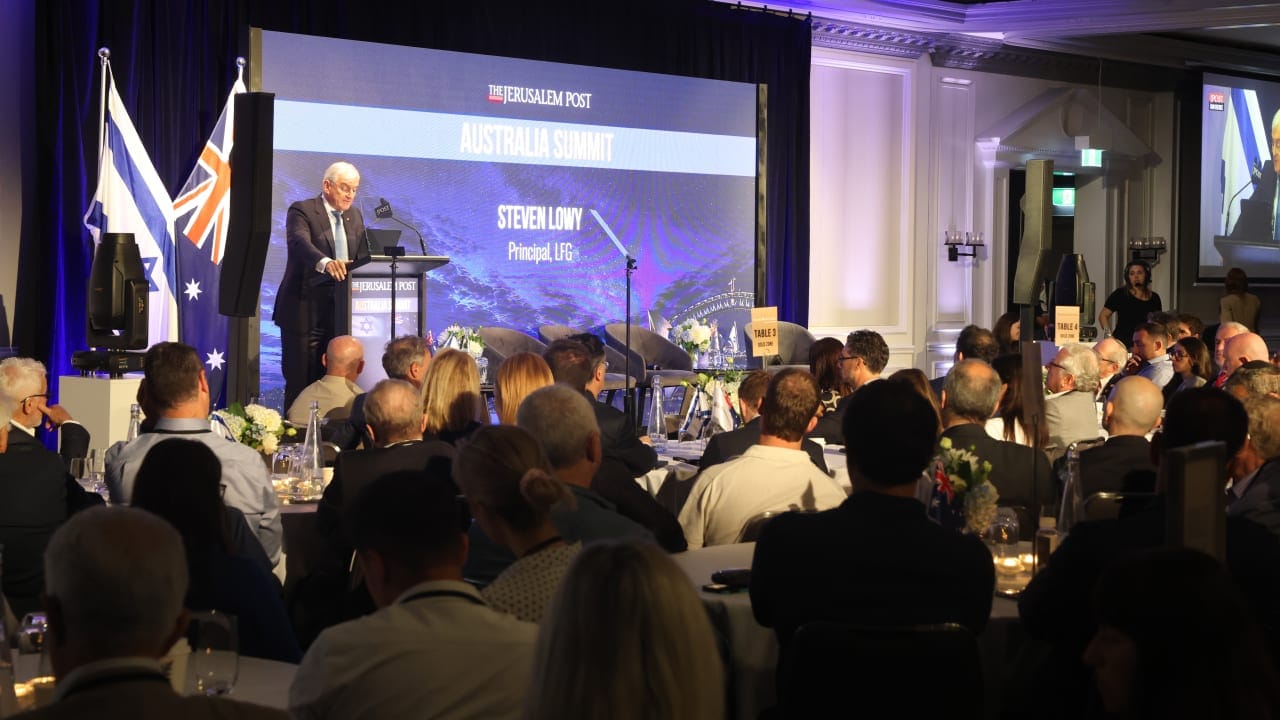
"It is shocking to know that in 2026 Australian Jews are contemplating the same decision – to stay or to go – that other Jews, in other places, have been forced to make down the centuries," Lowy said Thursday during his keynote address at The Jerusalem Post Australia Summit in Sydney.
"The fact that it is now very much a live question shows the extent to which Australia has been diminished as a safe haven for all its citizens,” he said.
Lowy said that during his nearly six years leading Keren Hayesod, he witnessed Jewish families across Europe, Canada and Latin America, many of whom had lived in their countries for generations, questioning whether they should leave.
"The fact that Jews are contemplating leaving these countries should worry every Western democracy," he said. "No country ever has benefited when Jews leave."
For Lowy, whose grandfather was murdered by the Nazis in Auschwitz-Birkenau in 1944, the issue is deeply personal.
His father, Frank, was just 13 when his father was arrested at a Budapest railway station while attempting to buy tickets to help his family escape. He did not learn the truth about his father's death until 50 years later.
"So, antisemitism is not a distant, abstract issue for me," Lowy said. "It is personal, and it is that close."
Lowy revealed that his family had documented more than 15,000 online attacks against them over the past year, including death threats. Following his testimony before Australia's Royal Commission in June, the volume of attacks increased by 97% in just one month.
He warned that Australia stands at a historic crossroads, with rising antisemitism threatening the values of fairness, tolerance and equality that have long defined the country.
However, Lowy also pointed to signs of change following the Bondi terrorist attack, including greater recognition among Australian leaders that antisemitism is a problem for the entire country.
"But Bondi woke up Australia," he said.
He praised the establishment of the Royal Commission and called on political leaders, universities and other institutions to ensure that antisemitism is pushed back to the fringes of society. Ultimately, Lowy said, Australia's future will depend on whether ordinary Australians are prepared to stand up for the values that made the country a safe haven for his family and so many others.
"To say I am optimistic goes too far," Lowy concluded. "But my faith in Australia is strong enough to believe that there is reason to be hopeful."