
‘The tools are completely different, the times are completely different, but the needs of inventors are the same as they were 157 years ago,” says Kfir Luzzatto, senior partner and president of The Luzzatto Group, one of Israel’s leading intellectual property firms, founded in 1869 in Milan by Riccardo Luzzatto.
The Luzzatto Group operates through two main divisions: a legal division and a business division. The legal division comprises two firms: Luzzatto and Luzzatto Patent Attorneys, which specializes in patent prosecution, intellectual property protection, and strategic IP management; and the Luzzatto Law Firm, which focuses on intellectual property and commercial law, including litigation, licensing, technology transactions, and commercialization.
The business division includes companies specializing in software development, business development, and technology consulting, extending the group’s activities beyond legal services into broader business and technological ventures.
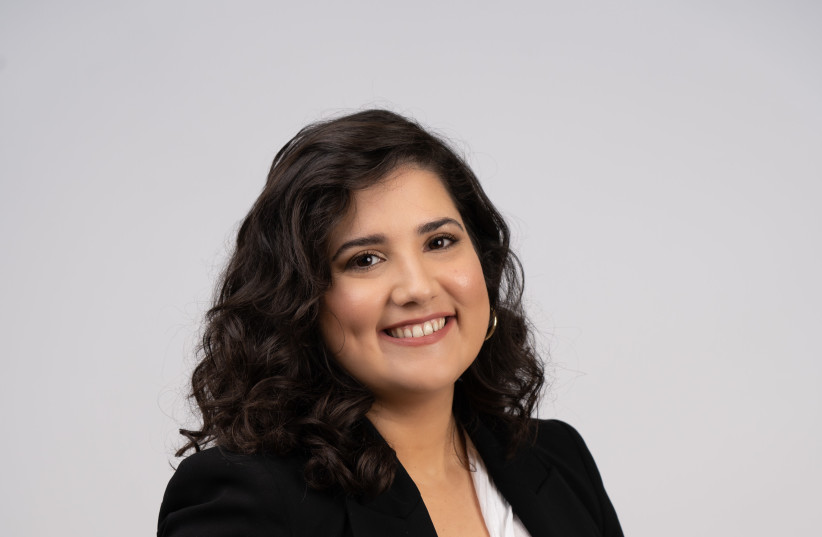
Kfir Luzzatto and his daughter Tamar, a fifth-generation family member who leads the group’s business development, marketing, and innovation efforts, recently spoke about how the business has prospered across five generations, kept pace with technological change, and promoted innovation in Israel’s periphery.
The Luzzatto family’s roots date back hundreds of years and include distinguished rabbinic figures such as Rabbi Moshe Hayim Luzzatto, the 18th-century kabbalist, writer, and poet, and Rabbi Shmuel David Luzzatto, the well-known 19th-century poet, Bible commentator, and philosopher.
In 1869, Riccardo Luzzatto founded the firm in Milan, and his son Enrico, a lawyer and airplane builder, joined the firm. In 1914, Enrico published a key book on the principles of intellectual property, still considered a landmark work in the field.
In 1971, Dr. Edgar Luzzatto, Kfir’s father and the grandson of founder Riccardo, made aliyah with his family and moved the business to Israel.
Dr. Luzzatto kept the Italian office operational for several years until the firm became established in Israel.
“He was a wizard in patent cases,” recalls Kfir about his father. “Many international companies kept coming to him for help when he came to Israel.”
“When I started working in the profession in Israel,” says Kfir, “many people did not know about patents, and they didn’t know how the patenting process could help them in developing their inventions. We had to educate the public.
“Today, people are much more informed and much more aware of what the patenting process can actually do for them.”
Patent law provides inventors with a legal right to control their inventions. Patents prevent others from making, using, selling, or importing a patented invention without permission, and allow inventors to license their technology in exchange for royalties, turning technical innovation into a valuable commercial asset.
Patent attorneys must stay up to date on technology. “You have to reinvent yourself at every step,” says Kfir, who explains that several major turning points in technology have occurred during his career.
“The first turning point where we had to reinvent ourselves was biotech, during the 1980s. Pharmaceutical companies were making products that were pure chemical drugs at the time. They then started developing biotechnological inventions. As patent attorneys, no one had a clue what this was. We had to learn about biotech. You cannot give reasonable advice to a client unless you understand the technology.”
Luzzatto says the second major change in technology took place during the early 2000s, when software began to take center stage.
“I always liked software and was very involved in software development during my university studies. It was easy for me, but it wasn’t easy for the industry, because protecting software as an intellectual property asset is very different from protecting anything else. It’s not like mechanical inventions.”
While the underlying ideas and processes of patent law are essentially the same, Luzzatto says the way patent attorneys protect different types of inventions that use different technologies can be radically different.
“If you don’t understand software intimately, you may end up filing patent applications that will never mature into a valid patent, that will not protect what you think you’re protecting.”
In the past 10 to 15 years, he adds, developments in both biotech and software, as well as court rulings in the US and other countries, have changed some patent practices in these fields.
Tamar Luzzatto, who represents the latest generation of Luzzattos in the group, says it was natural for her and her siblings to join the family business.
“The family business was like a member of the family. We grew up in the business, and all of us worked there when we were younger.”
Tamar and her sister Michal, the eldest, are lawyers and work on the legal side of The Luzzatto Group. Tamar also leads the group’s business development. Her sister Lilach is a patent attorney and a partner in the group’s patent firm, and their brother, Yonatan, the youngest, holds a PhD and is training to become a patent attorney.
“Every one of us has found their own way to contribute,” she says.
“Every generation brings its own perspective, which helps the business evolve, remain relevant, and continue growing. “When we joined, we entered a business that was open to hearing our ideas and willing to embrace change. That openness allowed us to contribute while building on the work of previous generations.
“We all share the same desire to succeed, accomplish meaningful things, and work hard. We saw an opportunity to achieve something special together as a family, so joining the group felt like a natural choice for all of us.”
Tamar says that the past 10 years have brought more changes than the previous 50.
One of the main events that affected the world of patent law was the COVID pandemic. The Luzzatto Group represents several pharmaceutical companies that developed vaccines and other medical solutions during that time.
“We had to be very responsive because everything moved really quickly in the world, and IP [intellectual property] moved along with it,” says Tamar. “As an organization, we had to change the way that we worked.”
Even before the COVID-19 pandemic, the group had introduced remote-working capabilities in 2017, leaving it well prepared when employees were required to work from home.
Tamar says that one of the hallmarks of The Luzzatto Group is its ability to adapt and evolve. “We’re not afraid of change. That is why our slogan is ‘pioneers in innovation,’ because we are not afraid to be the first to innovate. This is part of our DNA.”
She adds that this is especially true in the group’s use of AI. The Luzzatto Group is well positioned to use AI effectively and has been incorporating it into its internal processes for several years.
“We are not afraid of AI, but we believe it must be used responsibly,” says Tamar. “It is essential to understand both what it can do and where its limits lie. We are investing considerable effort in educating the market and helping people benefit from AI while minimizing its potential IP risks.”
The Luzzatto Group has been working to increase the number of women inventors and innovators. Tamar says women remain significantly underrepresented among named inventors worldwide, citing data from the World Intellectual Property Organization, which states that approximately 80% of innovators behind global inventions are men.
“We are trying to develop programs to bring women to the stage, to register patents and other IP rights, and to invent. We are committed to closing that gap.”
The Luzzatto Group’s management is 80% women, and its CEO is a woman. The group has also sponsored the Jerusalem Post Next-Gen Women Entrepreneurship Award events for five years, which promote innovative inventions developed by women.
The group’s willingness to challenge convention is reflected in its decision to base its headquarters in Omer, a thriving urban community near Beersheba, rather than in the second office in Tel Aviv, and in its decision to add a branch office in Kiryat Shmona, in the North.
“We have to give a bit of background about the Negev, and why we are so enthusiastic about the area,” says Tamar. “With the exception of my father, who was born in Milan, we were all born in the Negev.”
Their mother, Dr. Esther (Eti) Luzzatto, CEO and managing partner of The Luzzatto Group, has also devoted considerable time to advancing the Negev. In recognition of her work in the region, she was selected to light a torch during the Independence Day ceremony in 2006.
“Having our headquarters in Omer is pure Zionism from our point of view,” Tamar adds. “We don’t just talk the talk. We walk the walk. We are very busy working to develop the Negev so cially and business-wise, in every way that is available to us.”
In 2020, Margalit Startup City in the Galilee, an innovation center in Kiryat Shmona designed to develop the Galilee into a major hub for food technology, agricultural technology, and climate technology, invited The Luzzatto Group to open an office there.
“We are very much involved in Kiryat Shmona, not only on the business side of things but in the community as well,” says Tamar.
“The North is home to remarkable people with bold ideas and an extraordinary capacity for innovation across industries ranging from agritech and foodtech to climate tech. Exciting developments are taking place throughout the region, and we wanted to be part of that momentum.”
How is the Luzzatto Group positioned for the future? Says Tamar, “We combine a high level of professionalism with the personal character of a family business, and I believe that distinguishes us from other large firms.
“We want everybody to feel comfortable with us and to feel that they’re treated like family. Our employees do the same with our clients, and that has a very important impact.
“Looking ahead, we want to continue evolving, just as we always have. I believe that evolution will accelerate significantly over the next few years, as the AI revolution transforms our profession and the way we work.”
In 2026, technology may be changing faster than ever, but the principle that has guided The Luzzatto Group since 1869 remains constant: inventors need people who understand both their ideas and their ambitions. For the fifth generation, the challenge is to preserve that personal connection while embracing new technologies and extending the opportunities they create throughout Israel.
From Milan to Omer, Tel Aviv, and Kiryat Shmona, The Luzzatto Group has endured by preserving its heritage while giving each generation the freedom to shape what comes next.
This article was written in collaboration with The Luzzatto Group.